preloader brand
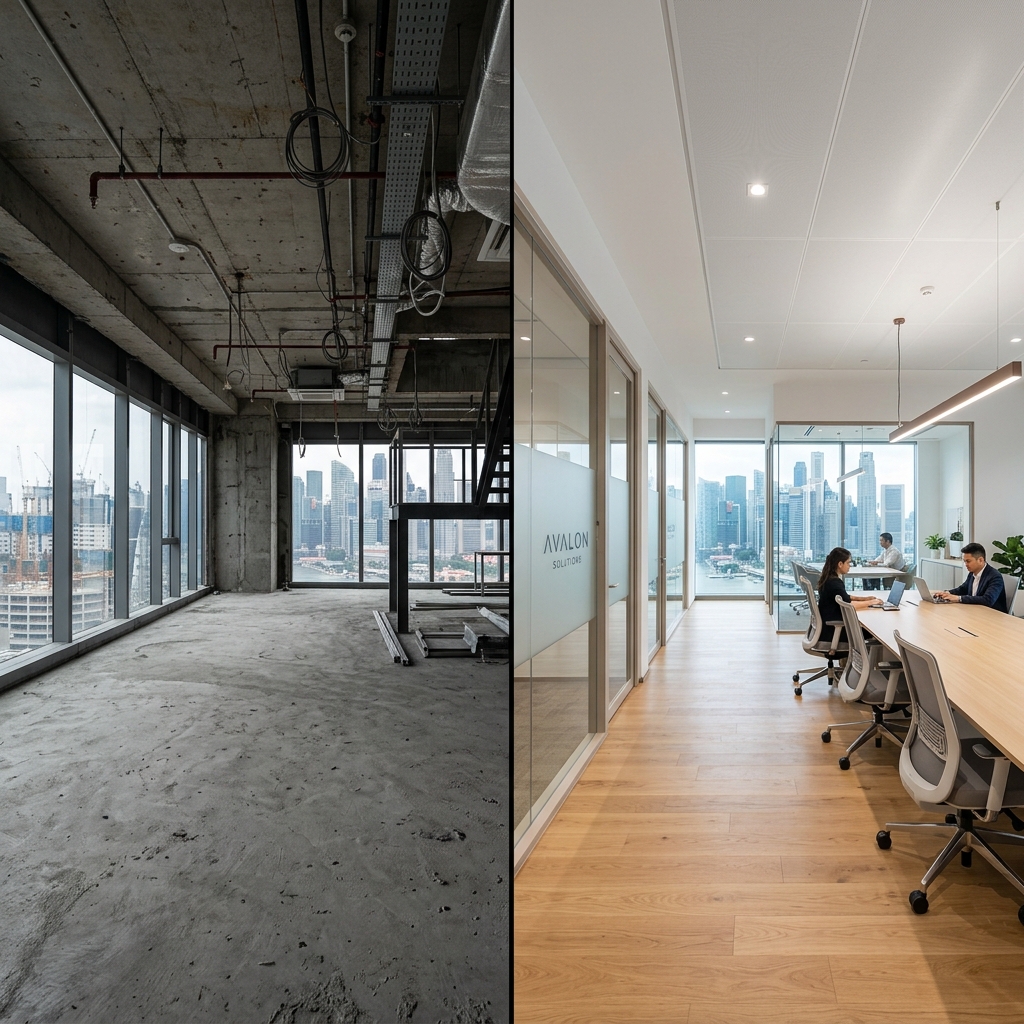
Bare Vs Fitted Office Singapore 1781496749566

Bare Unit vs. Fitted Unit: Which Commercial Space Saves You More Money in Singapore?

When expanding or relocating your business in Singapore, one of the first critical financial decisions you will face during commercial property hunting is deciding between a Bare Unit (Bare Shell) and a Fitted Unit (Pre-fitted / Takeover Space).

The choice you make will directly impact your upfront capital expenditure (CapEx) and your project timeline. As an experienced Commercial Contractor in Singapore, we help business owners analyze the real costs of both options so they can make the most cost-effective decision.

In this guide, we break down the economics of Bare vs. Fitted spaces, revealing the hidden costs of both, and explaining how a strategic Office Renovation Singapore plan can help you maximize your ROI.

1. What is a Bare Unit? (The Raw Canvas)

A bare unit in Singapore is exactly what it sounds like—a raw shell. When you take over, it typically features bare concrete floors, unpainted brick or block walls, capped services (water, electrical supply), and standard building sprinkler points at the ceiling level.

The Upfront Costs (CapEx):

Renting a bare shell requires a full-scope fit-out. You will need to hire a contractor to handle:

  • Floor screeding and finishes (carpeting, vinyl, or epoxy).
  • Partitioning for meeting rooms, executive offices, and utility rooms.
  • Complete Mechanical & Electrical (M&E) design, wiring, air-conditioning ducting, and SCDF fire safety compliance.
  • Custom carpentry (reception desk, pantry cabinets, storage).

The Real Savings:

While the initial fit-out cost is high, a bare shell offers long-term advantages:

  • Custom Layout Efficiency: You only build what you need. No wasted space, meaning you maximize the usable square footage of your office.
  • Lower Monthly Rent: Landlords generally offer bare units at a lower rental rate per square foot compared to fitted spaces.
  • No Re-Layout Costs: You don’t have to pay demolition costs to tear down the previous tenant’s walls.

2. What is a Fitted Unit? (The Plug-and-Play Option)

A fitted unit comes with existing partitions, flooring, ceilings, M&E wiring, and sometimes even furniture or a built-in pantry left behind by the previous tenant.

The Upfront Savings:

The major appeal of a fitted unit is the low initial CapEx:

  • Move-In Ready: You can potentially avoid major construction, moving in your team within days.
  • Inherited Infrastructure: The previous tenant has already paid for the air-conditioning ducting, lighting, and partition walls.

The Hidden Trap (Where It Costs You More):

A fitted space is rarely a perfect fit for a new business. Here are the hidden costs business owners often overlook:

  • Hacking & Modification Charges: Tearing down existing partitions to create your desired layout is expensive. You pay for both the demolition and the disposal of debris.
  • M&E Retrofitting: If you move partitions, you must adjust air-conditioning vents, sprinkler points, and electrical outlets to comply with SCDF fire safety codes. Retrofitting an old M&E system can sometimes cost *more* than installing a new one from scratch.
  • Inherited Wear and Tear: Hidden defects in old wiring, faulty air-con compressors, or stained carpets will become your financial responsibility once the lease starts.

3. Which One Saves You More Money? (The Financial Breakdown)

As a direct rule of thumb, look at the length of your lease and your layout requirements:

  • Choose a Fitted Unit if: You are signing a short-term lease (1 to 2 years), have a tight timeline, and your team can adapt to the existing layout with minimal modifications (less than 20% layout changes).
  • Choose a Bare Unit if: You are signing a long-term lease (3+ years), have specific spatial requirements (need high-confidentiality boardrooms, specialized server rooms, or custom carpentry), and want to capitalize on lower monthly rents.

Frequently Asked Questions About Singapore Commercial Spaces

Do I need building management (MCST) permits to modify a fitted unit?

Yes. Any changes to a fitted unit, including moving partition walls, modifying electrical points, or replacing flooring, require MCST approval, a refundable fitting-out deposit, and insurance coverage before your contractor can mobilize on-site.

What is the average cost of a bare office renovation in Singapore?

A standard office fit-out in Singapore ranges from S$40 to S$120+ per square foot, depending on material choices, carpentry requirements, and M&E complexity. Working directly with a builder with an in-house carpentry factory can reduce these costs significantly by removing designer markups.

Do I need to reinstate a fitted unit when my lease ends?

This depends on your Tenancy Agreement (TA). Some landlords require you to return the space to a “bare condition” even if you rented it “fitted.” Ensure you review the reinstatement clause in your TA before signing to avoid huge handover hacking costs.

Skip the Middleman Markups

Whether you choose a bare shell or a fitted space, the key to saving money is working with a direct contractor.

By bypassing design agencies that outsource construction, you secure direct builder pricing on carpentry, partitioning, electrical works, and premium finishes.

Planning a commercial space transformation in Singapore? Skip the ID markups. WhatsApp us today to get a direct, transparent contractor quote from the Nouvelle Workz team.

Shopping Cart
Scroll to Top