Epoxy Grout
Epoxy Grouting for Kitchens, Bathrooms, and Commercial Spaces
What Epoxy Grout Actually Is
Standard tile grout is cement-based. It is porous, which means it absorbs water, soap, cooking oil and dirt — and that is why bathroom and kitchen grout lines darken, stain and grow mould over time no matter how often you clean them.
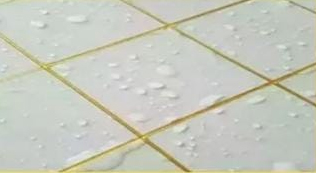
Epoxy grout is not cement. It is a two-part system — resin and hardener — that cures into a solid, non-porous joint. Water and stains sit on the surface instead of soaking in. It does not need sealing, does not need re-sealing every year, and holds its colour rather than yellowing.
| Cement grout | Epoxy grout | |
|---|---|---|
| Absorbs water | Yes — porous | No — non-porous |
| Staining | Darkens over time | Resists oil, soap, coffee, chemicals |
| Mould in wet areas | Common | Very resistant — nothing for it to feed on |
| Sealing required | Yes, and periodically re-sealed | No |
| Cracking | Can crack and crumble | Flexible, holds up to movement |
| Cost | Cheaper material and labour | Higher material cost, more skilled labour |
| Installation | Forgiving, slow-setting | Short working time, unforgiving of mistakes |
Where Epoxy Grout Is Worth It — and Where It Is Not
Epoxy grout costs more than cement grout, so it is worth being straight about where the money actually returns something:
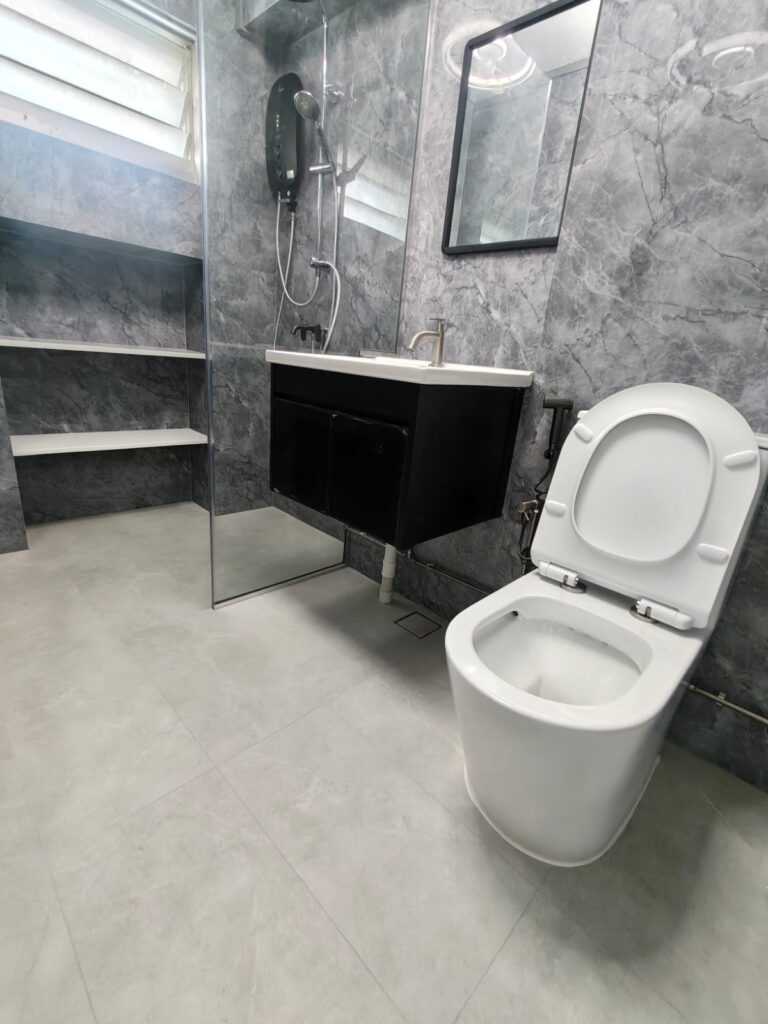
- Worth it: bathrooms and shower areas. Constant moisture is exactly the condition cement grout fails in. This is where most homeowners notice the difference within the first two years.
- Worth it: kitchen floors, backsplashes and countertop joints. Cooking oil is the single worst thing for cement grout — it soaks in and cannot be cleaned out.
- Worth it: commercial kitchens, F&B floors and high-traffic retail. Frequent washing down, chemical cleaning agents and heavy footfall. Also easier to keep to hygiene standards because the joint cannot harbour bacteria.
- Usually not worth it: dry bedroom and living room floors. Cement grout in a dry area with light traffic can last a long time. Spending on epoxy here is optional rather than protective.
- Depends: balconies and service yards. Worth it if the area gets wet regularly or is exposed to rain; less critical if sheltered.
Regrouting Existing Tiles
You do not need to hack and retile to fix bad grout. If the tiles themselves are sound and firmly bonded, the grout alone can be removed and replaced — which costs a fraction of a full retile and takes a fraction of the time.
The process matters more than most people expect:
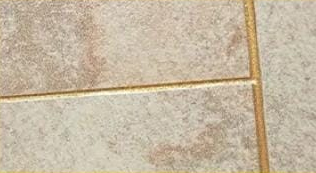
- Grout removal to sufficient depth. The old cement grout is cut out of the joints, not just scraped at the surface. Leaving old grout in the bottom of the joint means the new epoxy has nothing solid to key into and no depth to hold.
- Joints cleaned and fully dry. Epoxy will not bond properly to dust or damp. In a bathroom that usually means the room is out of use for a period before grouting begins.
- Tile condition assessed first. If tiles are hollow, drummy or lifting, regrouting is the wrong answer — the problem is underneath, and new grout will just crack again. We check before quoting rather than after starting.
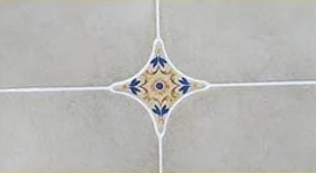
- Colour matching. Epoxy grout comes in a set colour range. If you are regrouting only part of a floor, we will tell you honestly whether the join will be visible.
Why Epoxy Grout Installation Goes Wrong
Epoxy grout is materially better than cement grout. It is also much less forgiving to install, and a bad epoxy job is worse than a good cement one. Three things separate a competent installer from a cheap quote:
- Haze removal within the working window. As epoxy is worked into the joints it leaves a thin film across the tile face. That film has to be washed off before the epoxy cures. Miss the window and the haze sets hard on your tiles — removing it afterwards means aggressive chemical stripping, and on some tile finishes it cannot be fully removed at all. This is the single most common epoxy grout disaster, and it is purely a matter of working fast enough with enough hands on site.
- Mixing and pot life. Epoxy starts curing the moment resin and hardener meet. It has to be mixed in the correct ratio and used within its working time. Mixing too much at once means wasted product; mixing carelessly means joints that never fully harden.
- Joint preparation. Grout is only as good as what it is sitting in. Dusty, damp or shallow joints produce a finish that looks right on handover and fails within months.
What Affects the Cost
Epoxy grouting is quoted by area, but the rate depends on more than square footage:
- New tiles or regrouting. Grouting fresh tiles is straightforward. Regrouting means removing the old grout first, which is the labour-heavy part.
- Tile size. Small tiles and mosaics mean far more linear metres of joint per square foot than large-format tiles — and grouting is priced by joint, not by tile.
- Condition of existing joints. Deep, clean joints are quick. Crumbling grout, old silicone residue and uneven depths all add time.
- Access and scale. A single bathroom is a different job from a full-house floor or a commercial kitchen that has to be done overnight.
Our quotations are itemised, so removal, preparation and grouting are priced separately rather than as one figure. WhatsApp us photos of your tiles and joints for a quote — for grout work, photos usually tell us most of what we need.
Grouting Services Across Singapore
We take epoxy grouting and regrouting work islandwide — HDB estates including Sengkang, Punggol, Tampines, Yishun, Woodlands, Bukit Batok, Jurong, Ang Mo Kio and Hougang, as well as private condominiums, landed homes and commercial premises. Tiling and waterproofing are handled by the same in-house team, so if the grout problem turns out to be a tile or waterproofing problem underneath, you are not left finding a second contractor.
Nouvelle Workz Pte. Ltd. — HDB Licensed Renovation Contractor (HB-075810E), bizSAFE Level 3
21 Bukit Batok Crescent, #09-73 WCEGA Tower, Singapore 658065
Call or WhatsApp +65 9109 8102
Frequently Asked Questions
Is epoxy grout worth the extra cost over cement grout?
In wet areas, yes. Bathrooms, showers and kitchen splashbacks are where cement grout fails — it absorbs water and oil, stains, and grows mould that cleaning will not remove. Epoxy is non-porous so there is nothing to absorb and nothing for mould to feed on, and it never needs sealing. In dry bedrooms and living areas the benefit is much smaller and cement grout is a reasonable choice.
Can you regrout my existing tiles without hacking?
Yes, provided the tiles themselves are sound. The old grout is cut out of the joints, the joints are cleaned and dried, and epoxy grout is applied. It costs far less than a full retile. If the tiles are hollow or lifting, though, the problem is underneath and regrouting will not fix it — we check the tile condition before quoting.
How long does epoxy grouting take?
It depends on the area and whether old grout has to be removed first. Grouting new tiles is quick. Regrouting takes longer because removal is the labour-heavy stage, and the joints must be fully dry before the epoxy goes in — which in a bathroom usually means the room is out of use for a period beforehand. We give you a schedule before starting.
Will epoxy grout stain my tiles?
Not if the haze is cleaned off within the working window. Epoxy leaves a thin film across the tile face during application which must be washed away before it cures. Done properly this is a non-issue. Done late, the film hardens onto the tile and is very difficult to remove — which is why this job needs enough hands on site to keep up with the curing time.
Does epoxy grout need sealing?
No. That is one of its main advantages over cement grout, which needs sealing on installation and re-sealing periodically. Epoxy is non-porous, so there is nothing to seal.
Can epoxy grout be used on all tile types?
It works on most ceramic, porcelain and stone tiles, but some porous or textured surfaces — certain natural stones and unglazed finishes — hold onto epoxy residue and need extra care or are unsuitable. We check the tile type before recommending it rather than discovering the problem during application.
Do you do commercial epoxy grouting?
Yes — commercial kitchens, F&B floors, retail and office washrooms. Commercial work is usually scheduled outside operating hours, and epoxy suits these premises because the joints stand up to frequent washing down and chemical cleaning agents without breaking down.
Can you match the grout colour to my existing floor?
Epoxy grout comes in a set colour range rather than being mixed to order, so an exact match to aged cement grout is not always possible. If you are regrouting only part of an area we will tell you upfront whether the join will be visible, so you can decide whether to do the whole floor instead.