
2026 Singapore Office Renovation Costs: Uncovering Hidden Fees and MCST Regulations
When expanding or relocating your business in Singapore, the physical office space serves as the primary canvas for your company’s culture and operational efficiency. However, navigating the landscape of commercial interior design and renovation in Singapore is fraught with potential pitfalls. From ambiguous pricing models to stringent Management Corporation Strata Title (MCST) regulations, business owners frequently find their initial budgets spiraling out of control.
At Nouvelle Workz, we believe in radical transparency. In this comprehensive 2026 guide, we will break down the true costs of office renovation in Singapore, expose the hidden warranty traps contractors use, and provide a definitive roadmap for dealing with landlords and regulatory bodies like the SCDF and BCA.
1. The True Cost of Office Renovation in Singapore (2026 Breakdown)
Many contractors lure clients in with an attractive base rate, only to stack variation orders (VOs) once the project is underway. Understanding the baseline costs is your first line of defense.
Average Cost per Square Foot (PSF)
| Renovation Tier | Cost Range (PSF) | What to Expect | Best For |
|---|---|---|---|
| Basic / Budget | S$50 – S$70 | Standard partitions, basic vinyl flooring, minimal carpentry, exposed ceilings, basic M&E. | Startups, temporary lease spaces. |
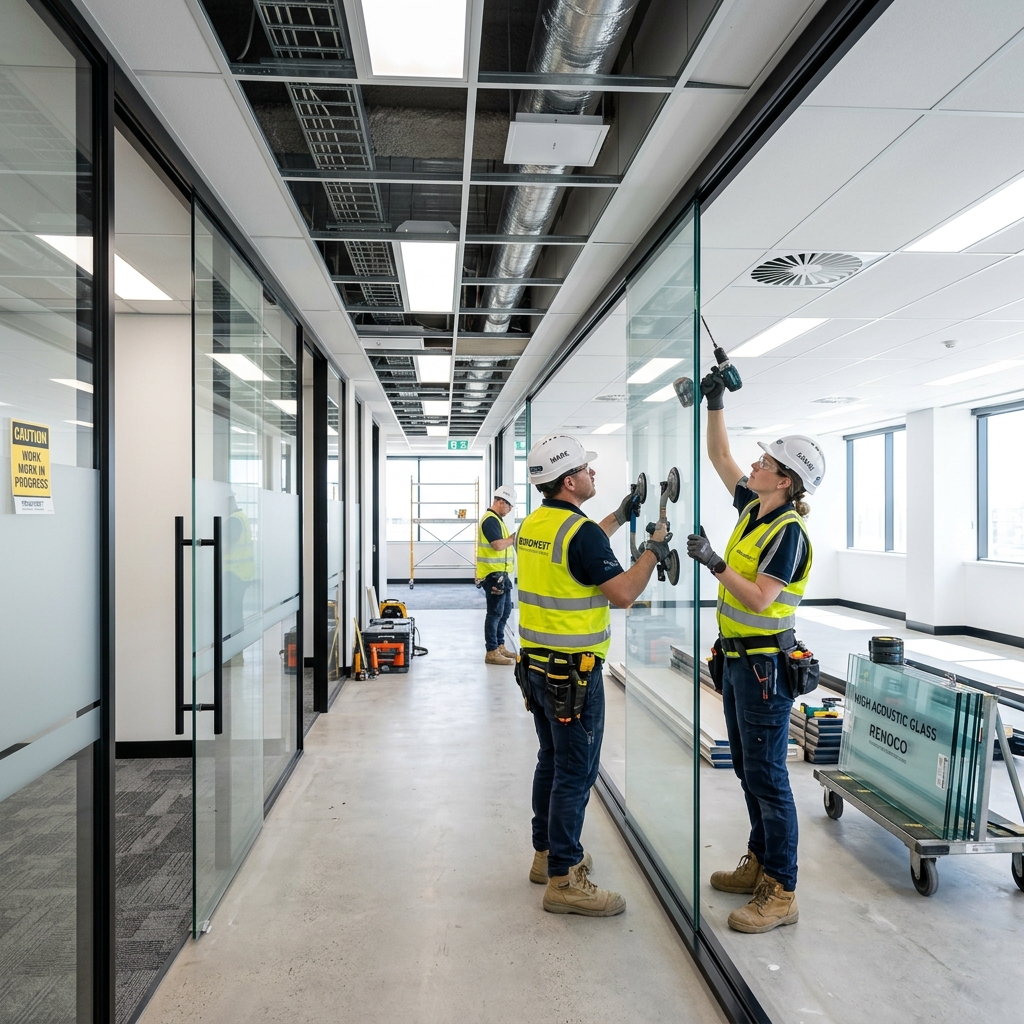
| Mid-Tier / Standard | S$80 – S$120 | Acoustic glass partitions, premium carpets, custom pantry carpentry, concealed wiring, basic smart lighting. | SMEs, tech firms, corporate branches. |
| Premium / Luxury | S$130 – S$200+ | High-end materials (marble, hardwood), smart office integrations, specialized acoustic treatments, custom architectural features. | MNC HQs, law firms, private wealth offices. |
2. Exposing the Hidden Fees: What Your Quote Doesn’t Show
When you receive a quotation, the line items for “Carpentry” or “Flooring” are usually straightforward. The danger lies in the administrative, regulatory, and logistical fees that are conveniently left out of the initial proposal.
A. MCST Deposits and Hoarding Requirements
Before a single hammer is swung, your building’s MCST will require a renovation deposit. This refundable deposit ensures that any damage to common areas (corridors, lifts) is covered.
- Cost Impact: S$1,000 to S$5,000 (Refundable, but ties up cash flow).
- Hidden Trap: Many MCSTs require specific fire-rated hoarding to be erected outside your unit. Contractors often exclude hoarding costs from the quote, surprising you with a S$1,500 bill on day one.
B. Fire Safety and Shelter Department (FSSD) Submissions
If your renovation involves altering partitions, changing the layout of sprinklers, or moving emergency lights, it is legally mandatory to submit plans to the SCDF/FSSD.
- Cost Impact: S$800 – S$3,000 for Registered Inspector (RI) and Professional Engineer (PE) endorsement fees.
- Hidden Trap: Unscrupulous contractors might suggest skipping this step to “save money.” If the MCST or SCDF finds out, you will be forced to halt work, tear down the non-compliant structures, and face severe fines.
C. Haulage and Disposal Fees
Singapore’s commercial buildings have strict rules regarding when and how debris can be removed.
- Cost Impact: S$500 – S$2,000 depending on volume.
- Hidden Trap: If your building only allows night work or weekend disposal, labor costs will double. Ensure your contractor has factored in specific building operating hours.
3. Navigating Landlord Disputes and Reinstatement Clauses
Your lease agreement is just as important as your renovation contract. The two most common areas of dispute between tenants and landlords involve the Fit-out Period and the Reinstatement Clause.
The Fit-Out Period
Most landlords offer a rent-free fit-out period (usually 2 to 4 weeks). If your contractor delays the project, you end up paying rent for a space you cannot use.
Nouvelle Workz Tip: Always insert a Liquidated Damages (LD) clause in your renovation contract. If the contractor misses the deadline, they compensate you for the lost rent.
The Reinstatement Clause
When your lease expires, 99% of commercial landlords require you to “reinstate” the office back to its original bare condition.
- The Trap: Tenants often forget to budget for reinstatement. Tearing down custom carpentry, removing false ceilings, and restoring the original flooring can cost anywhere from S$10 to S$25 psf.
- Strategic Move: Before signing the lease, negotiate with the landlord to accept the space “as-is” upon handover, provided the incoming tenant wants to keep the fittings.
4. Warranty Traps: Reading the Fine Print
Not all warranties are created equal. A contractor might promise a “5-Year Warranty,” but the fine print renders it useless.
What to Look For in a Renovation Warranty:
- Material vs. Workmanship: Does the warranty cover the cost of the replacement part and the labor to install it?
- Waterproofing and Plumbing: For office pantries and washrooms, ensure there is a strict 1-to-2 year warranty against leaks.
- Electrical Load: Ensure the warranty covers tripping issues caused by poor load balancing during the M&E phase.
5. Timeline of a Standard Commercial Renovation
To help you plan your relocation, here is a realistic timeline for a 2,000 sqft office renovation:
| Phase | Duration | Key Milestones |
|---|---|---|
| 1. Space Planning & Design | 2 – 3 Weeks | 3D rendering, material selection, finalizing quotation. |
| 2. MCST & FSSD Approvals | 2 – 4 Weeks | Submission of PE endorsed plans, paying deposits. |
| 3. Wet Works & M&E | 2 Weeks | Hacking, running electrical conduits, aircon ducting. |
| 4. Carpentry & Finishes | 2 – 3 Weeks | Installing partitions, custom furniture, painting, flooring. |
| 5. Handover & Defect Check | 1 Week | Cleaning, RI inspection, addressing minor touch-ups. |
| Total Estimated Time | 9 – 13 Weeks | Plan your lease transition accordingly! |
Conclusion: Protect Your Investment
Office renovation in Singapore doesn’t have to be a painful, opaque process. By anticipating hidden costs like MCST deposits and FSSD fees, negotiating smart lease terms with your landlord, and demanding transparent warranties, you can protect your capital and ensure a smooth transition.
At Nouvelle Workz, we specialize in end-to-end commercial interior design that prioritizes your business’s operational needs and budget constraints. We handle the red tape so you can focus on running your business.
Ready to transform your workspace without the hidden surprises? Contact our project management team today for a transparent, itemized consultation.