

Quick Answer: Commercial Office Reinstatement in Singapore
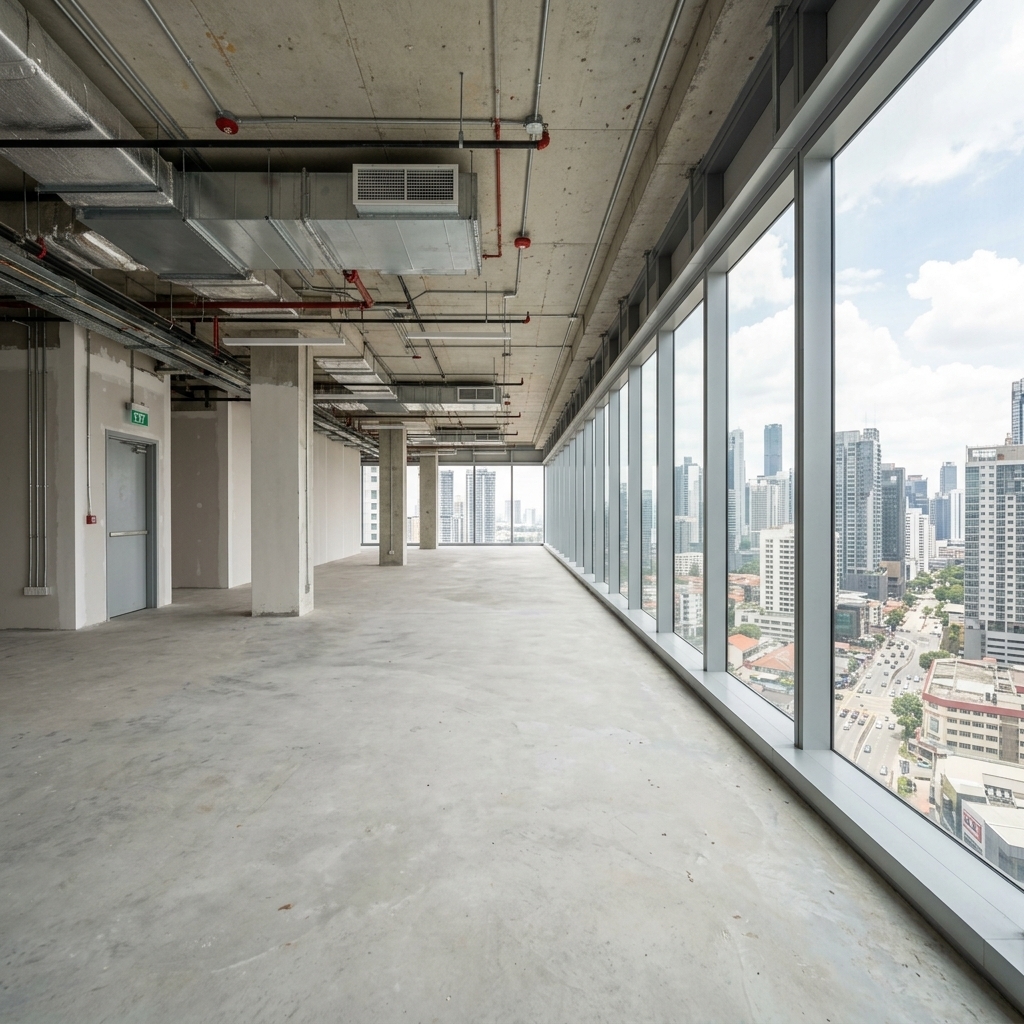
Commercial office reinstatement in Singapore is the mandatory process of returning a leased business premises to its original bare-shell condition upon tenancy expiration. It encompasses partition dismantling, ceiling and flooring restoration, fire safety system realignment, and mechanical and electrical reinstatement to satisfy landlord and building management handover requirements.
When a commercial lease comes to an end in Singapore, business owners are understandably focused on the exciting transition to their new office space. However, they frequently overlook the strict legal requirement found in almost every commercial tenancy agreement: the obligation to return their current unit to its original, bare shell condition. This rigorous process, known in the industry as reinstatement, is far more complex than simply moving furniture out, and it can come with unexpected financial surprises if not planned properly.
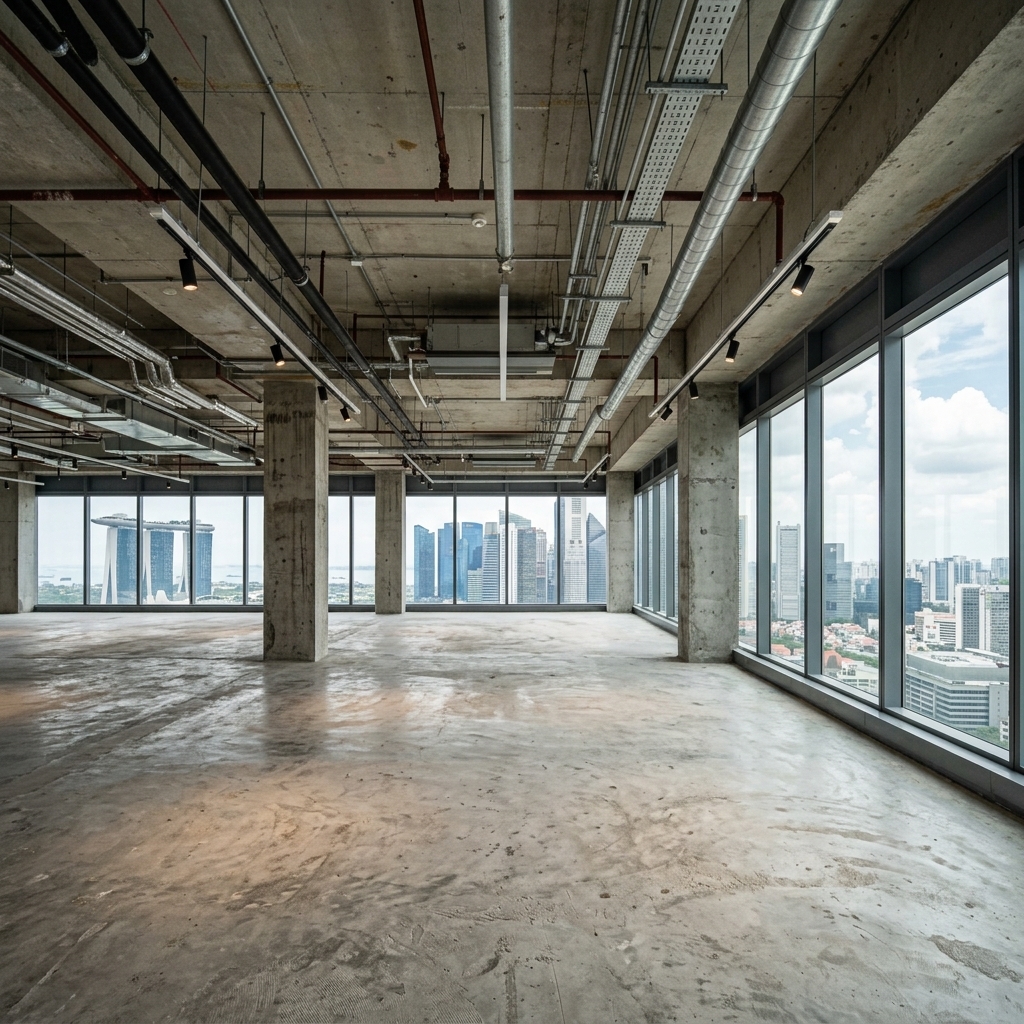
At Nouvelle Workz, our specialized teams have helped countless businesses navigate seamless, penalty-free handovers with stringent landlords across Singapore. Based on our extensive on-the-ground experience, we have compiled the definitive guide to the top 5 hidden costs of commercial office reinstatement-and crucial strategies to avoid them.
1. Fire Safety (FSSD) Compliance Updates
One of the most frequent and costly hidden surprises stems from fire safety regulations. SCDF fire codes evolve. If the building’s overarching fire safety codes have been updated since you first took over the lease, the building management (MCST) may legally require you to upgrade the sprinkler systems, emergency lighting, or smoke detectors during your reinstatement to meet the latest FSSD standards. You are essentially paying to upgrade the landlord’s infrastructure.
“Many tenants are shocked when building management rejects their reinstatement plan because the sprinkler layout doesn’t meet 2026 codes. Always demand the latest fit-out manual from the landlord before signing a reinstatement contract.”
– James, Founder of Nouvelle Workz
2. Specialized Floor Restoration (Beyond Just Removing Carpets)
A common misconception among business owners is that removing flooring is as simple as rolling up the carpet. In reality, commercial broadloom carpets and vinyl tiles are adhered using industrial-grade glues. Tearing them up leaves thick, stubborn adhesive residues across the entire concrete slab.
Landlords require the underlying concrete to be returned to a “bare, smooth, and level” condition. Achieving this requires deploying specialized chemical grinders and floor scarifiers. If your office utilized raised flooring systems for server rooms or trading floors, the structural removal and subsequent floor patching process is substantially more labor-intensive and costly.
3. Unseen M&E (Mechanical & Electrical) Damage
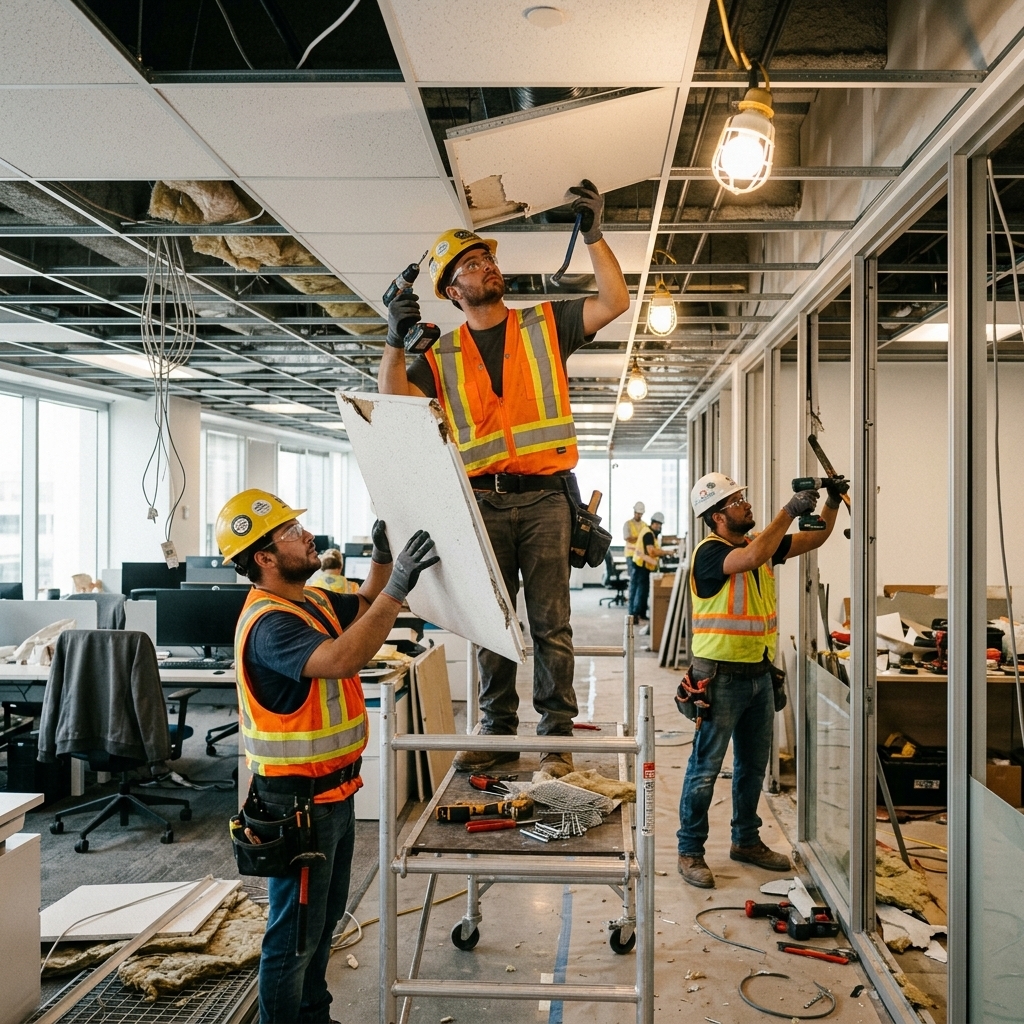
The demolition phase-removing dry partition walls and false ceilings-often acts as a painful reveal for hidden damage. Over years of use, air-conditioning (ACMV) ducts may have been crushed, electrical wiring modified improperly by third parties, or base building plumbing slightly altered.
Because tenancy agreements mandate that the base M&E infrastructure must be fully functional upon handover, patching up these historical, hidden damages falls squarely on the vacating tenant. This can add thousands to the final bill if not identified early in a pre-reinstatement site survey.
4. Disposal of Bulky Furniture and Premium Waste
You cannot simply leave old desks, broken ergonomic chairs, or outdated filing cabinets behind. Doing so will result in heavy penalty deductions from your tenancy deposit, as the landlord will hire their own expensive disposal teams. Proper commercial waste disposal in Singapore is highly regulated and expensive. It requires hiring specialized disposal trucks and paying mandatory landfill tipping fees.
Commercial Office Reinstatement Cost & Timeline Breakdown
| Office Size / Cost Category | Estimated Cost Rate (SGD) | Average Total Cost Range | Typical Timeline |
|---|---|---|---|
| Small Office (1,000 – 2,000 sqft) | $8.00 – $12.00 psf | $8,000 – $24,000 | 1 – 2 Weeks |
| Medium Office (2,000 – 5,000 sqft) | $7.00 – $10.50 psf | $14,000 – $52,500 | 2 – 3 Weeks |
| Large Office (5,000 – 10,000 sqft) | $6.50 – $9.50 psf | $32,500 – $95,000 | 3 – 4 Weeks |
| FSSD Fire Sprinkler Relayout Fee | $2,500 – $5,000 per project | $2,500 – $5,000 | 3 – 5 Days |
| Chemical Carpet Glue Grinding | $1.50 – $3.00 psf | $1,500 – $9,000 | 2 – 4 Days |
| After-Hours Security & Lift Surcharge | $150 – $350 per night | $1,050 – $3,500 | N/A (Per Shift) |
| Disposal Item Category | Relative Cost Impact | Why it Costs More |
|---|---|---|
| Standard Workstations | Low – Medium | Requires manual dismantling before transport. |
| Built-in Safes & Vaults | High | Extreme weight requires specialized lifting equipment. |
| Server Room AC Units | High | Requires safe extraction of refrigerant gases. |
5. Building Management “After-Hours” Surcharges
To maintain a peaceful environment for other tenants, most Grade-A and Grade-B office buildings in Singapore strictly prohibit noisy hacking, drilling, or demolition works during standard office hours (9 AM to 6 PM). Consequently, reinstatement contractors are forced to execute the bulk of the heavy work overnight or during weekends.
This mandatory “after-hours” scheduling inherently incurs higher labor costs. Furthermore, many building managements charge the tenant additional non-refundable fees for providing after-hours security guards and activating cargo lift operations during these periods.
Looking for professional help?
Explore our top-rated Commercial Renovation & Reinstatement Services in Singapore, or view our latest Project Portfolio to see our workmanship.