Commercial Flooring Guide: Why Epoxy & PU Are Essential for F&B and Warehouses
Published: July 2026
For commercial spaces in Singapore—whether it is a high-volume central kitchen, an automobile workshop, or a sprawling logistics warehouse—the floor is the most abused structural element of the building.
It endures the relentless scraping of forklift tires, the spilling of boiling cooking oil, the dropping of heavy metal tools, and aggressive daily chemical washing. If you install standard residential flooring (like ceramic tiles or vinyl) in a heavy commercial setting, it will crack, peel, and become a severe safety hazard within six months.
In this guide, we explore why Epoxy and Polyurethane (PU) flooring systems are the gold standard for commercial and industrial businesses, and how they protect your workers, your inventory, and your licensing compliance.
—
1. Why Tiles Fail in Commercial Kitchens (SFA Compliance)
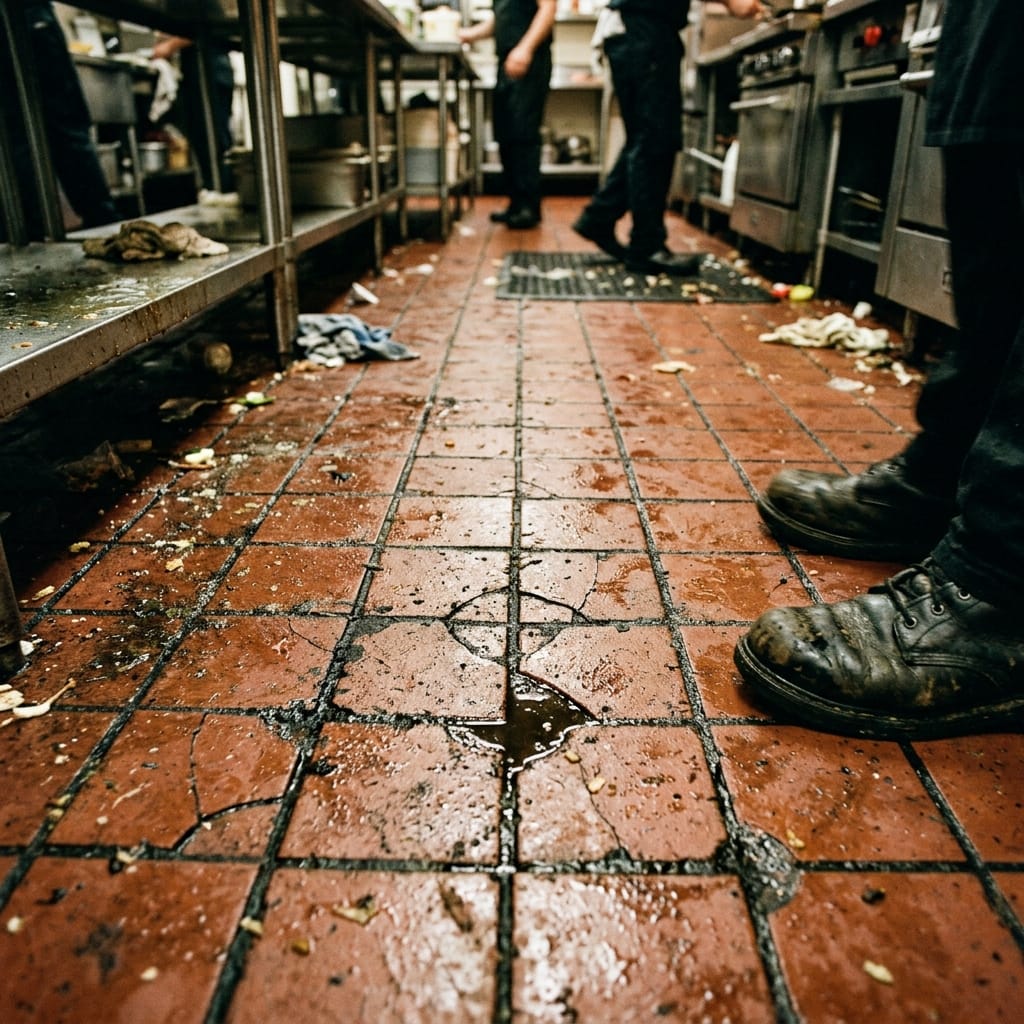
Many new restaurant owners make the mistake of using standard ceramic tiles for their kitchen floor to save money. This is a disaster waiting to happen.
The weakness of a tiled floor lies in its grout lines. Grout is inherently porous. In a bustling F&B kitchen, hot oil, blood, and food juices constantly spill onto the floor. These organic liquids seep deep into the grout lines, rotting from the inside out and breeding severe bacterial colonies.
When the Singapore Food Agency (SFA) conducts a hygiene inspection, blackened, greasy grout is an immediate red flag that can result in hefty fines or a suspended license.
—
2. The Superiority of Epoxy and PU Flooring
Epoxy and PU are liquid-applied resin systems that cure into a solid, impenetrable plastic-like shield over your concrete floor.
100% Seamless and Hygienic
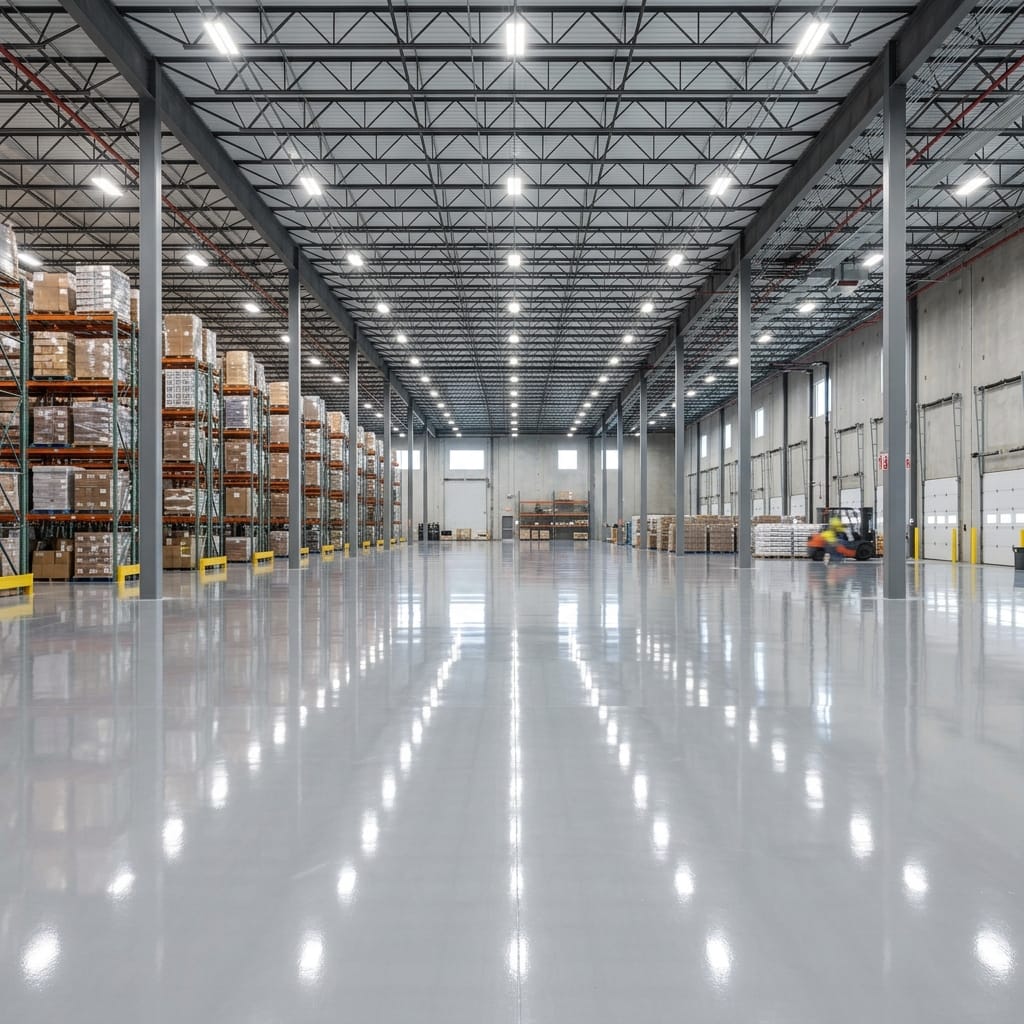
Because it is poured as a liquid, an epoxy floor has zero joints or grout lines. It creates a continuous, completely non-porous surface from wall to wall. You can literally hose down the entire kitchen or warehouse floor, and all the water and grease will glide effortlessly into the drainage traps without penetrating the surface.
Anti-Slip Safety Profiles
Commercial flooring contractors can broadcast silica sand or quartz aggregate into the wet resin before it cures. This gives the floor a highly textured, sandpaper-like finish, ensuring that your workers will not slip even if the floor is drenched in water or oil.
Extreme Impact and Chemical Resistance
A high-build epoxy or PU screed can withstand the immense point-load pressure of a 5-ton forklift without cracking. It is also highly resistant to harsh industrial chemicals, meaning battery acid spills or aggressive alkaline cleaners will not eat away the floor.
—
3. The Professional Application Process
Applying commercial epoxy is not like painting a wall; it is a highly sensitive chemical engineering process.
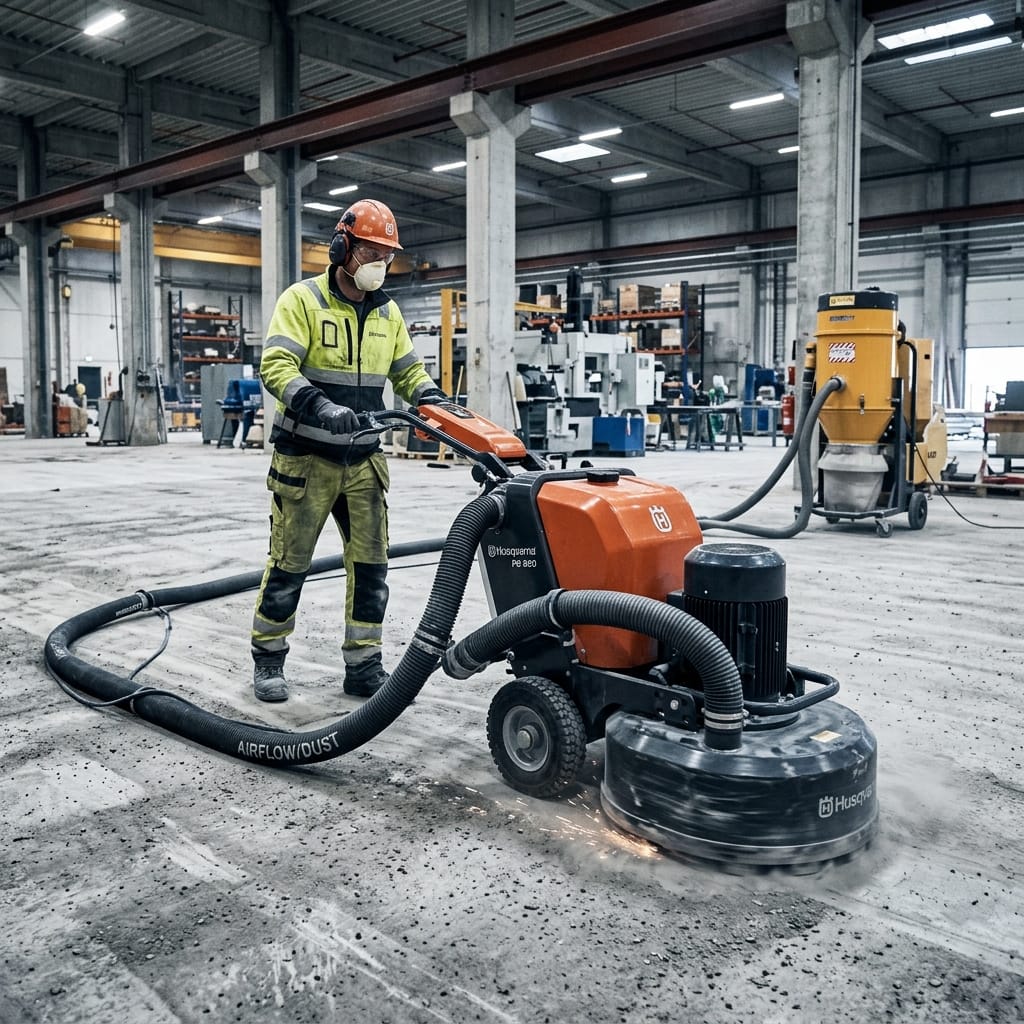
1. Diamond Grinding: The most critical step. The contractor uses heavy machinery to grind away the top layer of the existing concrete. This removes old contaminants and opens up the concrete’s pores so the epoxy can bond at a molecular level.
2. Moisture Barrier Primer: A specialized primer is applied to stop underground moisture from pushing up and causing the epoxy to blister or peel.
3. The Base Coat & Broadcast: The thick resin is poured and squeegeed across the floor. Anti-slip aggregates are broadcasted into the wet layer.
4. The Topcoat: A highly durable, UV-resistant clear or colored topcoat is applied to seal the aggregates and provide the final glossy or matte finish.
—
4. 2026 Commercial Flooring Cost Guide (Singapore)
Pricing for commercial flooring is highly dependent on the total square footage (larger areas have a lower PSF cost) and the required thickness of the coating.
| Flooring System | Estimated Cost (PSF) | Ideal Application |
| Thin-Coat Epoxy (Roller Applied) | $2.50 – $4.00 PSF | Light foot traffic, pedestrian walkways, small retail stores, server rooms. |
| High-Build Epoxy (Trowel Applied) | $4.50 – $7.00 PSF | Medium industrial use, warehouses with forklift traffic, automotive workshops, showrooms. |
| Heavy-Duty PU Screed (4mm – 6mm) | $8.00 – $12.00+ PSF | Commercial central kitchens, food manufacturing plants, cold rooms (resists extreme thermal shock from boiling water to freezing cold). |
—
5. Why Trust Nouvelle Workz for Your Commercial Flooring?
Commercial downtime is incredibly expensive. If you have to close your factory or restaurant for two weeks because a cheap contractor botched the floor and has to redo it, the lost revenue far exceeds the cost of the renovation itself.
At Nouvelle Workz, we understand the urgency of commercial operations. As a BCA-registered direct builder, our specialized flooring teams use state-of-the-art dustless grinding equipment and rapid-cure resins to complete your project with minimal disruption. We guarantee a flawless, SFA-compliant, and heavily durable floor that will serve your business for years.
Upgrade Your Commercial Floor Today
Stop risking SFA fines and worker injuries. Send us the floor plan of your commercial space for a free technical assessment and direct-contractor quotation.