
The 2026 Complete Guide to Office Reinstatement in Singapore: Costs, Hidden Traps & MCST Approvals
Handing over an office lease in Singapore is rarely as simple as packing up your computers and sweeping the floor. For most commercial tenants, the reinstatement clause buried in the tenancy agreement is a ticking time bomb of hidden costs, bureaucratic red tape, and potential landlord disputes.
Whether you are relocating your company to a larger space, downsizing to a co-working setup, or closing a retail branch, failing to reinstate your unit properly can result in the total forfeiture of your security deposit—which often amounts to 3 to 6 months of rent.
In this ultimate 2026 guide, we will tear down the complexities of commercial reinstatement in Singapore. From accurate cost breakdowns and navigating strict Management Corporation Strata Title (MCST) approvals to avoiding the devastating hidden traps set by unethical contractors, this is the only guide you need to ensure a smooth, penalty-free handover.
2. 2026 Office Reinstatement Cost Guide (Singapore)
How much should you budget for reinstatement? Prices fluctuate based on the volume of debris, manpower costs, and building requirements (e.g., night-time working hours in Grade A office buildings).
Below is an itemized, transparent cost log based on 2026 direct-contractor market rates.
Average Reinstatement Costs by PSF (Per Square Foot)
| Office Size / Complexity | Minimal Built-in (Open Plan) | Moderate Built-in (A few rooms) | Heavy Built-in (Full fit-out) |
| : | : | ||
| **< 1,000 sqft** | $4.00 – $6.00 PSF | $6.00 – $9.00 PSF | $9.00 – $14.00 PSF |
| **1,000 – 3,000 sqft** | $3.50 – $5.00 PSF | $5.50 – $8.00 PSF | $8.00 – $12.00 PSF |
| **> 3,000 sqft** | $3.00 – $4.50 PSF | $4.50 – $7.00 PSF | $7.00 – $10.00 PSF |
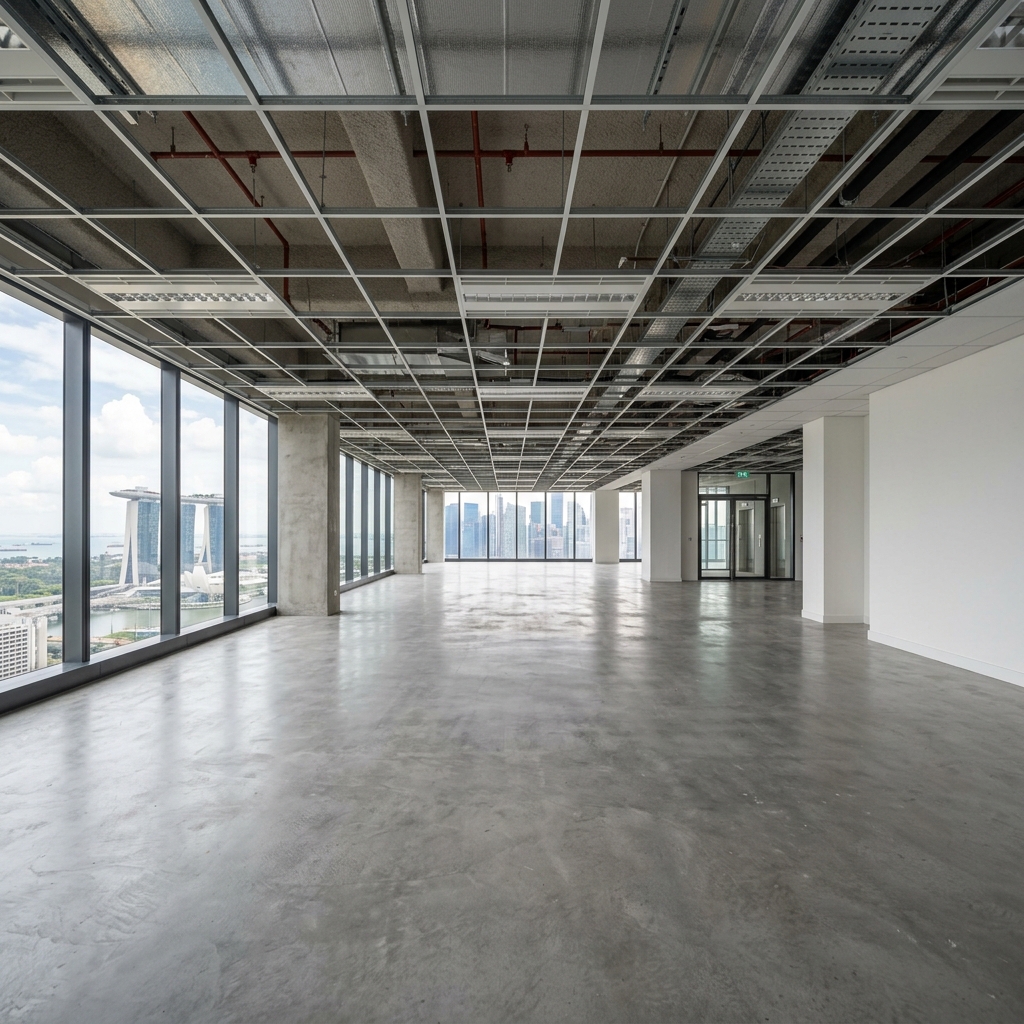
(Note: Rates in Grade A CBD buildings like Marina Bay Financial Centre may carry a 15-20% premium due to strict after-hours access rules and mandatory exclusive lift padding).
Itemized Component Breakdown
| Reinstatement Task | Estimated Cost Range (SGD) | Important Considerations |
| : | : |
3. The 3 Biggest Landlord & MCST Disputes (And How to Avoid Them)
Reinstatement is notorious for disputes between tenants and landlords. Here are the three most common traps we see companies fall into, and how to protect yourself.
Trap 1: The “Make Good” Discrepancy
Your contract says you must “make good” the premises. To you, that means patching holes and sweeping the floor. To the landlord, it means a fresh coat of premium paint, chemical washing of the floor, and replacing the main door lock.
How to avoid it: Dig out your original Condition Report (the photos you signed on Day 1 of your lease). Your legal obligation is to return it to that specific condition—nothing more, nothing less. A professional reinstatement contractor will demand to see this report to match the exact handover specs.
Trap 2: The Nominated Sub-Contractor (NSC) Monopoly
Some strict building managements (especially in shopping malls and Grade A offices) will force you to use their “Nominated Sub-Contractors” for Fire Alarm and Air-Conditioning (ACMV) works. These NSCs often charge 2x to 3x the market rate because they know you have no choice.
How to avoid it: You cannot bypass the NSC entirely, but a smart main contractor will manage them tightly. We often handle the demolition and general works at direct-contractor pricing, while coordinating seamlessly with the landlord’s NSC to ensure you aren’t overcharged for overlapping scopes.
Trap 3: The Ghosting Contractor (Forfeited Deposit)
Many companies hire the cheapest “handyman” flyer they find in their mailbox. This handyman promises to do the job for half the price. However, when the MCST demands detailed Risk Assessments, Method Statements, and a hefty Contractor’s Deposit before allowing entry, the handyman disappears. You miss your handover deadline, and the landlord legally confiscates your $30,000 security deposit.
How to avoid it: Only hire BCA-Registered and BizSAFE 3 certified direct builders.
5. Navigating the Red Tape: MCST Approvals and FSSD Compliance
The actual physical hacking of your office is only 50% of the battle. The other 50% is paperwork. Singapore building managements are incredibly strict, and failure to comply will result in “Stop Work Orders”.
What Your Contractor Must Submit to the MCST:
1. Method Statement: A detailed step-by-step document explaining exactly how the ceiling will be dropped, how glass will be shattered safely, and how dust will be contained.
2. Risk Assessment (RA): A mandatory MOM (Ministry of Manpower) document detailing hazard mitigation (e.g., preventing electrocution during live wire termination).
3. Letter of Undertaking & Deposit: The contractor usually must place a $1,000 – $3,000 refundable cheque deposit to the building management to cover potential damages to public corridors.
4. Worker Work Permits: Submitting the NRICs and valid Work Permits of all foreign workers to building security for pass creation.
The FSSD (Fire Safety) Hurdle
If your original renovation involved dropping fire sprinklers to accommodate a false ceiling, or adding partition rooms that required new smoke detectors, these must be reversed.
Only a registered Fire Safety Engineer (FSE) or specialized contractor can alter these lines, drain the fire pipes safely, and submit the Notice of Completion to the Singapore Civil Defence Force (SCDF). If your contractor damages a live sprinkler head, it will trigger the building alarm, flood your office, and result in fines exceeding $10,000.
| : |
| **Phase 1: Site Survey & Quoting** | Days 1 – 3 | On-site inspection, reviewing the lease agreement, issuing final quotation. |
| **Phase 2: Paperwork & MCST Approval** | Days 4 – 10 | Drafting Risk Assessments, submitting deposits, waiting for management approval. |
| **Phase 3: Site Protection & Demolition** | Days 11 – 13 | Laying protective floor boards in corridors, hacking partitions, dismantling ceilings. |
| **Phase 4: MEP & Sprinkler Reversal** | Days 14 – 16 | Terminating electricals, reinstating fire sprinklers and AC ducts. |
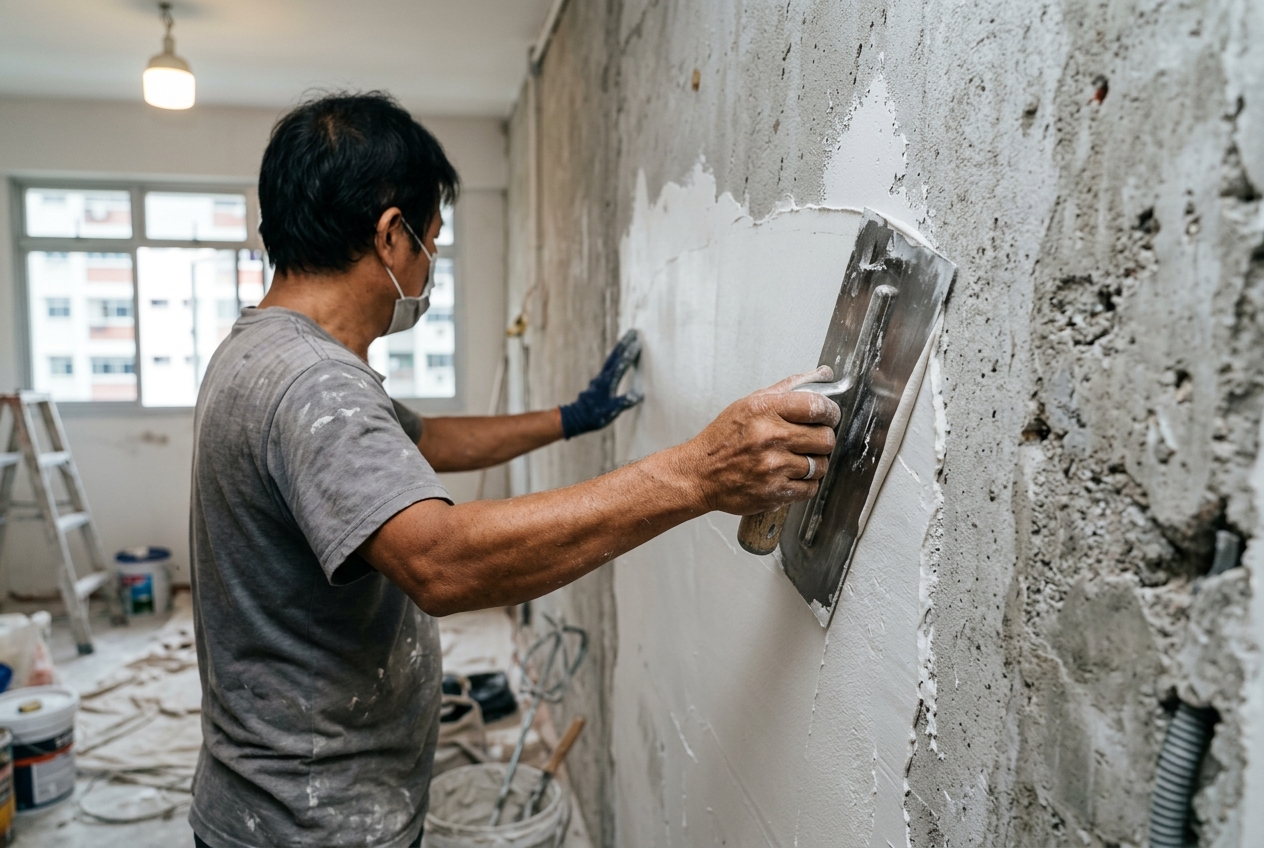
| **Phase 5: Making Good & Painting** | Days 17 – 18 | Patching slab holes, floor grinding, painting walls back to original color. |
| **Phase 6: Chemical Wash & Handover** | Day 19 | Deep cleaning, final joint inspection with the landlord/building manager. |
Total Safe Lead Time: 3 to 4 Weeks before your lease expiry date.
8. Your Pre-Handover Checklist
Before you sign off with your contractor and hand the keys back to the landlord, physically walk the site and check these 5 things:
—
Conclusion: Protect Your Deposit with Nouvelle Workz
Commercial reinstatement is a high-stakes, time-sensitive project. As a business owner, your focus should be on transitioning your team to your new office, not arguing with building management over fire sprinkler compliance or haggling with rogue contractors.
At Nouvelle Workz, we are a BCA-registered and BizSAFE 3 certified direct commercial builder. We have successfully completed hundreds of flawless office and retail reinstatements across Singapore’s strictest commercial buildings. We handle 100% of the MCST paperwork, guarantee zero hidden VOs, and ensure you get your full security deposit back on time.
Don’t risk your deposit.
Ready for a Stress-Free Handover?
Send us your floor plan and reinstatement requirements for a free, no-obligation site survey and direct-contractor quotation.