
A renovation warranty in Singapore is a legally binding contractual obligation where interior design firms or contractors pledge to rectify structural, material, or workmanship defects for a specified period, typically ranging from one to five years post-handover. Beyond this basic definition, homeowners must navigate complex exclusions, void clauses, and hidden costs that often render superficial warranties useless in practical dispute scenarios.
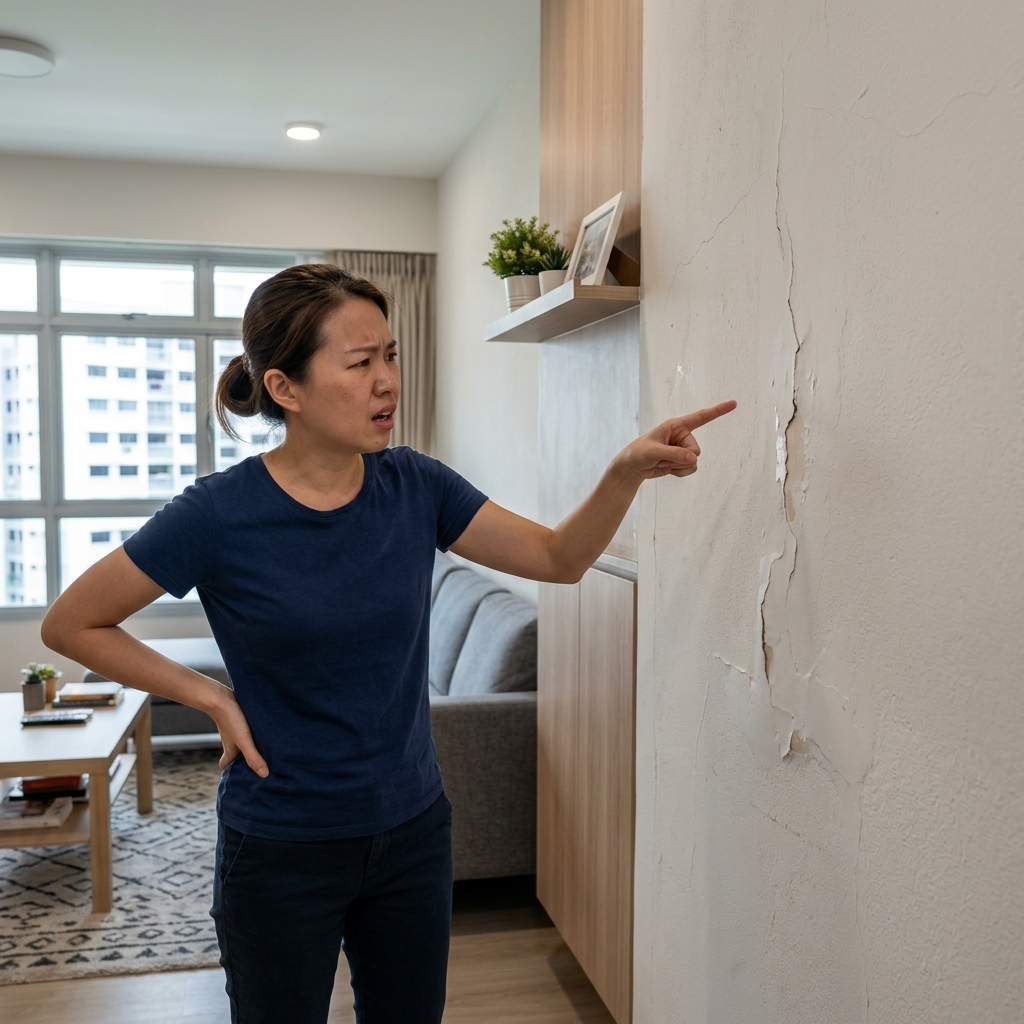
The landscape of home renovations in Singapore has evolved significantly, but one area that continues to trip up homeowners in 2026 is the fine print of renovation warranties. Promising long-term peace of mind, many interior design (ID) firms market comprehensive coverage that sounds perfect on paper. However, the reality of claiming these warranties when a defect actually surfaces often tells a very different story. Homeowners frequently find themselves bogged down in technicalities, hidden clauses, and contractor disputes that can make the process more stressful than the renovation itself. In this comprehensive guide, we dive deep into the specific traps to avoid when navigating renovation warranties, ensuring your investment is genuinely protected for years to come.
1. The “Workmanship vs. Materials” Trap
One of the most common pitfalls homeowners encounter is failing to distinguish between workmanship warranties and material warranties. A contractor might proudly advertise a blanket “5-year warranty,” but this often only covers their direct workmanship—such as the physical act of installing a cabinet or laying a tile. If the cabinet hinges rust, the quartz countertop discolors, or the vinyl flooring peels due to material degradation, the contractor may simply point you to the original manufacturer.
The trap here is that manufacturer warranties might have already expired, or they might contain numerous exclusions of their own. Furthermore, claiming a manufacturer warranty often requires original receipts and warranty cards that the ID firm might not have handed over. To safeguard yourself, you must demand a clear, written breakdown of what aspects fall under workmanship and which are relegated to third-party material suppliers. Make sure you receive the original manufacturer warranty cards for all high-value fixtures, appliances, and materials used in your home during the handover process.
“Always insist on itemized warranty documentation during the handover phase. If an ID firm verbally promises ‘everything is covered,’ that is a massive red flag. Real warranties have specific scopes, durations, and claim procedures written in black and white.” — James, Founder of Nouvelle Workz
2. The Hidden “Call-Out Fee” Clause
Imagine discovering a leaking pipe under your newly installed kitchen sink just a few months after moving in. You confidently call your contractor, assuming the repair will be entirely free under your much-touted warranty. However, when the plumber arrives, you are hit with a surprise $150 “transport and assessment fee.” This is a notorious trap hidden in the depths of many standard renovation contracts across Singapore.
Understanding Transportation and Assessment Costs
While the actual repair work or replacement parts might technically be free as promised, rogue firms offset their obligations by charging exorbitant call-out fees. In some cases, these fees are higher than simply hiring an external handyman yourself. Before signing your renovation contract, explicitly clarify if transportation, diagnostic, and labor costs are fully covered during the warranty period. A genuine, premium warranty will explicitly state that there are zero out-of-pocket costs for legitimate defects.

3. Structural Alterations Voiding Coverage
A warranty is a delicate legal agreement that can be instantly voided if the homeowner breaches certain conditions. A classic trap is the “unauthorized modification” clause. For instance, if you hire a third-party electrician to add a smart power socket to a custom TV console originally built by your main ID, the ID may instantly void the warranty for the entire carpentry unit. They will argue that the structural integrity was compromised by an unapproved vendor.
If you plan to make subsequent upgrades or employ separate specialized vendors (such as smart home installers or specialized lighting technicians), coordinate this closely with your primary contractor during the initial design phase. Getting their written approval ensures these additions do not inadvertently nullify your hard-earned coverage.
4. The “Normal Wear and Tear” Loophole
Perhaps the most subjective and heavily abused clause in any renovation warranty is the exclusion of “normal wear and tear.” When a defect arises—such as discolored tile grout, sagging cabinet doors, or hairline cracks in the plaster wall—contractors often dismiss it as natural degradation rather than a flaw in their workmanship.
Defining Acceptable Standards
To combat this ambiguity, request that the contract clearly defines what constitutes a legitimate defect versus expected wear and tear. For example, a minor settlement crack in a new partition wall within the first three months should undeniably be rectified free of charge, whereas a scratch on a vinyl floor after two years of heavy foot traffic and furniture movement is genuinely wear and tear. Clear definitions prevent the contractor from using this loophole to escape their responsibilities.
| Defect Category | Defect vs. Wear & Tear Examples | Standard Warranty Action |
|---|---|---|
| Carpentry Hardware (Hinges/Runners) | Rust within 6 months (Defect) vs. Slight stiffness after 3 years (Wear & Tear) | Free replacement within 1 year |
| Plumbing & Piping | Active leak at joints (Defect) vs. Naturally discolored PVC (Wear & Tear) | Immediate free repair (within warranty) |
| Painting & Wall Finishes | Peeling/blistering paint (Defect) vs. Everyday scuff marks (Wear & Tear) | Free touch-up within 3-6 months |
| Electrical Works | Tripping breakers under normal load (Defect) vs. Blown lightbulb (Wear & Tear) | Immediate diagnosis & rewiring |
5. The Disappearing Contractor Phenomenon
A shiny 10-year warranty certificate is entirely worthless if the issuing company goes out of business in two years. The interior design and renovation industry in Singapore is notoriously volatile and highly competitive. Smaller firms frequently fold, liquidate, or deceptively rebrand to escape mounting liabilities and bad reviews. When a firm legally dissolves, its warranty obligations disappear into thin air.
This emphasizes the paramount importance of performing rigorous due diligence on the financial health, corporate structure, and track record of the ID firm before engaging them. Established firms with a long operating history, a strong physical presence (like an actual showroom, not just a co-working space), and valid CaseTrust accreditation are exponentially more likely to honor long-term warranty commitments.

6. Subcontractor Finger-Pointing and Deflection
Most interior design firms operate essentially as project managers, farming out the actual physical labor to a complex web of specialized subcontractors, including independent electricians, plumbers, and carpenters. When a complex defect occurs—such as a concealed water leak slowly ruining a custom built-in wardrobe—the blame game begins. The plumber might blame the carpenter for drilling into a pipe, and the carpenter might blame the plumber for poor pipe sealing. Meanwhile, the ID firm acts as a passive mediator, delaying the repair indefinitely while they figure out who has to absorb the cost.
Your contract must explicitly stipulate that the primary ID firm assumes full, uncompromising liability as the single point of contact for all warranty claims, regardless of which subcontractor is ultimately at fault. They must resolve the internal dispute on their own time and budget, not yours.
“The hallmark of a premium renovation service is accountability. If there is a defect, the main contractor must step up immediately to fix it, rather than pushing the blame onto external vendors. Client peace of mind should never end at the handover.” — James, Founder of Nouvelle Workz
7. Lack of a Formal Defect Liability Period (DLP)
The Defect Liability Period (DLP) is the critical initial window post-renovation where the contractor is obligated to promptly fix any teething issues that arise as the newly renovated home settles. However, some contracts vaguely blend the DLP into the general warranty, which often leads to immense confusion about response times and coverage depth.
You must ensure your contract clearly defines a specific DLP—usually spanning between 3 to 12 months—during which response times are legally required to be rapid, and absolutely no call-out fees or material costs apply. Post-DLP, the standard long-term warranty conditions can kick in, but this initial phase must offer comprehensive, blanket protection to iron out all post-construction quirks.
8. The Burden of Proof: Documenting Everything
In the event of a severe dispute, the burden of proof inevitably falls upon the homeowner. If you claim a defect is due to poor workmanship, but you lack documentation of the materials used, the installation process, or the state of the item at handover, you will face an uphill battle. Unscrupulous contractors rely on homeowners having poor record-keeping.
Maintain a meticulous digital folder containing all signed contracts, appended variations orders (VOs), material selection sign-offs, and most importantly, high-resolution photographs and videos taken during the official handover phase. Should a warranty claim ever escalate to a formal tribunal or the Small Claims Tribunal, this chronological evidence will be your strongest asset.
Final Thoughts: Protecting Your Home Investment
Navigating the intricate and sometimes opaque web of renovation warranties in Singapore requires a meticulous eye for detail, a proactive approach, and a firm understanding of standard industry practices. Do not be swayed by flashy marketing promises of decade-long coverages without taking the time to read the fine print. By demanding itemized inclusions, avoiding hidden call-out fees, ensuring clear defect definitions, and partnering exclusively with reputable, transparent contractors, you can guarantee that your beautifully renovated home remains a source of joy, fully protected against unexpected structural and material defects.
Ready to Transform Your Space?
Explore our top-rated HDB & Residential Renovation Services in Singapore, or view our latest Project Portfolio to see our workmanship.
Contact our expert team at Nouvelle Workz for a direct contractor quote and avoid ID markups.