
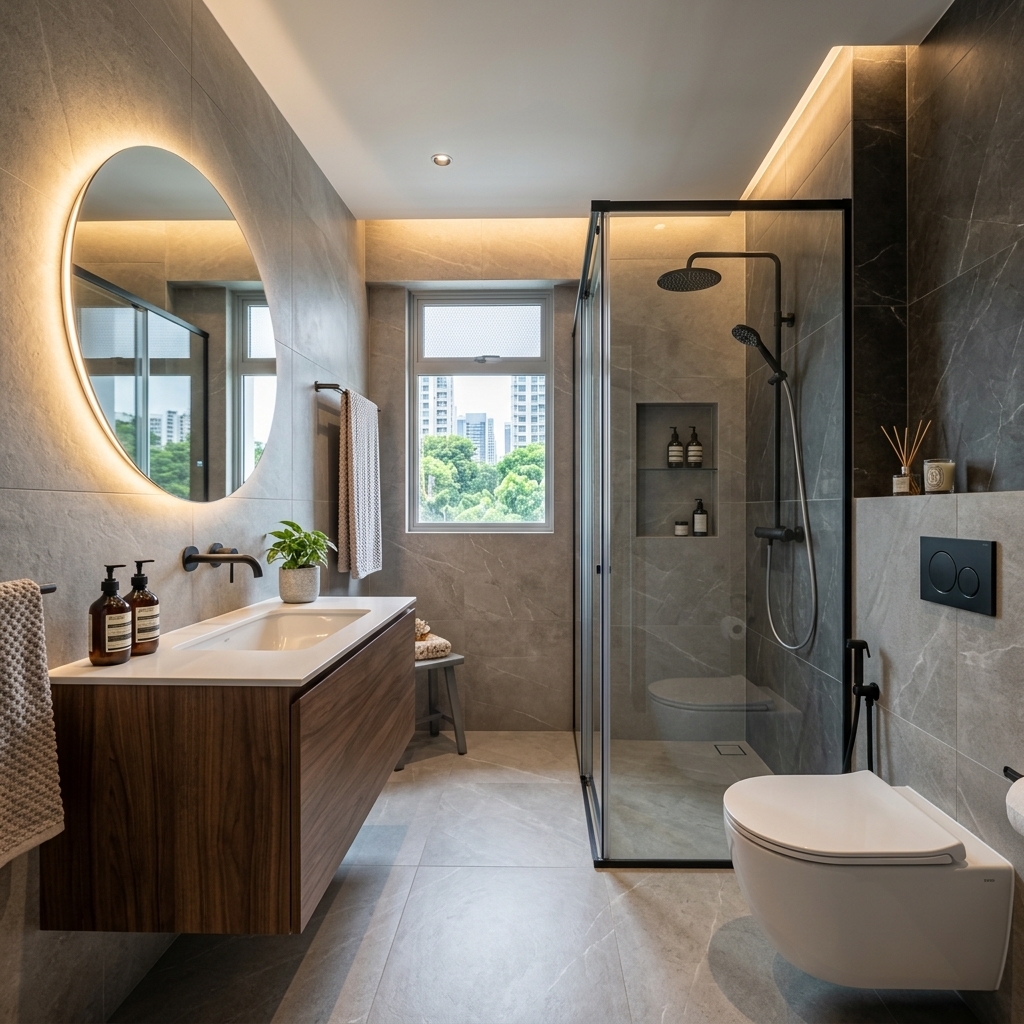
1. Hacking vs Overlay: The Ultimate Dilemma
When planning an HDB or BTO bathroom renovation, homeowners face a critical choice: should you hack the existing tiles or overlay them? This decision dictates not only your immediate renovation budget but also your long-term peace of mind regarding waterproofing integrity.
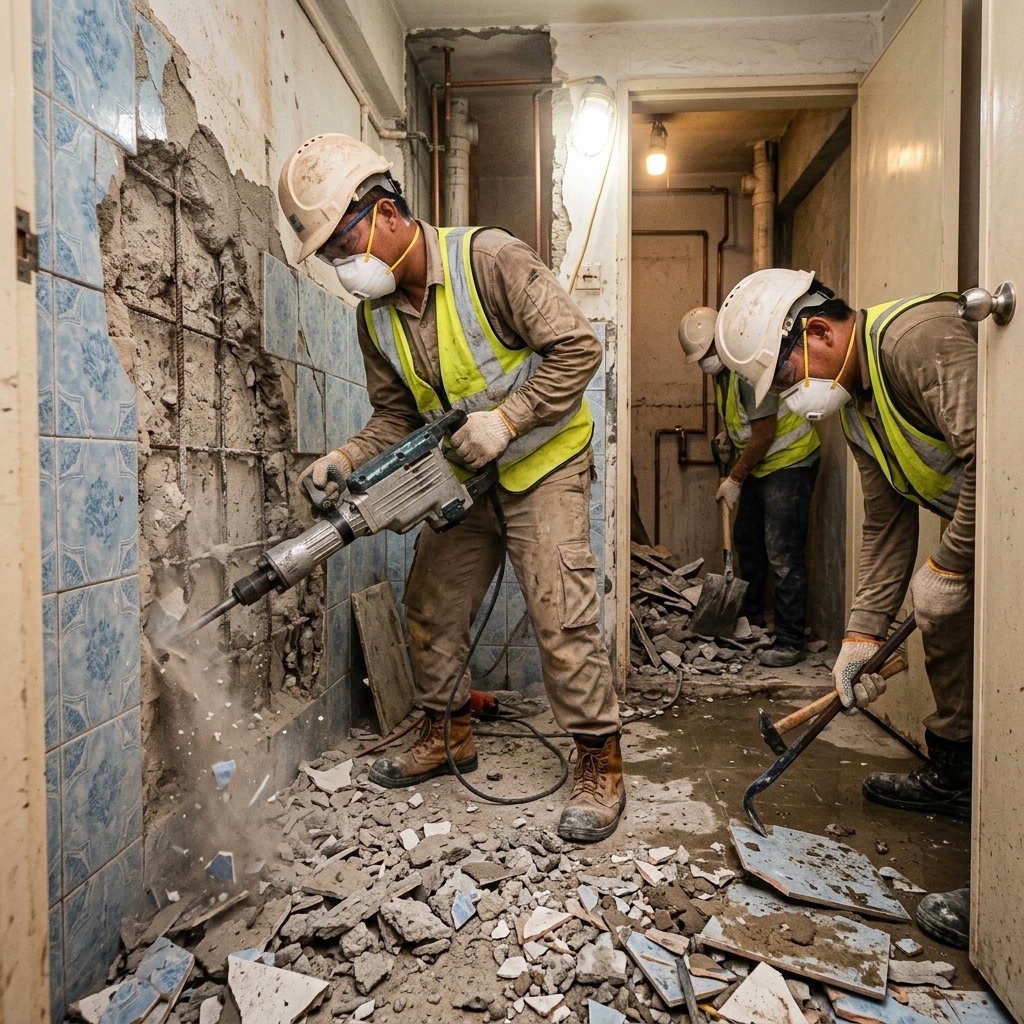
The Case for Hacking (Strictly Recommended for Resale)
Hacking involves completely removing the old wall and floor tiles down to the bare concrete substrate. Once the bare concrete is exposed, a brand-new waterproofing membrane is applied before the new tiles are laid. This is the most thorough and safest approach. Over time—typically 10 to 15 years—the original waterproofing membrane under your tiles degrades due to constant moisture and micro-vibrations in the building structure. If you are buying an older HDB resale flat, hacking is non-negotiable. Overlaying new tiles on top of a failing 15-year-old membrane is a ticking time bomb for severe inter-floor leakages.
The Case for Overlaying (Suitable for BTOs)
Overlaying means applying a special adhesive and laying new tiles directly over the existing ones. This method is significantly cheaper and faster, as it skips the dusty, noisy, and expensive demolition phase. Furthermore, you do not need to apply for a hacking permit. However, overlaying is only viable if the existing waterproofing is 100% intact and there are zero signs of water seepage or hollow tiles. This method is primarily recommended for brand new BTOs or very recent resale flats (under 5 years old) where the homeowner simply dislikes the HDB-provided tile design. Note that HDB mandates a 3-year restriction period on hacking bathroom wall and floor tiles in new BTO flats to prevent damage to the concealed waterproofing membrane.
“Many homeowners opt for cheap overlay solutions to save on upfront costs, only to face thousands of dollars in neighbor dispute claims two years later when the old membrane fails. If your resale flat is over 15 years old, always choose hacking and re-waterproofing.” — James, Founder of Nouvelle Workz.
2. BTO Bathroom: The 3-Year Tile Hacking Restriction
If you have just collected your keys to a brand new BTO flat, there is one critical HDB rule you must know: you are strictly prohibited from hacking your bathroom wall and floor tiles for the first 3 years after the block’s TOP (Temporary Occupation Permit) date. Note that the 3-year countdown starts from the block’s official completion date — not from when you collected your keys.
This restriction exists because HDB installs a professional-grade waterproofing membrane underneath the original bathroom tiles. Hacking these tiles within 3 years risks puncturing the membrane, which can cause severe water leakage into the unit below. Violating this rule can result in a fine of up to $5,000 and you will be forced to reinstate the original condition at your own cost.
What Can You Do Within the First 3 Years?
- Overlay tiles: You can lay new tiles over the existing ones using adhesive, as long as the total floor thickness does not exceed 50mm.
- Change sanitary wares: You can freely replace the toilet bowl, basin, shower set, tap fittings, and water heater without any permit.
- Install a shower screen: Adding a frameless glass shower screen does not require any hacking.
- Add vanity cabinets or mirrors: Wall-mounted accessories that do not require drilling into the floor tiles are permitted.
After the 3-Year Period
Once 3 years have passed from the TOP date, you may apply for an HDB hacking permit to fully remove and replace the bathroom tiles. However, your contractor must then apply a brand-new waterproofing membrane and conduct a mandatory 48-hour water ponding test (flooding the bathroom floor and checking for leaks) before new tiles can be laid. Always engage an HDB-registered contractor for this work.
3. Waterproofing Failure: Identifying and Fixing Toilet Leaks
Waterproofing failure is arguably one of the most stressful disputes between upper and lower floor neighbors in Singapore. Recognizing the signs early can save you from catastrophic structural damage.
Common signs of waterproofing failure include:
- Water stains or yellowish patches on the lower floor’s ceiling.
- Peeling, bubbling, or flaking paint directly underneath your bathroom.
- Actual water dripping from the ceiling during or after showers.
- Efflorescence (white, powdery mineral deposits) forming on tile grout lines.
- Musty odors that persist despite good ventilation.
The Goodwill Repair Assistance (GRA) Scheme
HDB guidelines explicitly state that for inter-floor leakages, both the upper and lower floor owners have a mutual responsibility to cooperate. Under the Goodwill Repair Assistance (GRA) scheme, if an investigation determines that the leak is due to the natural wear and tear of the floor slab’s waterproofing membrane, HDB will co-pay 50% of the repair costs, while the remaining 50% is shared equally between the upper and lower floor flat owners (25% each). However, if the leak is caused by recent renovation works by the upper floor owner, the upper floor owner bears 100% of the liability and repair cost.
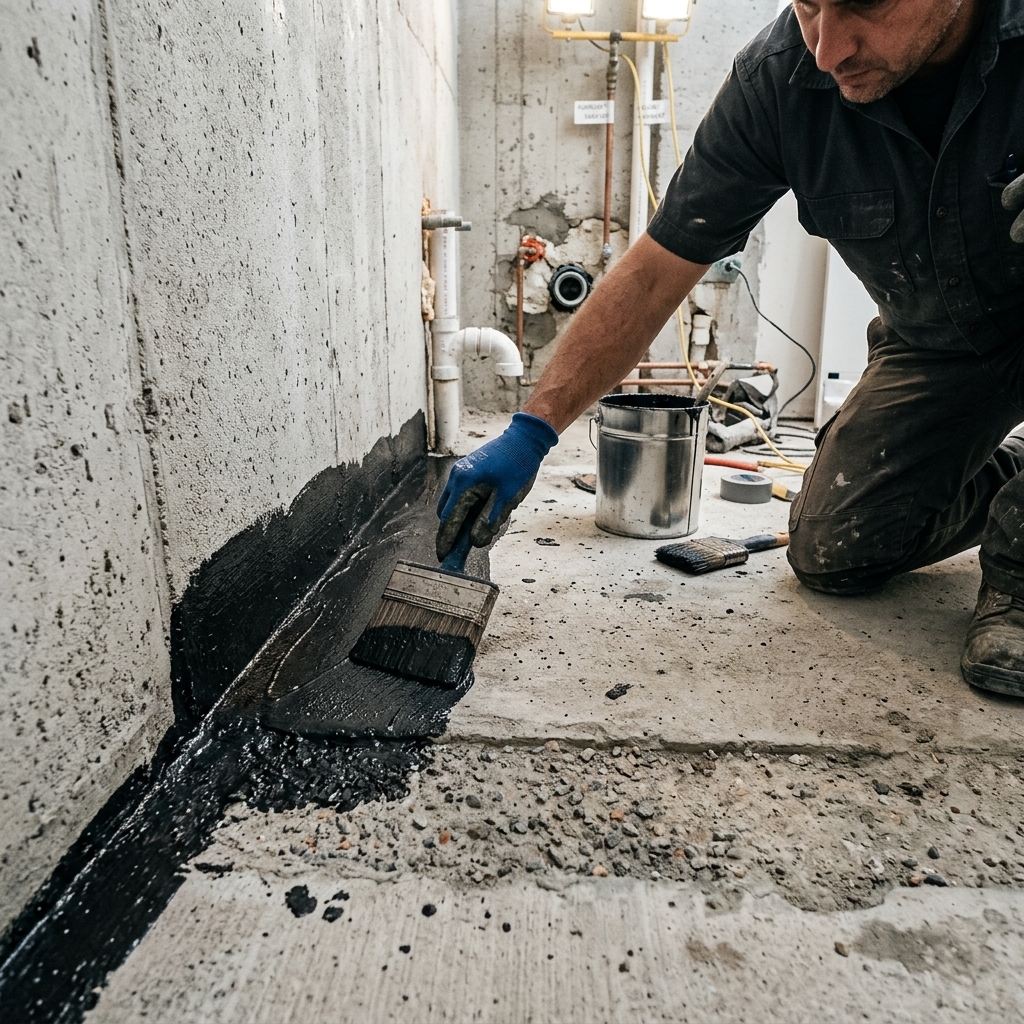
PU Injection vs Full Hacking
When a leak is detected, there are two primary repair methods:
1. Polyurethane (PU) Injection: This is a highly effective, non-destructive repair method. Expanding PU resin is injected under high pressure directly into the concrete cracks from the lower floor’s ceiling. The resin reacts with moisture, expands, and forms a watertight seal, effectively stopping the leak without requiring the upper floor owner to hack their tiles. This is often the preferred first line of defense for localized leaks.
2. Full Hacking and Re-Waterproofing: If the waterproofing membrane has universally degraded or if PU injection fails to resolve the issue, a full re-screeding is required. This involves the upper floor owner hacking away their bathroom floor tiles, applying a new liquid-applied polyurethane or cementitious waterproofing membrane across the entire floor and up the walls (upturn), conducting a flood test, and then laying new tiles. While expensive and highly disruptive, it is the only permanent fix for severe degradation.
4. Typical Costs for HDB Bathroom Renovation (2026 Guide)
Budgeting for an HDB toilet renovation requires factoring in demolition, plumbing, waterproofing, and tiling. Beware of exceptionally low quotes, as they often utilize substandard waterproofing chemicals or skip the mandatory water ponding (flood) tests. Below is an estimated breakdown for a standard HDB bathroom overhaul in 2026.
| Service / Material | Estimated Cost (SGD) |
|---|---|
| Hacking of Existing Floor & Wall Tiles (inc. disposal) | $800 – $1,200 |
| Waterproofing Membrane Application (2 coats + upturn) | $350 – $550 |
| Plumbing & Piping Works (Concealed/Exposed copper/PPR pipes) | $600 – $900 |
| Supply & Lay New Floor and Wall Tiles (Ceramic/Homogeneous) | $1,800 – $2,500 |
| Installation of Sanitary Wares (WC, Basin, Heater, Accessories) | $350 – $600 |
| Shower Screen Installation (Tempered Glass) | $400 – $700 |
| PU Injection Repair (Targeted Fix for existing leaks) | $300 – $800 per injection point |
5. Spalling Concrete and Common Internal Leaks
Beyond the floor membrane, homeowners must watch out for spalling concrete—where moisture permeates the ceiling slab, causing the embedded steel rebars to rust and expand. This expansion forces the concrete surface to crack and fall off in chunks, posing a severe safety hazard. This is extremely common in older HDB bathrooms due to poor ventilation and constant high humidity.
Unlike inter-floor leakages, HDB considers spalling concrete as internal wear and tear, meaning the responsibility for repair falls entirely on the flat owner. Prompt repair using specialized polymer-modified cement (after cleaning and applying anti-rust coatings to the exposed rebars) is crucial before the structural integrity of the floor slab is compromised.
Additionally, distinguish between inter-floor leaks (waterproofing failure) and internal plumbing leaks (e.g., a burst concealed pipe or a leaking water heater joint). Internal plumbing leaks are solely the responsibility of the homeowner to fix and can often lead to massively inflated utility bills if left unaddressed.
Need Professional HDB Toilet Renovation?
Explore our top-rated HDB & Residential Renovation Services in Singapore, or view our latest Project Portfolio.
Contact Nouvelle Workz for a direct contractor quote and long-lasting waterproofing solutions.