
Cafe and coffee shop interior renovation in Singapore encompasses the specialized commercial fit-out of retail spaces, integrating custom front espresso bar carpentry with dedicated high-voltage electrical circuits, PUB-compliant water filtration drainage, and mandatory Singapore Food Agency licensing. Achieving a compliant 4-to-6-week handover requires precision coordination between M&E trades and direct joinery fabricators.
Opening a boutique specialty cafe, matcha bar, or artisan bakery in Singapore is a high-stakes commercial venture. With commercial rental rates in central shophouses and shopping malls ranging from $12 to $35 psf, every single day spent under construction represents lost revenue and burning overheads. Commercial landlords typically grant only 4 to 6 weeks of rent-free fit-out period before the rent meter starts ticking.
Unlike standard retail shops, coffee shops are complex hybrid spaces. The front-of-house bar must balance customer-facing aesthetics with intense mechanical, electrical, and plumbing (M&E) engineering. A single plumbing miscalculation under the espresso machine or a delayed Singapore Food Agency (SFA) food shop inspection can stall your grand opening by weeks. In this 2026 guide, Nouvelle Workz breaks down the critical stages of cafe interior fit-out, bar counter ergonomics, regulatory compliance, and realistic costs.
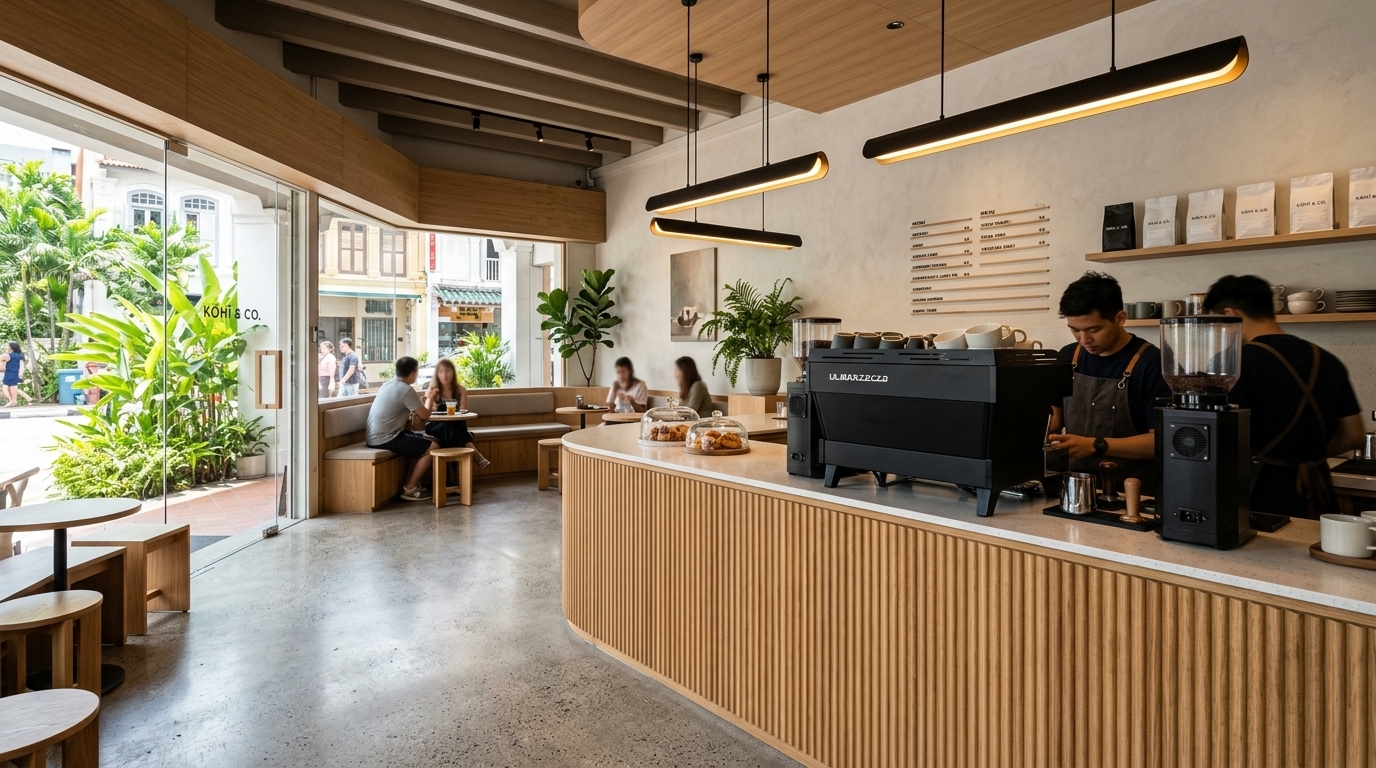
1. The Coffee Bar Counter: Ergonomics & Trade Integration
The espresso bar is both the visual centerpiece of your cafe and your primary revenue-generating engine. A poorly engineered coffee bar leads to barista fatigue, bottlenecked drink output, and dangerous floor spills.
Dual-Height Countertop Architecture
A professional cafe counter is almost never built as a single flat slab. We fabricate commercial bar counters using a tiered two-level structure:
- Customer Service / POS Counter (1050mm to 1100mm height): Provides a comfortable standing height for transactions, menu displays, pastry display cases, and condiment stations while shielding under-counter clutter from view.
- Barista Working Deck (850mm to 900mm height): Positioned at the ergonomic sweet spot for tamping espresso portafilters, steaming milk pitchers, and operating commercial grinders without wrist strain.
Countertop Material Selection: Sintered Stone vs Stainless Steel
Standard wood laminate or natural marble should never be used on a commercial coffee bar. Hot milk residue, acidic coffee oils, and abrasive metal portafilters will destroy them within months. For modern cafes, we recommend 12mm Sintered Stone or SUS304 Food-Grade Stainless Steel. Sintered stone delivers warm architectural luxury with zero porosity, while stainless steel wet areas around the rinse pitcher sink ensure total hygienic durability.
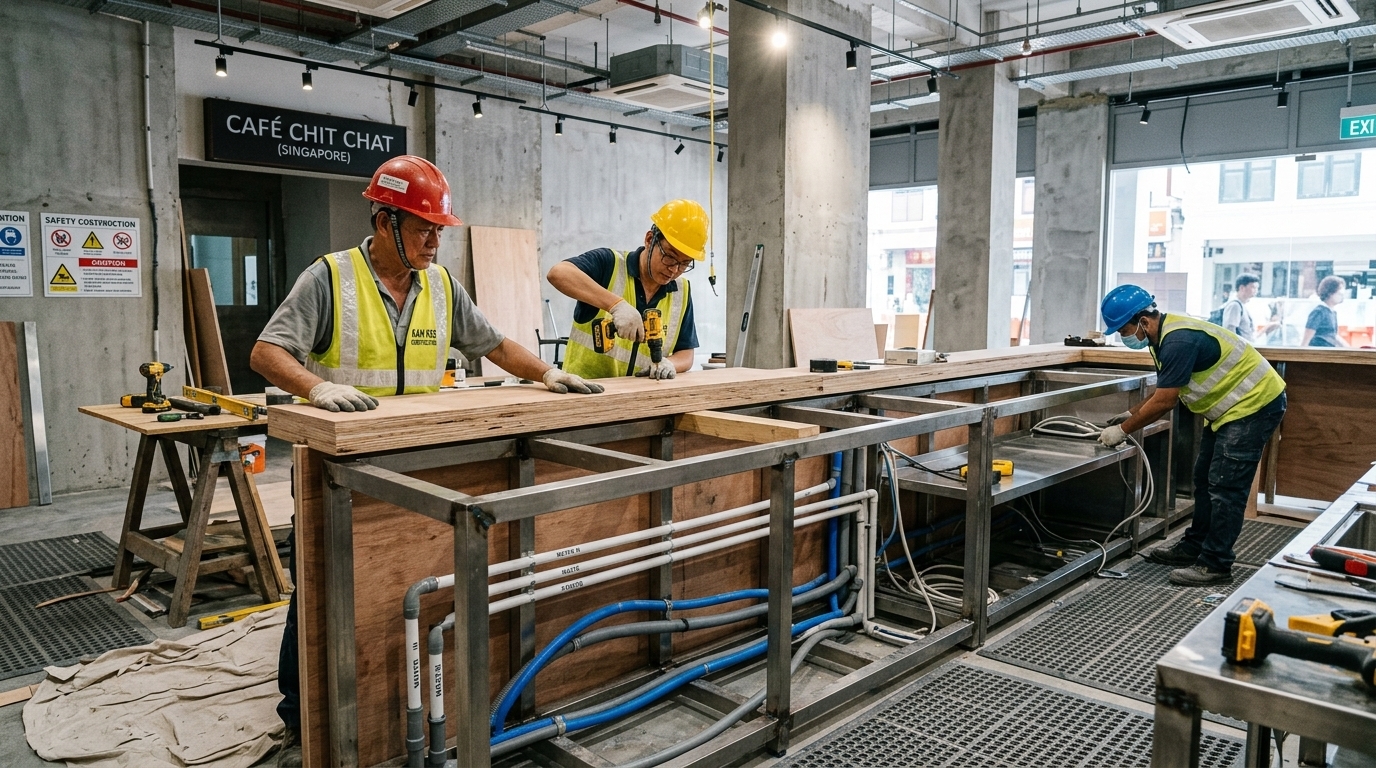
2. Essential M&E Engineering: Power, Water & Drainage
Commercial espresso machines and high-speed blenders draw immense electrical currents and require pristine water pressure. The table below outlines the core M&E specifications required under Singapore building standards.
| Equipment Station | Electrical Requirements | Plumbing & Water Lines | Drainage & Waste Spec |
|---|---|---|---|
| Commercial Espresso Machine (2-3 Group) | Single-Phase 32A or 3-Phase 20A isolator | 1/2″ cold water line with reverse osmosis / filtration | Dedicated 50mm heat-resistant UPVC gravity waste |
| Pitcher Rinser & Sink Station | Not applicable | High-pressure regulated line (min 2.5 bar) | Direct connection to under-counter grease trap |
| On-Demand Coffee Grinders (2-3 Units) | Dedicated twin 13A switch socket outlets | Not applicable | Not applicable |
| Under-Counter Chiller & Ice Machine | Dedicated 13A/15A socket with surge protection | Filtered cold water connection (Ice machine) | Continuous indirect floor trap discharge |
“Many cafe founders fall in love with beautiful 3D mood boards without checking the landlord’s incoming electrical capacity. A three-group commercial espresso machine paired with an ice maker, water boiler, and air conditioning can easily require 60A to 100A three-phase power. If your shophouse unit only has 30A single-phase, you face an unexpected $8,000 to $15,000 SP Power electrical upgrade. As a direct contractor, our first step before signing is always an on-site DB box power audit.”
— James Liang, Founder & Managing Director of Nouvelle Workz Pte. Ltd.
3. Navigating Singapore Regulatory Approvals (SFA, PUB & SCDF)
You cannot legally pour a single latte in Singapore without passing multiple statutory agency hurdles. Nouvelle Workz coordinates all compliance submissions to ensure zero inspection delays:
- Singapore Food Agency (SFA) Food Shop Licence: Requires submitting scaled layout plans illustrating clear separation between clean prep areas, waste washing sinks, grease trap locations, and food storage shelves. Sinks must feature hands-free or lever-operated taps.
- PUB Grease Trap Compliance: Even if you only serve coffee, pastries, and light brunch, milk fats and butter wash off dishes into wastewater. Under PUB regulations, all commercial sinks must route through an approved portable or in-ground grease trap with a minimum 25-50 liter capacity.
- SCDF Fire Safety & Sprinkler Relocation: Adding partition walls, enclosed booths, or decorative hanging rafts requires maintaining a minimum 500mm clearance from fire sprinkler heads. Any sprinkler relocation must be endorsed by a Qualified Person (QP) or licensed fire contractor.
- BCA Barrier-Free Accessibility: Commercial cafes exceeding certain seating thresholds must provide wheelchair-accessible main entrances and ramp gradients complying with the BCA Accessibility Code.
4. 2026 Cafe Fit-Out Cost Guide in Singapore
Cafe renovation costs vary significantly depending on unit condition (bare shell vs partially fitted) and the scale of custom carpentry. The table below outlines typical commercial fit-out packages in Singapore.
| Cafe Format & Floor Area | Average Total Cost | Price Per Sq Ft (psf) | Typical Fit-Out Timeline |
|---|---|---|---|
| Express Kiosk / Takeaway Bar (150 – 300 sqft) | $24,000 – $38,000 | $110 – $140 psf | 3 to 4 Weeks |
| Boutique Specialty Cafe (500 – 900 sqft) | $52,000 – $88,000 | $95 – $125 psf | 4 to 6 Weeks |
| Full-Concept Cafe & Roastery (1,200 – 2,000 sqft) | $115,000 – $185,000 | $85 – $115 psf | 6 to 8 Weeks |
*Note: Costs cover hacking, masonry, plumbing, electrical rewiring, custom bar joinery, banquette booth seating, flooring, painting, and basic lighting. Commercial espresso equipment, grinders, and landlord security deposits are excluded.
Fast-Track Your Cafe Opening with a Direct Contractor
Explore our licensed F&B and Cafe Renovation Services and full-scale Commercial Renovation Solutions, or inspect our past hospitality projects in our Project Portfolio.
Contact Nouvelle Workz for a direct commercial quotation with in-house joinery fabrication and fast-track handover guarantees.
Frequently Asked Questions (FAQ)
How long does a typical cafe renovation take in Singapore?
A standard 600 to 900 sqft cafe interior fit-out usually takes 4 to 6 weeks. To meet landlord rent-free period deadlines, Nouvelle Workz begins fabricating all custom bar counters and banquette seating in our workshop while on-site wet trade hacking, tiling, and electrical conduit works take place simultaneously.
Do I need a grease trap if I only sell coffee and light pastries?
Yes. Under PUB regulations, any commercial food and beverage premises that washes preparation utensils, milk pitchers, or serving ware must install an approved grease trap to prevent fats, oils, and grease (FOG) from clogging public sewers.
Can a direct builder assist with SFA food shop licence submissions?
Yes. Nouvelle Workz drafts and submits scaled layout floor plans complying with SFA hygiene criteria, including designated dishwashing sink locations, grease trap layouts, pest-proof ceilings, and impervious wall claddings required for final inspection sign-off.
What electrical power supply is required for a commercial espresso machine?
Most dual or three-group commercial espresso machines require a dedicated 32A single-phase or 20A three-phase rotary isolator switch. They cannot run off standard 13A household wall plugs due to the heavy wattage drawn by multi-boiler heating elements.