
F&B kitchen exhaust hoods and grease traps in Singapore must strictly adhere to both NEA (National Environment Agency) health standards and SCDF (Singapore Civil Defence Force) fire safety regulations. Failure to install a compliant mechanical exhaust system with electrostatic precipitators (ESP) or a certified grease interceptor will result in your food shop license being rejected, delaying your restaurant’s grand opening.
Opening a restaurant, cafe, or central kitchen in Singapore is an exciting venture, but the renovation process is vastly different from residential or standard office projects. The single biggest hurdle F&B owners face is passing the mandatory NEA and SCDF inspections.
At the heart of these inspections are two critical components: the Kitchen Exhaust System and the Grease Trap. If these are not calculated, designed, and installed correctly by an experienced commercial contractor, you risk catastrophic delays. Here is the 2026 technical guide to F&B kitchen compliance.
1. SCDF & NEA Rules for Kitchen Exhaust Hoods
If your F&B outlet involves any form of open-flame cooking, deep frying, or heavy oil usage, NEA mandates a dedicated mechanical exhaust system. You cannot simply install a standard residential cooker hood.
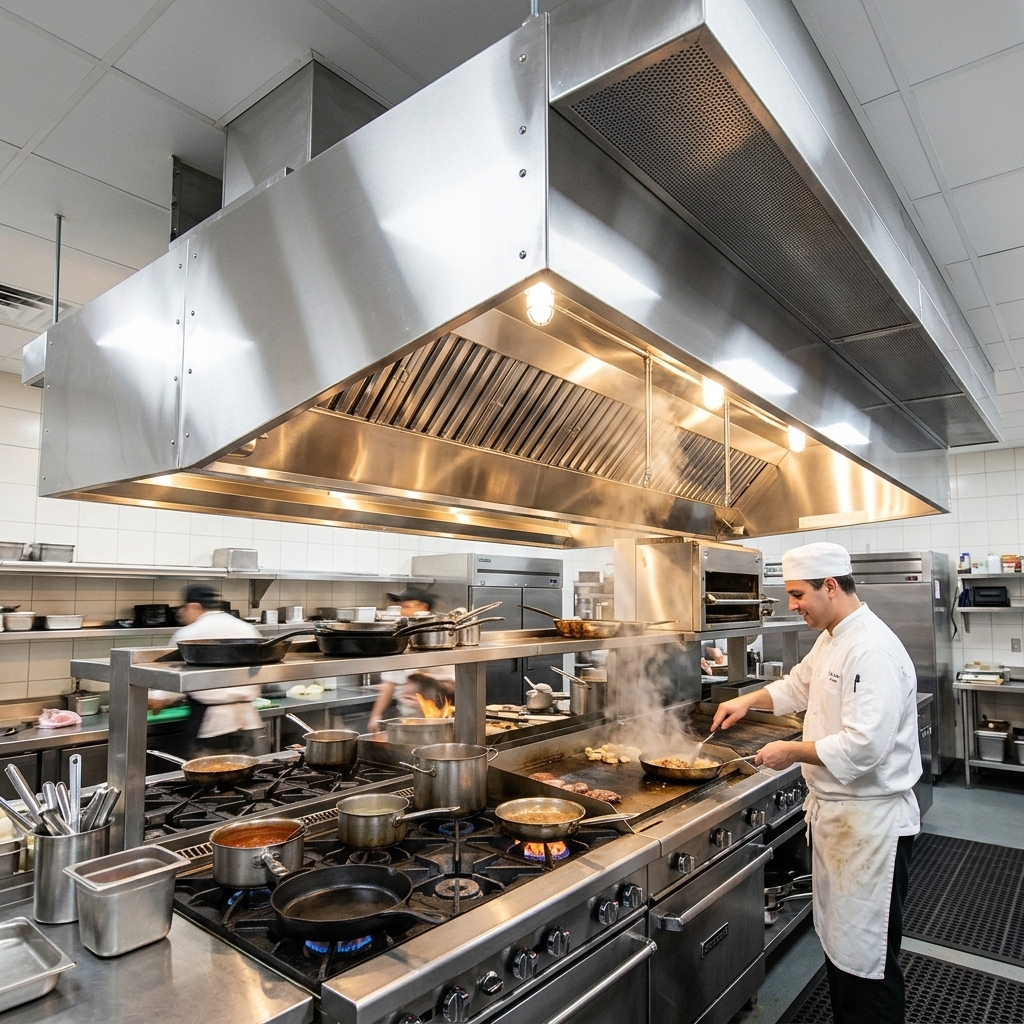
Key 2026 Compliance Requirements:
- Exhaust Discharge Location: Exhaust air must be discharged at the roof level, extending at least 3 meters above the roofline. If roof access is impossible, you must install heavy-duty Electrostatic Precipitators (ESP) and Carbon Filters to scrub the air of smoke and grease before discharging it at a low level (subject to MCST and NEA approval).
- Fire Suppression System: SCDF requires commercial exhaust hoods to be fitted with an automatic fire suppression system (e.g., Ansul System). This system must automatically cut off the gas supply if a fire is detected.
- Ducting Material: Exhaust ducting must be made of fire-rated bare steel or stainless steel, with zero combustible materials used in the joints.
Estimated Exhaust System Costs (2026)
| System Type | Estimated Cost |
|---|---|
| Basic Stainless Steel Hood (No ducting) | $1,500 – $3,000 |
| Standard Ducting to Roof (Subject to length) | $3,000 – $6,000 |
| ESP Unit & Carbon Filter System (For low discharge) | $4,500 – $8,500+ |
| Ansul Fire Suppression System | $2,500 – $4,500 |
2. Grease Trap Interceptor Installation
PUB and NEA mandate that all F&B establishments must have an approved grease trap (interceptor) installed. This device prevents fats, oils, and grease (FOG) from entering the public sewage system, which would otherwise cause massive blockages.
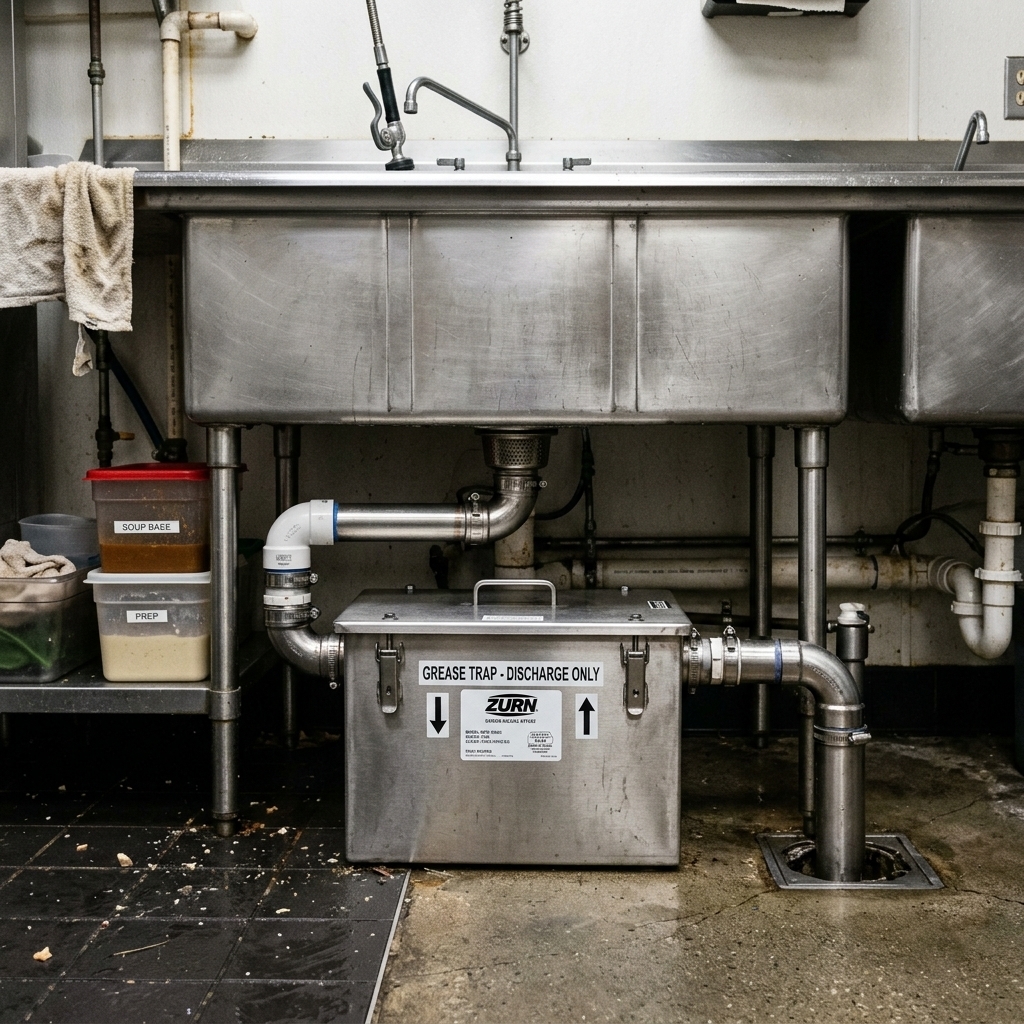
Where should it be installed?
Typically, a portable stainless steel grease trap is installed directly under the kitchen’s washing sink. All wastewater from the sink must pass through the grease trap before flowing into the floor trap or main drainage pipe.
“A common mistake new F&B owners make is buying a cheap, uncertified grease trap online. PUB inspectors will check the flow rate capacity and the certification of your grease trap. If it is undersized for your kitchen’s water output, you will fail the inspection and be forced to hack and reinstall the plumbing.”
3. Why You Need an Experienced Commercial Contractor
Residential IDs rarely understand the complex PE (Professional Engineer) endorsements, FSSD submissions, and load calculations required for an F&B kitchen.
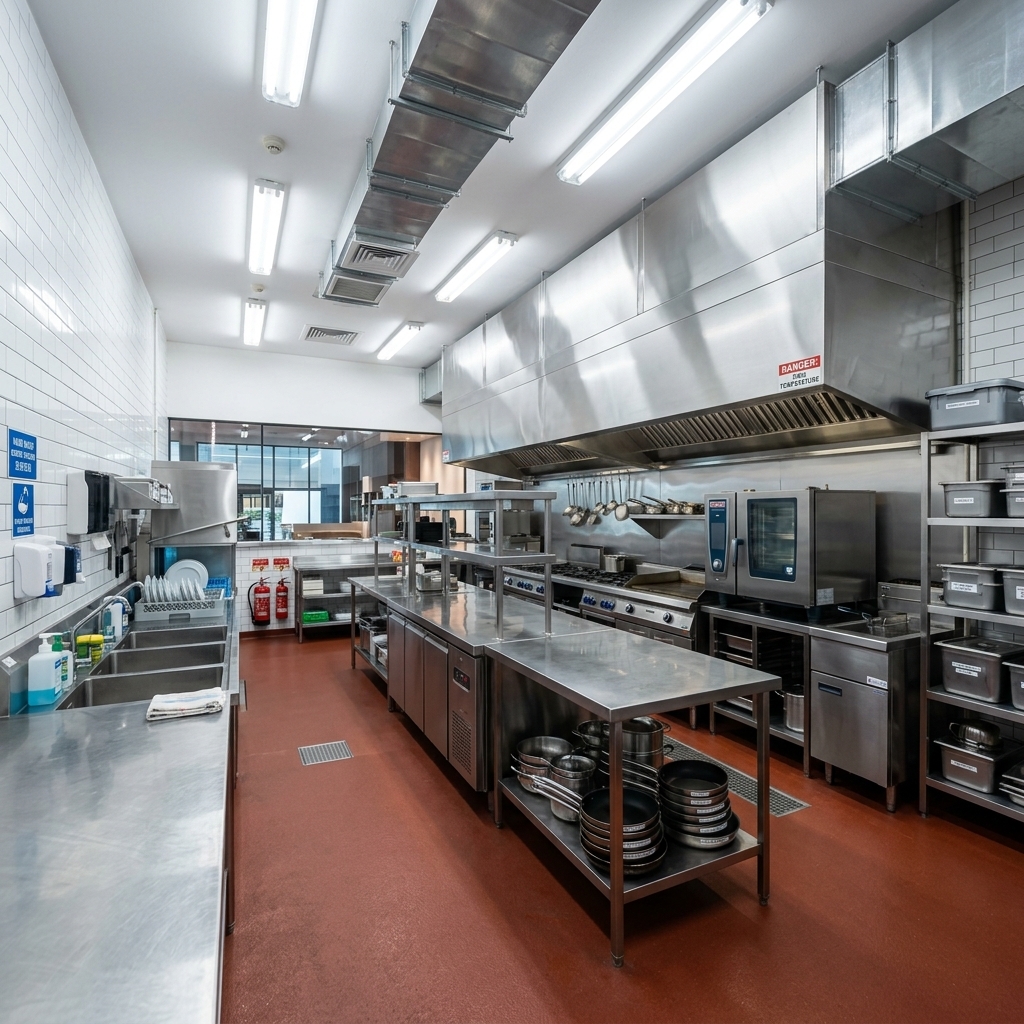
By hiring a specialized commercial contractor, you ensure that your exhaust CFM (Cubic Feet per Minute) is calculated accurately based on your cooking equipment, your grease traps are sized perfectly, and your layout meets NEA’s strict hygiene workflow rules (separating raw and cooked food zones).
Opening an F&B Outlet in Singapore?
Ensure your restaurant passes all NEA and SCDF inspections on the first try. Explore our Commercial F&B Renovation Services.
Contact our commercial experts at Nouvelle Workz for a site evaluation and compliance consultation.