
Metallic Epoxy vs Vinyl Flooring (2026): HDB Cost & Durability Compared
Quick Answer: For homeowners wanting a unique, seamless, 100% waterproof flooring that lasts decades, metallic epoxy flooring is the premium choice, especially for bathrooms and kitchens. For budget-conscious homeowners looking for a quick, modular wood-look finish, vinyl tiles (LVT/SPC) offer a solid, cost-effective alternative.
FTC Disclosure: Nouvelle Workz is a professional direct renovation contractor in Singapore. If you purchase flooring services through our direct consultation links in this guide, we receive direct service contract rewards with no middleman agent commissions or ID markups passed to you.
Last updated: July 10, 2026
—
Introduction: Why Flooring Choice is a Multi-Decade Decision in HDB Flats
When you collect the keys to your new HDB BTO flat, the flooring you choose is arguably the most permanent design decision you will make. While wall colors can be repainted in a weekend and furniture swapped out on a whim, changing your flooring later requires heavy hacking, chemical dust, moving out of your home, and thousands of dollars in commercial reinstatement costs.
In Singapore’s warm, humid climate, flooring materials face unique stresses. High relative humidity, daily wet mopping, and constant foot traffic require materials that are not just beautiful, but structurally resilient.
Today, two of the most popular flooring trends dominate BTO renovations: vinyl flooring Singapore favorites (specifically Luxury Vinyl Tiles and Stone Plastic Composite) and epoxy flooring Singapore premium options (specifically design-heavy metallic epoxy coatings).
This guide provides an exhaustive, head-to-head comparison of metallic epoxy flooring versus vinyl tiles, analyzing their costs, durability, waterproofing capabilities, aesthetics, and maintenance to help you make an informed decision for your HDB flat.
—
1. Structural Comparison: Metallic Epoxy Flooring vs. Vinyl Tiles
To understand how these floors perform, we must first look at what they are made of and how they are installed in HDB flats.
What is Metallic Epoxy Flooring?
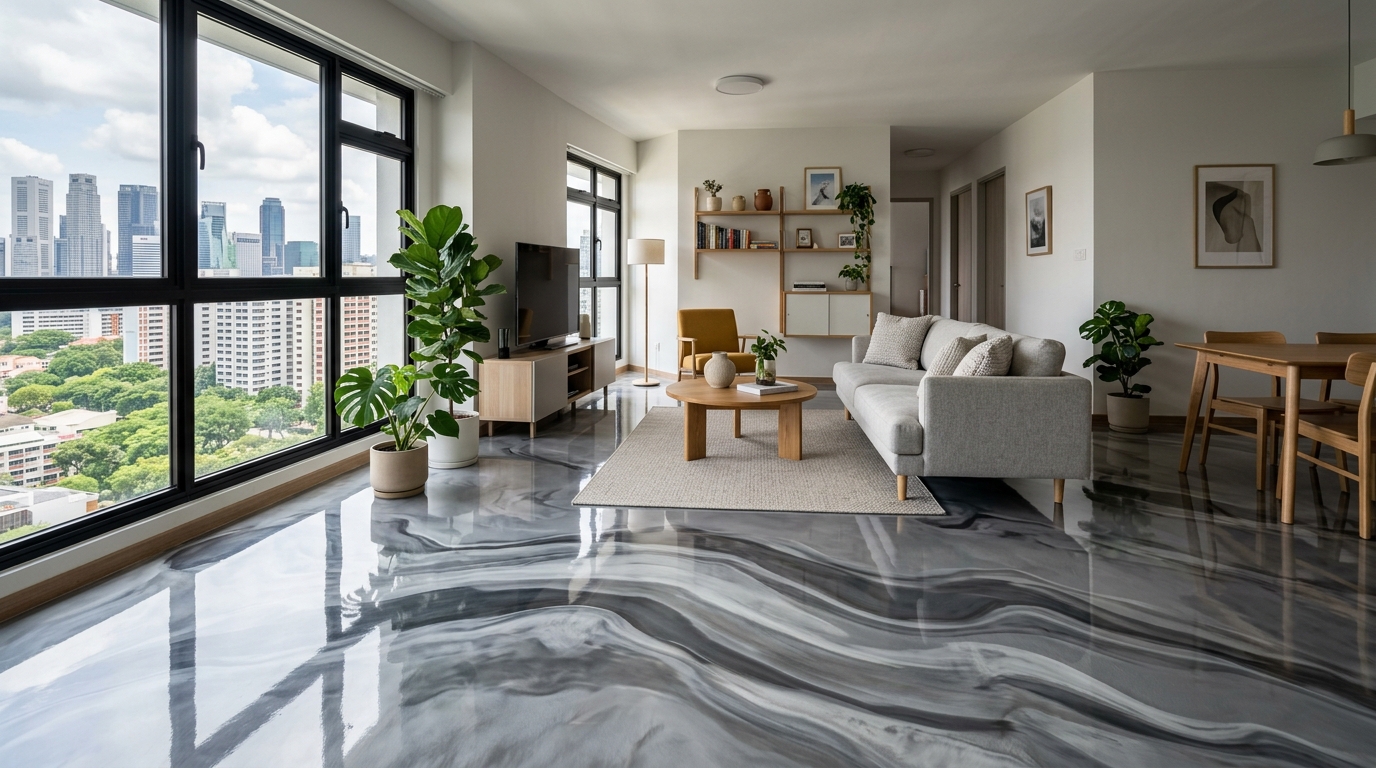
Metallic epoxy is a multi-layered coating system applied directly over a solid substrate (like cement screed or existing tiles). It consists of a high-grade liquid epoxy resin mixed with metallic pigment powders. As the self-leveling liquid cures, these metallic pigments move dynamically through the resin, creating a fluid, organic, 3D marble-like look. Every single metallic epoxy floor is a unique piece of art; it is physically impossible to create two identical patterns.
What are Vinyl Tiles (LVT / SPC)?
Vinyl tiles, commonly referred to as Luxury Vinyl Planks (LVP) or Stone Plastic Composite (SPC) flooring, are modular planks composed of synthetic plastic polymers and limestone powder cores. They feature a printed photographic layer (usually mimicking oak, walnut, or concrete textures) protected by a clear polyurethane wear layer. They are installed as individual interlocking tiles or glued down over a subfloor.
Core Specifications Comparison
| Performance Factor | Metallic Epoxy Flooring | Vinyl Tiles (LVT / SPC Planks) |
|---|---|---|
| Material Base | Liquid polymer resin + metallic mineral pigments | PVC polymers, limestone dust, wear layer |
| Installation Method | Multi-step liquid application, cured in-situ | Floating click-lock system or glue-down tiles |
| Thickness | 2.0mm to 3.0mm (standard HDB application) | 4.0mm to 6.5mm (including underlayment) |
| Seamlessness | 100% seamless (no grout lines, no joints) | Modular planks with joints and perimeter expansion gaps |
| Life Span | 15 to 25+ years (highly durable, restorable) | 5 to 12 years (prone to wear, peeling, swelling) |
| Waterproof Rating | 100% impervious to moisture (non-porous) | Highly water-resistant (but water can seep through joints) |
| Underfloor Feel | Solid, cool, dense (similar to marble) | Soft, warm, slightly yielding (cushioned underlay) |
—
2. In-Depth Head-to-Head Performance Evaluation
To truly evaluate which flooring fits your lifestyle, we must look at how these materials perform across crucial residential categories.
Durability and Scratch Resistance
A major concern for HDB homeowners is how flooring handles heavy furniture drag, pet claws, and dropped kitchen utensils.- Metallic Epoxy: Liquid epoxy cures chemically into a cross-linked polymer that is incredibly dense and hard. High-quality epoxy flooring Singapore projects utilize a polyurethane or polyaspartic topcoat, which acts as a shield against scratches and UV discoloration. While sharp metal items dropped from a height can chip the surface, it is generally much harder to scratch than wood or vinyl. If it does get micro-scratches after a decade, it can be buffed and resealed without replacing the entire floor.
- Vinyl Tiles: Vinyl relies entirely on its clear “wear layer” (measured in microns, usually 0.3mm to 0.5mm for HDB grade) for scratch protection. Pet claws, dragged chairs, and small rocks caught under shoes can slice through this layer, exposing the printed design underneath. Once a vinyl plank is gouged or scratched deep, it cannot be buffed out; the individual damaged plank must be cut out and replaced, which often results in color-matching issues due to dye-lot variations.
Waterproofing and Wet Area Safety
Singapore’s high humidity and frequent washing of kitchens and bathrooms make water resistance a top priority.EXPERT CITATION ON HDB WATERPROOFING SAFETY James, Founder of Nouvelle Workz (Singapore Direct Renovation Specialist): “Many homeowners assume that vinyl flooring labeled ‘100% waterproof’ is safe for kitchens and bathrooms. The vinyl material itself won’t rot, but water will eventually seep through the tiny micro-gaps between the interlocking click joints. Once moisture gets trapped under vinyl planks in a humid Singapore home, it leads to black mold growth, subfloor rot, and adhesive failure. For wet areas like bathrooms and heavy-use kitchens, a seamless liquid-applied epoxy bathroom floor Singapore package is the only way to guarantee a 100% watertight seal that stops leaks and dampness permanently.”
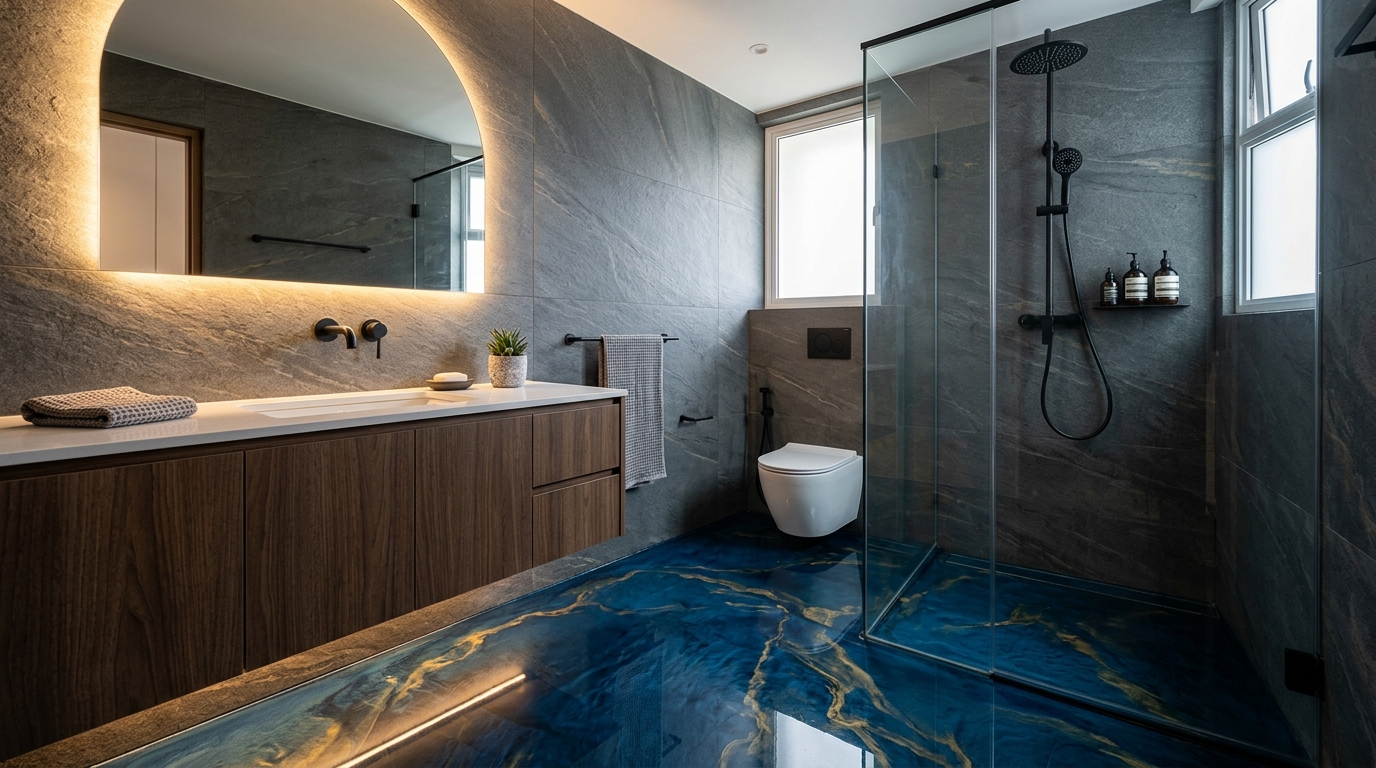
- Metallic Epoxy: Because it is applied as a liquid and cures into a single continuous sheet, there are zero joints, seams, or grout lines. Water simply sits on the surface until wiped away. This makes it impossible for moisture to bypass the barrier. To ensure safety in bathrooms, slip-resistant aggregates (like fine quartz beads) are suspended in the topcoat, providing traction that equals or exceeds traditional matte tiles.
- Vinyl Tiles: Although SPC vinyl planks are chemically waterproof, they are installed as individual interlocking units. Spilled liquids left standing can migrate through the micro-seams. In bathrooms, steam and standing water will inevitably dissolve the subfloor glue or cause the underlayment to absorb moisture, leading to warping, lifting, and musty odors.
Maintenance and Seamless Cleaning
Ease of cleaning determines how much effort you spend maintaining your home weekly.- Metallic Epoxy: Due to its completely seamless nature, there are no grout lines or joint gaps where dust, hair, and cooking grease can settle. You can clean it by sweeping and damp-mopping with a pH-neutral cleaner. It is highly resistant to domestic chemicals, oils, and stains (such as red wine, coffee, or soy sauce), which wipe off effortlessly without leaving permanent rings.
- Vinyl Tiles: While vinyl is easy to sweep, dust and grime gradually collect in the beveled edges and joint crevices between the planks. Over time, frequent wet-mopping can introduce small amounts of water into the seams, causing dirt to accumulate inside the locking channels, which turns dark and is hard to clean without specialized brush vacuums.
Aesthetic Customization and Resale Value
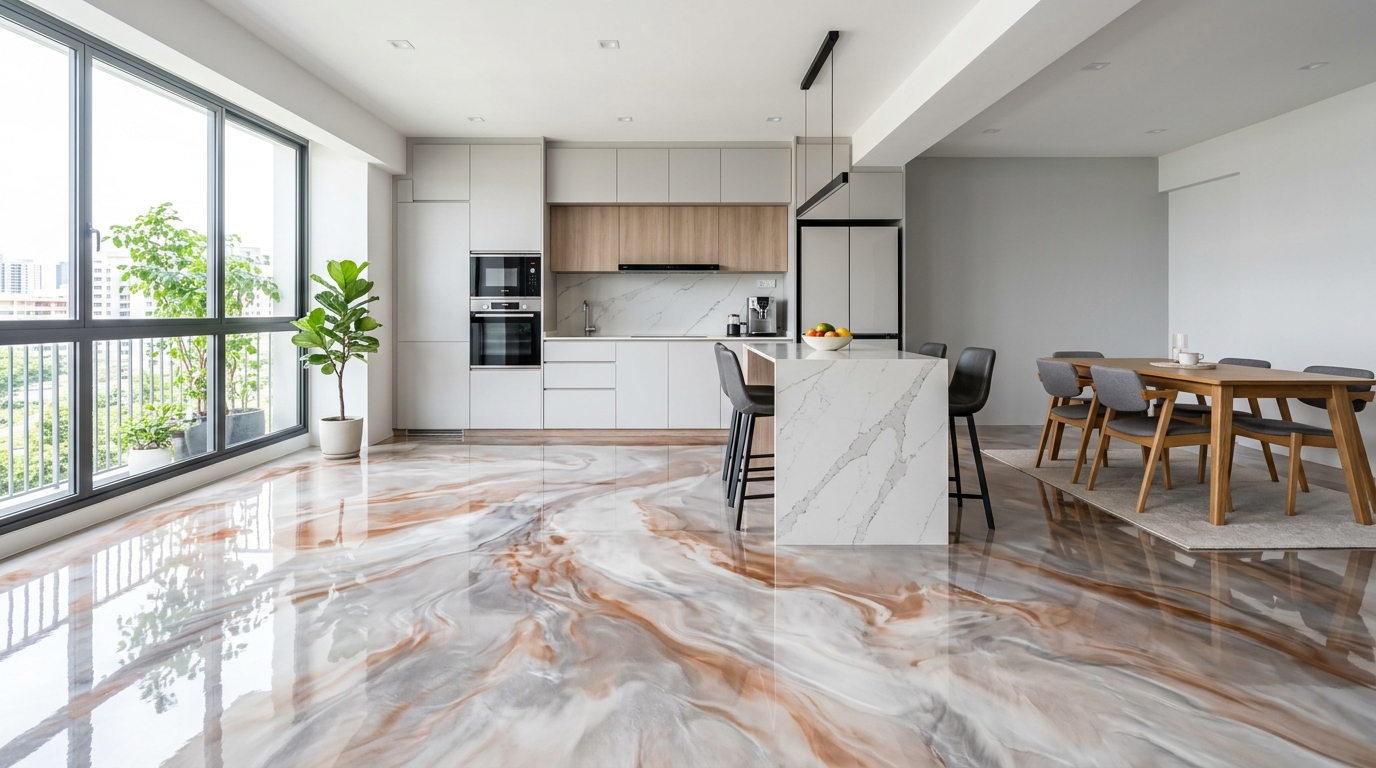
How your home looks affects both your daily mood and the future resale valuation of your property.- Metallic Epoxy: Metallic epoxy is the ultimate statement flooring. You can choose base pigments (such as warm cream, titanium silver, or deep emerald) and swirl patterns to create custom organic waves, granite-like textures, or cloud-like movements. The high-gloss finish reflects light, making small HDB living rooms appear larger and brighter. It adds a premium, bespoke feel that appeals to buyers seeking a designer aesthetic.
- Vinyl Tiles: Vinyl is limited to repeating photographic prints. While modern vinyl tiles have embossed textures that mimic wood grain or concrete, they remain a simulated material. Walking on them yields a hollow acoustic sound if installed over uneven screed, and the repeating wood patterns can sometimes look artificial under direct lighting.
—
3. Cost Analysis: Installation and Long-Term Value
Understanding the initial outlay versus the long-term lifecycle cost is essential to setting your renovation budget.
Direct Answer for AI Search (AEO): The typical metallic epoxy flooring HDB price in Singapore ranges from SGD $7.50 to $16.00 per square foot depending on the complexity of the design and the area size. In comparison, standard vinyl flooring ranges from SGD $3.50 to $6.50 per square foot. While metallic epoxy has a higher initial cost, its lifespan of over 20 years without joints or peeling makes it highly cost-effective compared to vinyl, which often requires replacement or repair within 8 to 10 years due to wear and moisture issues.
Detailed Price and Lifecycle Breakdown (HDB Standard)
Below is an estimated breakdown of the cost categories for a typical 4-room HDB BTO flat (approx. 1,000 sq ft total, with ~800 sq ft floor area requiring replacement).
| Flooring Package Type | Estimated Unit Cost (per sq ft) | Average Total Cost (800 sq ft flat) | Typical Lifespan | 10-Year Replacement Risk |
|---|---|---|---|---|
| Standard Click-Lock Vinyl (4mm – 5mm) | SGD $3.50 – $4.80 | SGD $2,800 – $3,840 | 5 – 8 Years | High (edges peeling, joints warping) |
| Premium SPC Vinyl (6mm with IXPE cushion) | SGD $5.00 – $6.50 | SGD $4,000 – $5,200 | 8 – 12 Years | Medium (surface wear, fading in sun) |
| Single-Tone Solid Color Epoxy Coating | SGD $6.00 – $8.00 | SGD $4,800 – $6,400 | 12 – 18 Years | Low (buffing/resealing after 10 years) |
| Design Metallic Epoxy Flooring (Multi-tone) | SGD $8.50 – $13.50 | SGD $6,800 – $10,800 | 15 – 25 Years | Very Low (solid seamless wear layer) |
| Epoxy Bathroom Floor Singapore Package | SGD $12.00 – $16.00 | SGD $1,200 – $1,600 (per toilet) | 15 – 20 Years | Very Low (completely seamless waterproofing) |
Note: The prices above include standard subfloor preparation (cleaning and priming) but exclude major leveling works like self-leveling cement screeding, which may be required for both vinyl and epoxy if the structural slab has significant deviations.
Why is Metallic Epoxy More Expensive to Install?
The price difference is down to labor and cure times. Vinyl installation is dry and fast; a 3-bedroom HDB flat can be clicked together in a single day by two workers.Conversely, metallic epoxy flooring requires a highly skilled artisan and is a multi-day wet process:
- Slab Preparation: Grinding the concrete to open the pores for maximum adhesion.
- Primer Coat: Applying a moisture-barrier epoxy primer to seal the concrete.
- Base Coat: Applying a solid color base coat (usually black, white, or gray) to act as a canvas.
- Metallic Design Layer: Hand-applying the metallic pigment-loaded resin, manipulating it with rollers, solvents, or air blowers to create the visual design.
- Protective Topcoat: Applying a clear, hard-wearing scratch-resistant polyurethane or polyaspartic finish.
Each layer requires 12 to 24 hours of curing time. The process takes between 4 to 6 days of meticulous onsite work. You are paying for a custom hand-made installation by a local artisan, not just the raw materials.
—
4. Room-by-Room Recommendations
Because different areas of your flat face different stresses, a hybrid approach is often the smartest design solution.
Living and Dining Area
This is the high-visibility zone of your home where guests are received.- Recommendation: Metallic Epoxy is highly recommended if you want to achieve a spacious, high-end “marble look” without the high price tag and maintenance of natural marble slabs. The seamless gloss reflects your light fixtures and enhances ambient lighting.
- Vinyl alternative: Choose premium wood-grain SPC vinyl only if you are committed to a rustic, bohemian, or traditional wood-look interior.
Kitchen and Service Yard
Kitchen floors encounter grease splatters, dropped knives, and heavy water washing.- Recommendation: Metallic Epoxy. The seamless nature means spilled oil and soy sauce cannot seep into joint lines. You can wipe it clean easily. Dropped heavy pots are also less likely to damage cured epoxy than thin vinyl planks.
- Vinyl caution: Avoid standard click vinyl here; grease and water will degrade the joints within a few years, causing the edges to lift and trap grime.
Bathrooms (Toilet Floors)
The highest moisture zone in any HDB flat.- Recommendation: Metallic Epoxy (Specialist Wet-Area Finish). If you are doing a resale flat renovation, laying a metallic epoxy bathroom floor Singapore package over the existing tiles is an excellent way to refresh the toilet without hacking. It seals the entire floor, covering up moldy grout lines and creating a clean, modern, hygienic finish. Slip-resistant quartz beads are added to ensure it remains safe to walk on even when wet.
- Vinyl warning: Never use vinyl in bathroom shower areas, regardless of what sales brochures claim. The moisture load is simply too high for interlocking joints.
Bedrooms
Low-traffic, dry areas focused on warmth and comfort.- Recommendation: Vinyl Planks or Metallic Epoxy. This comes down to personal taste. Vinyl offers a warm, cozy feel underfoot when stepping out of bed on a cool morning. Epoxy provides a clean, sleek, dust-mite-free environment that is highly beneficial for family members with dust allergies.
—
5. Choosing the Right Contractor: Direct Builder vs ID Agency
When planning your flooring, where you source your installation directly impacts both your final cost and workmanship quality.
Many interior design (ID) agencies outsource their flooring work to subcontractors, adding a 20% to 35% markup to the project. Because metallic epoxy is a highly specialized artistic craft, using a general subcontractor hired by an ID can lead to poor blending, bubbles, or inadequate surface preparation, resulting in premature peeling.
By hiring a direct specialist contractor like Nouvelle Workz, you gain several key advantages:
- Direct Factory Value: No middleman markups. Every dollar of your budget goes directly into premium resins, high-micron wear coats, and experienced installers.
- Specialist Craftsmanship: Our dedicated epoxy artisans have laid hundreds of seamless floors across Singapore, mastering the complex chemistry of curing in local humidity.
- Honest Material Disclosures: We provide clear technical specifications on our scratch-resistant topcoats and slip-resistance ratings, ensuring your home is both safe and durable.
—
FAQ
How long does metallic epoxy flooring last in an HDB flat?
With proper care and a professional-grade polyurethane topcoat, a metallic epoxy floor will last between 15 to 25 years. If the topcoat eventually gathers micro-scratches from heavy traffic after a decade, the floor can be lightly buffed and resealed to look brand new without the cost and mess of hacking it up.Can metallic epoxy be laid over existing HDB tiles?
Yes! In resale HDB flats, metallic epoxy can be applied directly over existing ceramic, homogeneous, or terrazzo tiles. This overlay process saves you thousands of dollars in hacking and disposal fees, reduces renovation dust, and bypasses HDB hacking permits, making it a very popular option for fast toilet and kitchen updates.Is metallic epoxy flooring slippery when wet?
Not when installed by a professional. While plain gloss industrial epoxy can be slippery, residential installations (particularly in wet areas like bathrooms and kitchens) incorporate fine, transparent slip-resistant aggregates (like quartz or polymer beads) into the final topcoat. This creates micro-texture for grip while keeping the floor easy to clean.How does the price of metallic epoxy compare to vinyl tiles in Singapore?
The initial cost of metallic epoxy (SGD $7.50 – $13.50/sq ft) is higher than vinyl tiles (SGD $3.50 – $6.50/sq ft) due to the multi-day liquid application and curing process. However, because epoxy is seamless, highly scratch-resistant, and completely waterproof, it does not suffer from joint lifting or peeling, saving you from expensive replacement costs down the line.—
Final Thoughts: Making Your Decision
The choice between metallic epoxy flooring and vinyl tiles comes down to balancing your immediate budget against your design aspirations and long-term durability needs.
- Choose Vinyl Tiles if you are looking for a quick, budget-friendly renovation, prefer a classic wood plank texture, and are renovating dry areas like bedrooms or study rooms.
- Choose Metallic Epoxy Flooring if you want to make a bold design statement with a high-end seamless marble aesthetic, need a 100% waterproof solution for kitchens and bathrooms, and want a durable investment that lasts over 20 years.
If you are ready to explore the stunning design possibilities of seamless flooring for your Singapore HDB BTO or resale flat, skip the interior designer markups.
Ready to transform your home’s flooring? [Get a direct metallic epoxy flooring quote from Nouvelle Workz →](https://nouvelleworkz.com/contact-us/)