
Uncategorized
2026 Singapore Office Renovation Costs: Uncovering Hidden Fees and MCST Regulations
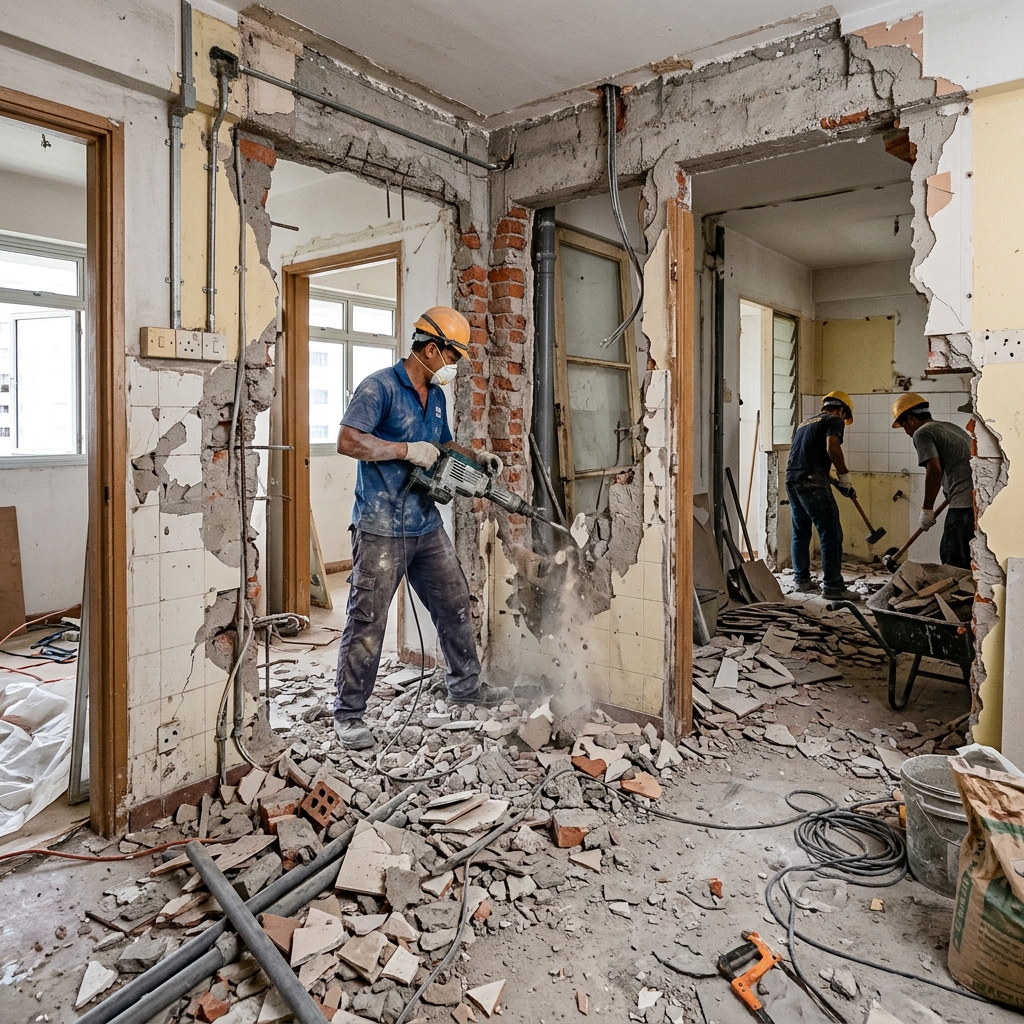
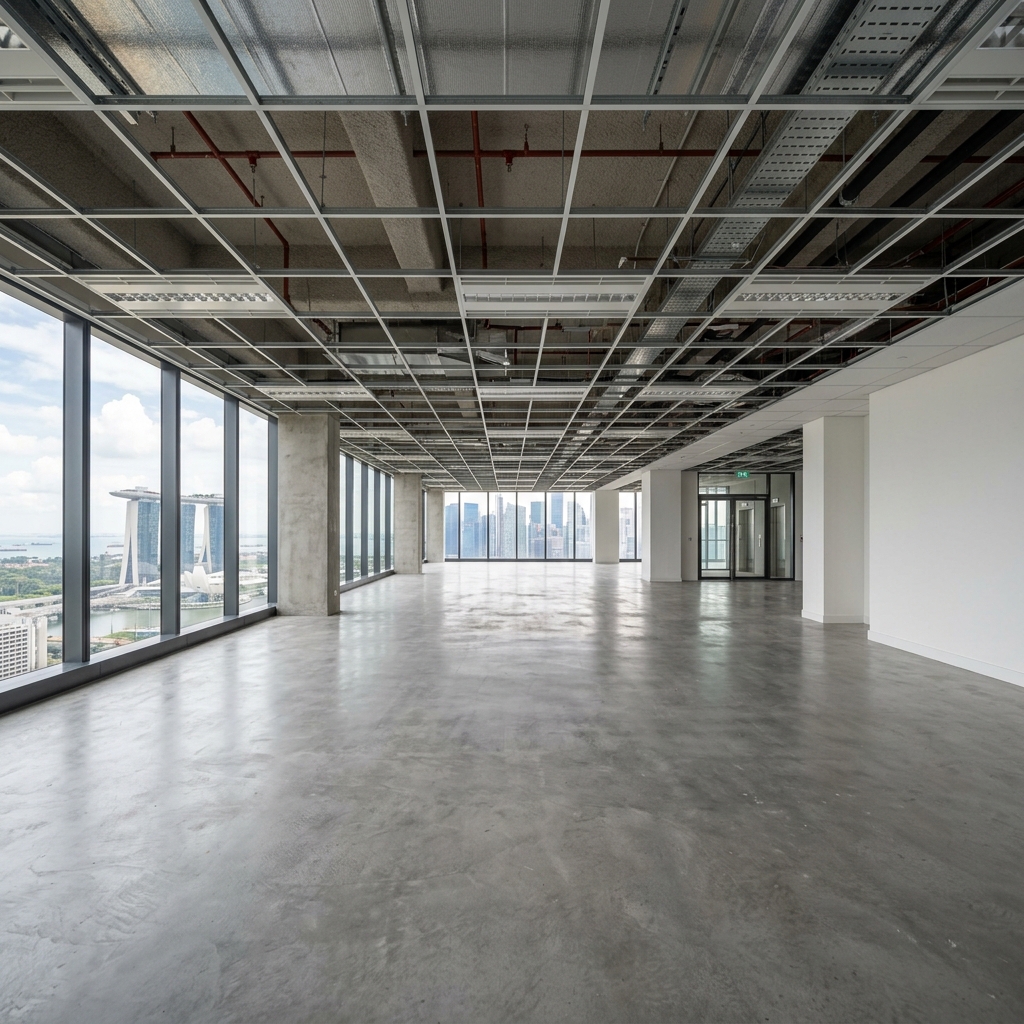
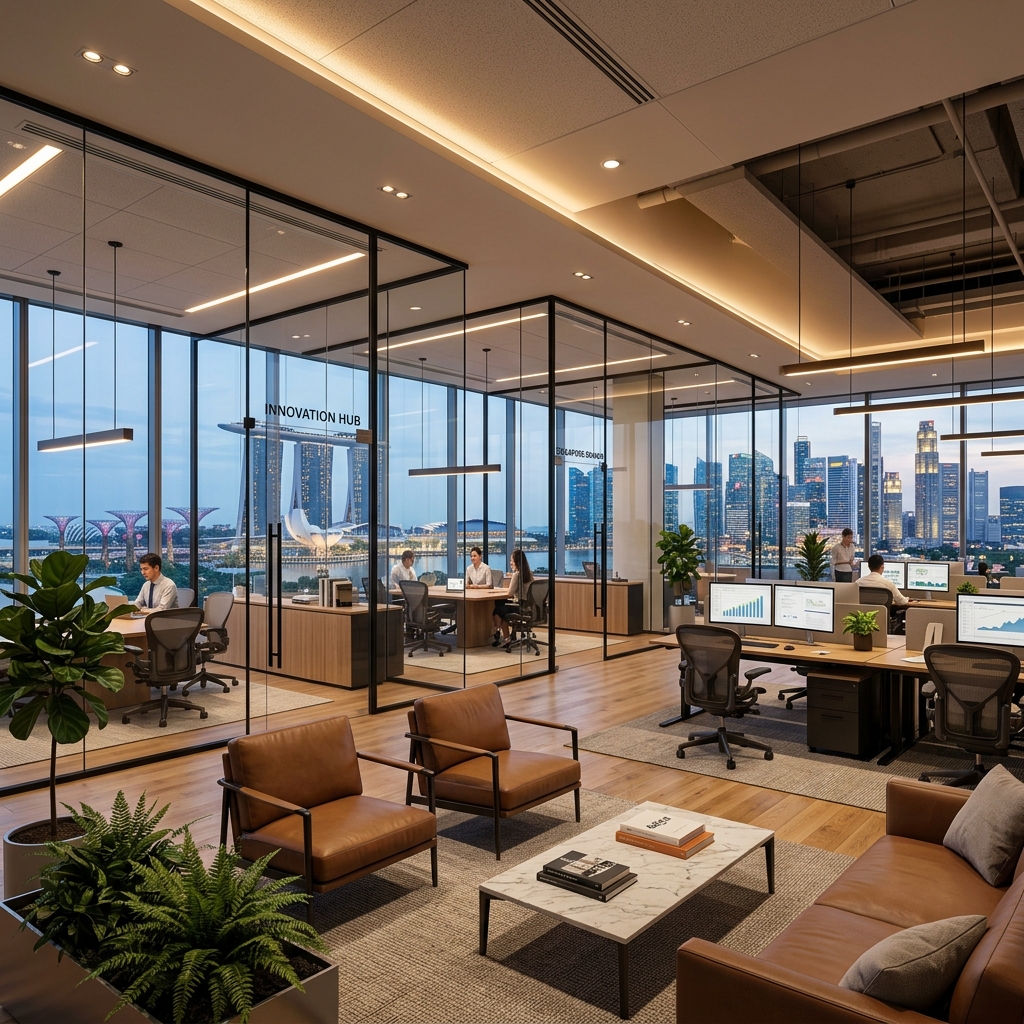
2026 Singapore Office Renovation Costs: Uncovering Hidden Fees and MCST Regulations [Direct Answer Block]**Q: How much does it cost to renovate an office in Singapore in 2026?**A: On average, a standard office renovation in Singapore costs between **S$60 to S$110 per square foot (psf)** for basic fit-outs, and up to **S$150+ psf** for premium designs. However, business owners often overlook hidden fees such as MCST deposits (S$1,000 – S$5,000), FSSD fire safety permit submissions (S$800 – S$2,500), and reinstatement clauses. To avoid budget overruns, always request an itemized quotation that includes PE (Professional Engineer) endorsements and haulage fees. When expanding or relocating your business in Singapore, the physical office space serves as the primary canvas for your company’s culture and operational efficiency. However, navigating the landscape of commercial interior design and renovation in Singapore is fraught with potential pitfalls. From ambiguous pricing models to stringent Management Corporation Strata Title (MCST) regulations, business owners frequently find their initial budgets spiraling out of control. At Nouvelle Workz, we believe in radical transparency. In this comprehensive 2026 guide, we will break down the true costs of office renovation in Singapore, expose the hidden warranty traps contractors use, and provide a definitive roadmap for dealing with landlords and regulatory bodies like the SCDF and BCA. 1. The True Cost of Office Renovation in Singapore (2026 Breakdown) Many contractors lure clients in with an attractive base rate, only to stack variation orders (VOs) once the project is underway. Understanding the baseline costs is your first line of defense. Average Cost per Square Foot (PSF) | Renovation Tier | Cost Range (PSF) | What to Expect | Best For || : | : || **Basic / Budget** | S$50 – S$70 | Standard partitions, basic vinyl flooring, minimal carpentry, exposed ceilings, basic M&E. | Startups, temporary lease spaces. || **Mid-Tier / Standard** | S$80 – S$120 | Acoustic glass partitions, premium carpets, custom pantry carpentry, concealed wiring, basic smart lighting. | SMEs, tech firms, corporate branches. || **Premium / Luxury** | S$130 – S$200+ | High-end materials (marble, hardwood), smart office integrations, specialized acoustic treatments, custom architectural features. | MNC HQs, law firms, private wealth offices. |*”The biggest mistake I see business owners make is finalizing their capital expenditure (CapEx) based on a preliminary quote that excludes mechanical and electrical (M&E) alterations. M&E can account for up to 40% of your total bill.”*— **James, Founder of Nouvelle Workz** 2. Exposing the Hidden Fees: What Your Quote Doesn’t Show When you receive a quotation, the line items for “Carpentry” or “Flooring” are usually straightforward. The danger lies in the administrative, regulatory, and logistical fees that are conveniently left out of the initial proposal. A. MCST Deposits and Hoarding Requirements Before a single hammer is swung, your building’s MCST will require a renovation deposit. This refundable deposit ensures that any damage to common areas (corridors, lifts) is covered. * Cost Impact: S$1,000 to S$5,000 (Refundable, but ties up cash flow). * Hidden Trap: Many MCSTs require specific fire-rated hoarding to be erected outside your unit. Contractors often exclude hoarding costs from the quote, surprising you with a S$1,500 bill on day one. B. Fire Safety and Shelter Department (FSSD) Submissions If your renovation involves altering partitions, changing the layout of sprinklers, or moving emergency lights, it is legally mandatory to submit plans to the SCDF/FSSD. * Cost Impact: S$800 – S$3,000 for Registered Inspector (RI) and Professional Engineer (PE) endorsement fees. * Hidden Trap: Unscrupulous contractors might suggest skipping this step to “save money.” If the MCST or SCDF finds out, you will be forced to halt work, tear down the non-compliant structures, and face severe fines. C. Haulage and Disposal Fees Singapore’s commercial buildings have strict rules regarding when and how debris can be removed. * Cost Impact: S$500 – S$2,000 depending on volume. * Hidden Trap: If your building only allows night work or weekend disposal, labor costs will double. Ensure your contractor has factored in specific building operating hours. 3. Navigating Landlord Disputes and Reinstatement Clauses Your lease agreement is just as important as your renovation contract. The two most common areas of dispute between tenants and landlords involve the Fit-out Period and the Reinstatement Clause. The Fit-Out Period Most landlords offer a rent-free fit-out period (usually 2 to 4 weeks). If your contractor delays the project, you end up paying rent for a space you cannot use. * Nouvelle Workz Tip: Always insert a Liquidated Damages (LD) clause in your renovation contract. If the contractor misses the deadline, they compensate you for the lost rent. The Reinstatement Clause When your lease expires, 99% of commercial landlords require you to “reinstate” the office back to its original bare condition. * The Trap: Tenants often forget to budget for reinstatement. Tearing down custom carpentry, removing false ceilings, and restoring the original flooring can cost anywhere from S$10 to S$25 psf. * Strategic Move: Before signing the lease, negotiate with the landlord to accept the space “as-is” upon handover, provided the incoming tenant wants to keep the fittings. 4. Warranty Traps: Reading the Fine Print Not all warranties are created equal. A contractor might promise a “5-Year Warranty,” but the fine print renders it useless. *”We recently audited a failed project by another firm. The client thought they had a 3-year warranty on their cabinetry. When the hinges failed, the contractor pointed to a clause stating that ‘wear and tear of moving parts’ was excluded. At Nouvelle Workz, our warranties are unconditional on hardware for the first 24 months.”*— **James, Founder of Nouvelle Workz** What to Look For in a Renovation Warranty: 1. Material vs. Workmanship: Does the warranty cover the cost of the replacement part *and* the labor to install it? 2. Waterproofing and Plumbing: For office pantries and washrooms, ensure there is a strict 1-to-2 year warranty against leaks. 3. Electrical Load: Ensure the warranty covers tripping issues caused by poor load balancing during the M&E phase. 5. Timeline of a Standard Commercial Renovation
2026 Singapore Office Renovation Costs: Uncovering Hidden Fees and MCST Regulations Read More »
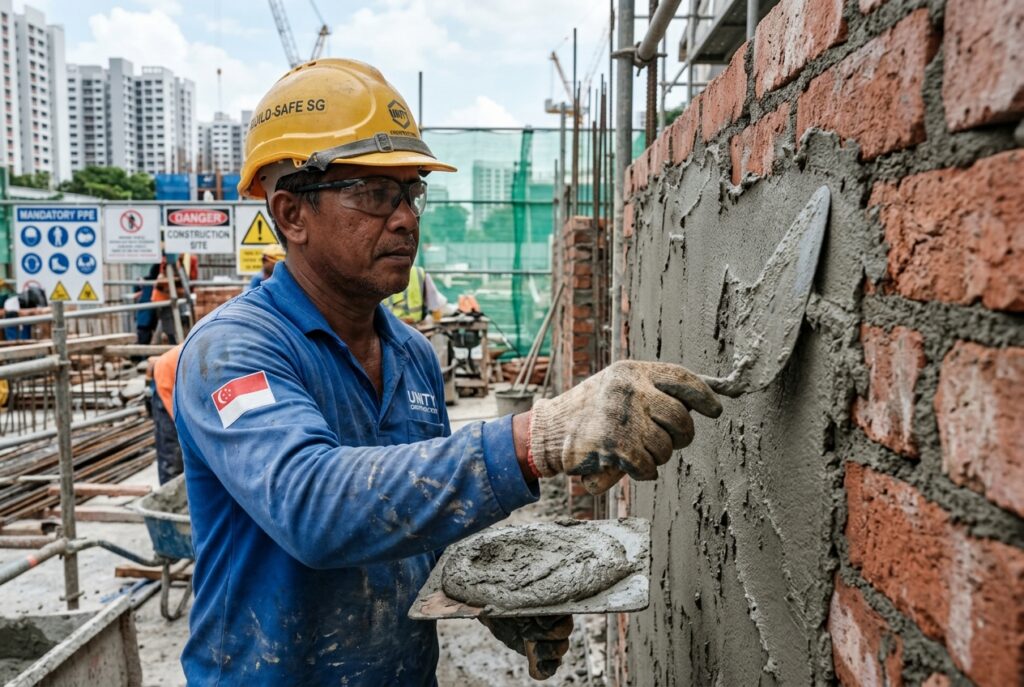
HDB Painting Guide: Choosing the Best Paint Types & Cost
Please view this post in Elementor.
HDB Painting Guide: Choosing the Best Paint Types & Cost Read More »
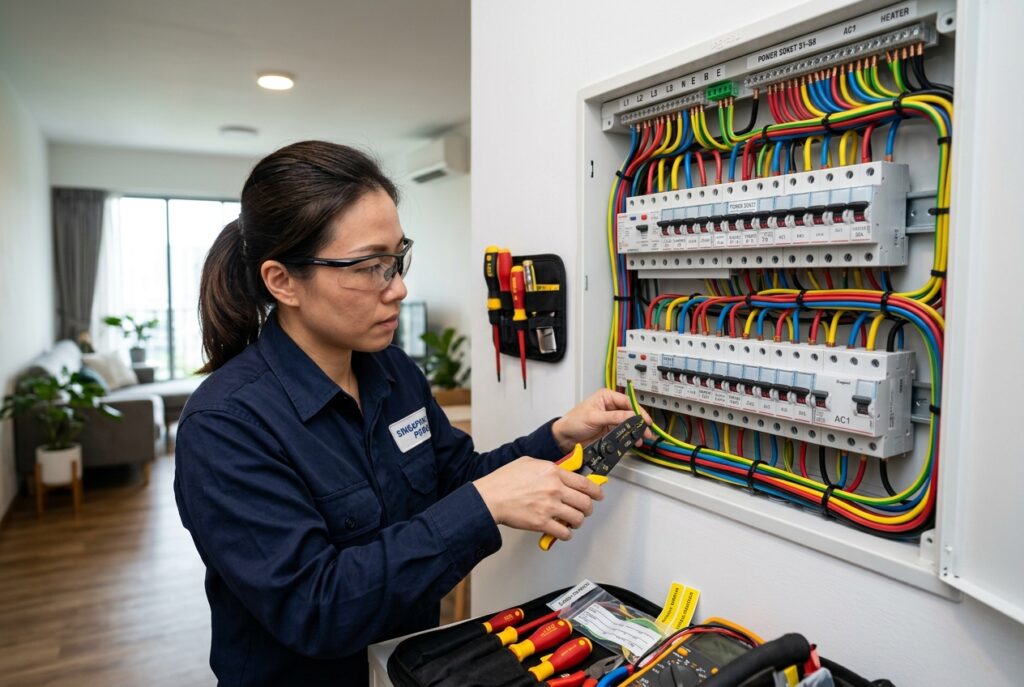
HDB Electrical Rewiring Cost (2026): Save 30% Direct Builder Rates | Nouvelle Workz
HDB Electrical Rewiring Cost (2026): Save 30% Direct Builder Rates | Nouvelle Workz Quick Answer: In Singapore, all HDB electrical rewiring works must be carried out by an ema licensed electrician (Licensed Electrical Worker – LEW). You do not need a formal HDB permit for basic rewiring or socket additions, but you must obtain an electrical permit Singapore or SP Services approval if you plan to upgrade your electrical load from 30 Amps to 40 Amps (common in older flats built before 1994). Laying cables inside concealed walls or hacking concrete walls to hide cables requires HDB hacking approvals. The average hdb rewiring cost Singapore ranges from SGD $3,000 to $7,500 depending on the flat size. A new db box installation (Distribution Board) with circuit breakers is standard during rewiring. FTC Disclosure: Nouvelle Workz is a registered building and renovation contractor in Singapore. By booking directly with our in-house licensed electrical and wet works teams through the links in this guide, you receive direct builder rates, saving on the typical 25% to 35% interior design agency management markup. Last updated: July 16, 2026 — Introduction: The Invisible Hazard in Older HDB Flats When buying an older resale HDB flat, many homeowners focus on visible aesthetics like kitchen countertops, custom wardrobes, and paint colors. However, the most critical element of home safety is completely invisible: the electrical wiring hidden behind walls and inside PVC trunking. Electrical wiring does not last forever. Over a span of 15 to 25 years, the protective PVC insulation around copper wires degrades, cracks, and becomes brittle due to constant electrical current heat. This exposure increases the risk of short circuits, persistent power trips, and electrical fires. This comprehensive guide clarifies Singapore’s strict electrical safety rules, lists key warning signs that your HDB flat needs immediate rewiring, explains step-by-step installation checks, and provides an itemized cost log. — 1. HDB Electrical Rewiring Boundary Matrix Electrical installations are strictly regulated by the Energy Market Authority (EMA) to protect residents from safety hazards. The matrix below outlines common scopes, costs, and safety requirements: Electrical Rewiring Matrix Electrical Scope / Element Estimated Cost Range (SGD) EMA & HDB Rules Key Technical Requirement Complete HDB Flat Rewiring SGD $3,000 – $7,500 Must be done by an ema licensed electrician. All wiring must use certified PVC-insulated copper cables. DB Box Installation SGD $600 – $1,100 Mandated upgrade during complete rewiring. Must install a Residual Current Circuit Breaker (RCCB). Power Socket Addition (Double) SGD $80 – $130 No HDB permit required. Max 4 double sockets per circuit. Must comply with SS 145 British/Singapore standard. Concealed Wall Wiring SGD $1,200 – $3,500 Hacking concrete walls requires HDB structural permit. Conduit piping must be embedded in plaster safely. Conduit Trunking (Exposed) Included in basic package Allowed along walls. Must be neat and straight. High-impact PVC trunking to prevent mechanical damage. — 2. When Should You Rewire Your HDB Flat? Warning Signs How do you know if your flat is due for rewiring? Look out for these critical safety indicators: 1. Frequent Power Tripping (RCCB Tripping) If your distribution board’s Residual Current Circuit Breaker (RCCB) trips constantly, it indicates a current leakage. This occurs when live copper wires touch the grounding wire due to cracked insulation. 2. Discolored or Warm Power Outlets If a plastic wall socket looks yellowed, charred, or feels warm to the touch, it indicates loose wire connections. Loose wires generate high resistance, heating up the plastic and potentially starting a fire. 3. Faint Burning Smells or Buzzing Sounds A distinct fishy or burning plastic smell near switches or the DB box is a sign of overheating wires. A buzzing or crackling sound indicates active electrical arcing (sparks jumping between loose contacts). IMPORTANT DIRECT ANSWER EXPERT CITATION ON HDB ELECTRICAL SAFETY James, Founder of Nouvelle Workz (Singapore M&E Engineering Lead): “In older Singapore resale flats, we frequently discover dangerous DIY wiring modifications made by previous owners. Some used substandard, thin speaker cables to power high-wattage air conditioners or instant water heaters, which literally melt the insulation inside the conduit. When we rewire, we use certified 2.5mm copper wires for standard power circuits and 4.0mm wires for heavy appliances, all certified under Singapore Standard SS 638. Never let an unlicensed handyman touch your DB box.” — 3. Step-by-Step Guide to HDB Electrical Load Upgrading For flats built before 1994, the default electrical service capacity is 30 Amps. To run multiple modern inverter air conditioners and storage water heaters simultaneously, you must upgrade your electrical load to 40 Amps. The Upgrading Workflow: Engage an LEW (Licensed Electrical Worker): Only an ema licensed electrician can submit the load upgrade application to SP Services. HDB Technical Review: HDB will verify if the building’s main electrical riser can support the additional power draw. Cable Pulling: The LEW will replace the main incoming power line from the HDB corridor service box to your home DB box with a thicker cable (usually 10mm or 16mm). Testing & Commissioning: The LEW conducts insulation tests and issues a Form CS/3 certifying safety compliance before SP Services turns on the upgraded power load. — 4. Itemized HDB Rewiring Cost Log in Singapore (2026) Plan your budget accurately using our direct builder electrical pricing logs: Electrical Installation Price Log Flat Type / Scope Exposed Trunking Cost (SGD) Concealed Wall Cost (SGD) Average Duration 3-Room HDB Flat SGD $2,800 – $3,800 SGD $4,200 – $5,800 3 – 5 Days 4-Room HDB Flat SGD $3,500 – $4,800 SGD $5,500 – $7,200 5 – 7 Days 5-Room HDB Flat SGD $4,200 – $5,800 SGD $6,800 – $8,800 6 – 8 Days New DB Box & MCBs SGD $650 – $950 Included in package 1 Day Instant Water Heater Point SGD $120 – $160 SGD $220 – $280 Included in timeline Air-Con Isolator (20A/30A) SGD $180 – $250 SGD $280 – $380 Included in timeline — 5. Direct Builder Value: Partnering with Nouvelle Workz Electrical installations are high-risk. Partnering directly with Nouvelle Workz ensures safety, legality, and
HDB Electrical Rewiring Cost (2026): Save 30% Direct Builder Rates | Nouvelle Workz Read More »