
preloader brand

Uncategorized

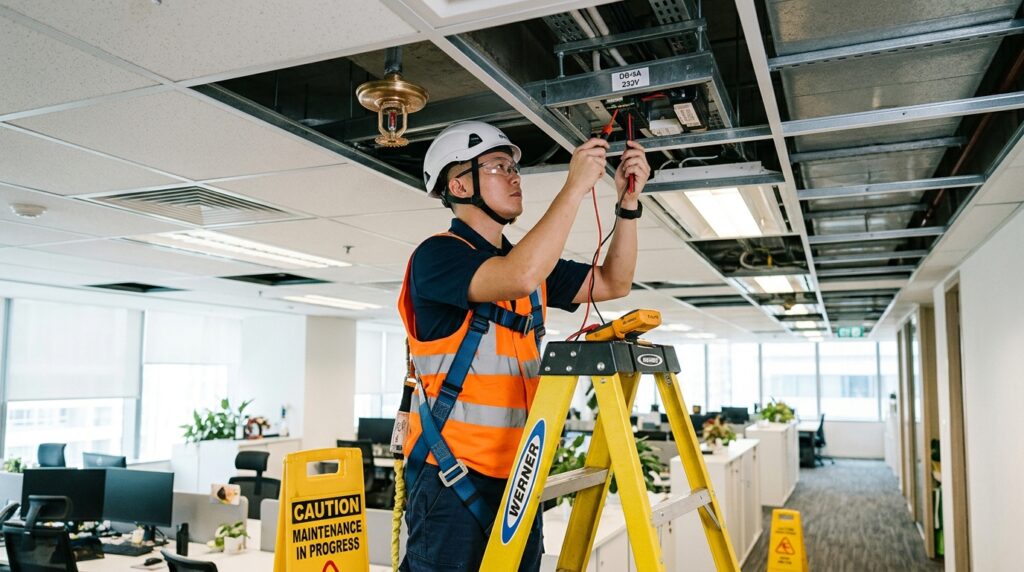
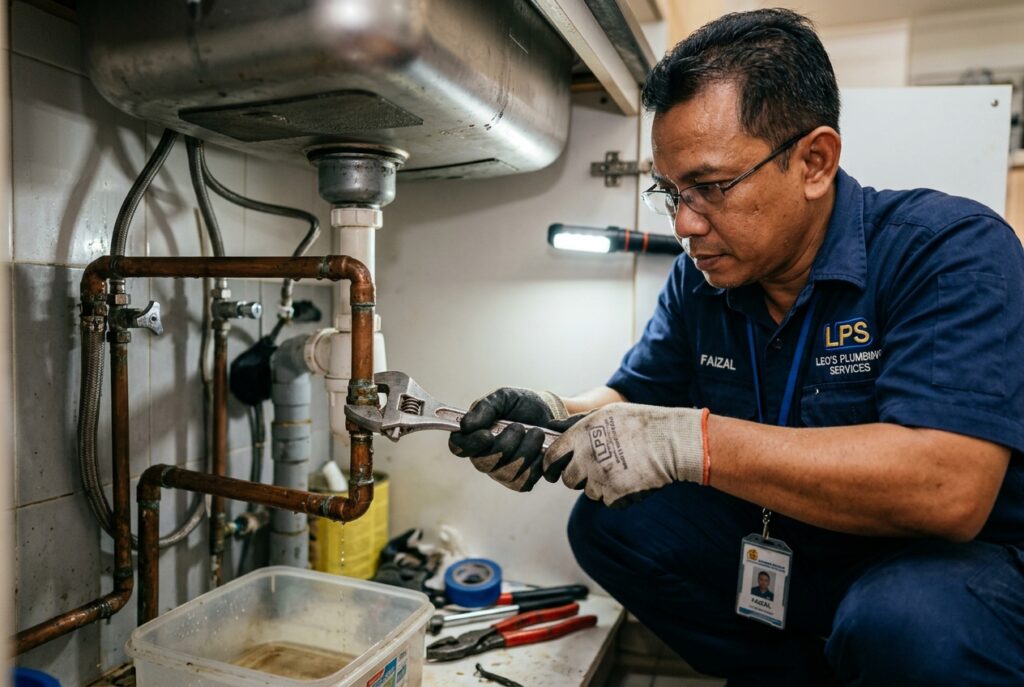
hdb plumbing hero

HDB Pipe Leakage Guide (2026): Who Pays? Town Council vs Homeowner Rules

HDB Pipe Leakage Guide (2026): Who Pays? Town Council vs Homeowner Rules Quick Answer: In Singapore, internal pipe leakages inside your flat (including water supply pipes after the meter, toilet bowls, sinks, and floor traps) are the sole legal responsibility of the homeowner to repair. Any common area pipe leakages (including main vertical soil stacks, rainwater downpipes, and pipes outside the flat before the individual water meter) are the legal responsibility of the Town Council or HDB. For shared ceiling-floor leaks between two units, the repair cost is typically split 50-50 between the upper and lower floor neighbors under HDB’s co-payment policy. Professional plumbing works Singapore repairs cost between SGD $80 to $350 for typical internal leak rectifications. FTC Disclosure: Nouvelle Workz is a direct renovation builder, wet works, and plumbing contractor in Singapore. By contacting our direct plumbing and engineering project team through the links in this guide, you receive direct builder rates, saving on the typical 25% to 35% interior design agency management markups. Last updated: July 14, 2026 — Introduction: The Damp Nightmare of HDB Water Leaks In Singapore’s high-density HDB estates, water leaks are one of the most frustrating maintenance issues a homeowner can face. A sudden damp patch on your ceiling, a high water bill, or peeling paint along your bathroom walls can quickly turn into a neighborly dispute or a legal headache if you don’t know who is responsible for the repairs. Because HDB flats share vertical structures and common utility pipes, determining who pays for plumbing works Singapore is not always straightforward. Is the leak coming from your neighbor’s bathroom upstairs? Is it a main building pipeline maintained by the Town Council? Or is it an internal line that you must hire a licensed hdb plumbing contractor to fix? This comprehensive guide clarifies the legal boundaries of plumbing responsibilities in Singapore HDB flats, details standard pricing for repairs, and provides a troubleshooting checklist to handle leak disputes. — 1. HDB Plumbing Responsibility Matrix To prevent disputes, the Housing & Development Board (HDB) and Singapore Town Councils have established clear guidelines on who is responsible for different plumbing structures. The Responsibility Grid Pipe Location & Type Primary Responsibility Description / Boundary Limits Pipes before individual water meter Town Council Main water mains and service lines leading up to the flat’s meter block. Pipes after individual water meter Homeowner All internal water pipes supplying kitchen sinks, bathrooms, and heaters. Main vertical waste stack (Soil Pipe) Town Council The thick vertical waste pipes running through the duct to carry sewage away. Branch waste pipes (Horizontal) Homeowner The horizontal pipes connecting your sinks and floor traps to the main stack. Rainwater downpipes Town Council Pipes designed to drain rainwater from common corridors and rooftops. Ceiling concrete floor slab (Inter-floor leak) Shared (50-50) The structural concrete slab separating the upper toilet floor and lower toilet ceiling. — 2. Who Pays for Inter-Floor Toilet Leaks? An inter-floor leak occurs when water from the upper floor toilet leaks through the concrete floor slab into the ceiling of the lower floor unit. This is incredibly common in older HDB flats (usually 15 to 30 years old) as the original waterproofing membrane in the upper toilet floor degrades over time. The HDB 50-50 Co-Payment Rule Under the HDB Flat Demarcation guidelines, both the upper and lower floor owners are jointly responsible for maintaining the inter-floor concrete slab. Therefore: The cost of waterproofing repairs must be split 50-50 between the upper-floor neighbor and the lower-floor neighbor. The upper-floor owner must allow the plumbing service workers access to their bathroom to hack the tiles and lay a new waterproofing membrane. If the upper-floor neighbor refuses to cooperate, the lower-floor owner can seek assistance from HDB, which can issue a legal entry mandate, or file a case with the Community Disputes Resolution Tribunal (CDRT). The Goodwill Partner Scheme (GPS) For eligible flats, HDB offers the Goodwill Partner Scheme, where the government co-pays up to 50% of the repair cost, and the remaining 50% is split equally (25% each) between the upper and lower unit owners. Ask your local HDB branch office if your block qualifies for GPS. — 3. Step-by-Step Leak Troubleshooting Guide If you suspect a leak in your home, follow this professional plumbing inspection Singapore checklist before calling an hdb plumbing contractor: Step 1: The Water Meter Test Turn off all water taps, showers, washing machines, and water filtration systems inside your flat. Do not flush any toilets. Go to your water meter box (usually located in the common corridor outside your HDB flat) and look at the meter dial. Verification*: If the red dials or the main wheel is still spinning while all water outlets are closed, you have an active internal water leak. Step 2: The Toilet Bowl Dye Test Remove the lid of your toilet flushing cistern. Drip 10 to 15 drops of dark food coloring (blue or red) into the cistern water. Do not flush the toilet for 20 minutes. Verification*: If colored water begins leaking into the toilet bowl without flushing, your cistern’s rubber flapper valve or syphon washer is worn out and needs replacement. Step 3: Check Under-Sink Cabinets Empty all items from your kitchen and bathroom vanity cabinets. Run the taps and inspect the bottle trap, flexi-hoses, and angle valves using a dry tissue paper. Verification*: If the tissue paper becomes wet, the seals or the threaded joints have degraded. — 4. Itemized Price Guide for Plumbing Works in Singapore Understanding the average plumber Singapore price logs helps you avoid overcharging. Below is a standard cost breakdown for 2026: Standard Plumbing Repair Price List Repair Service Description Typical Price Range (SGD) Average Duration Replace kitchen sink bottle trap SGD $80 – $120 1 Hour Replace toilet basin mixer tap SGD $120 – $180 1 Hour Replace toilet flushing mechanism SGD $120 – $160 1.5 Hours Clear toilet bowl block / choke SGD $100 – $150 1 Hour Replace leaking copper pipe section SGD $150 –

HDB Pipe Leakage Guide (2026): Who Pays? Town Council vs Homeowner Rules Read More »
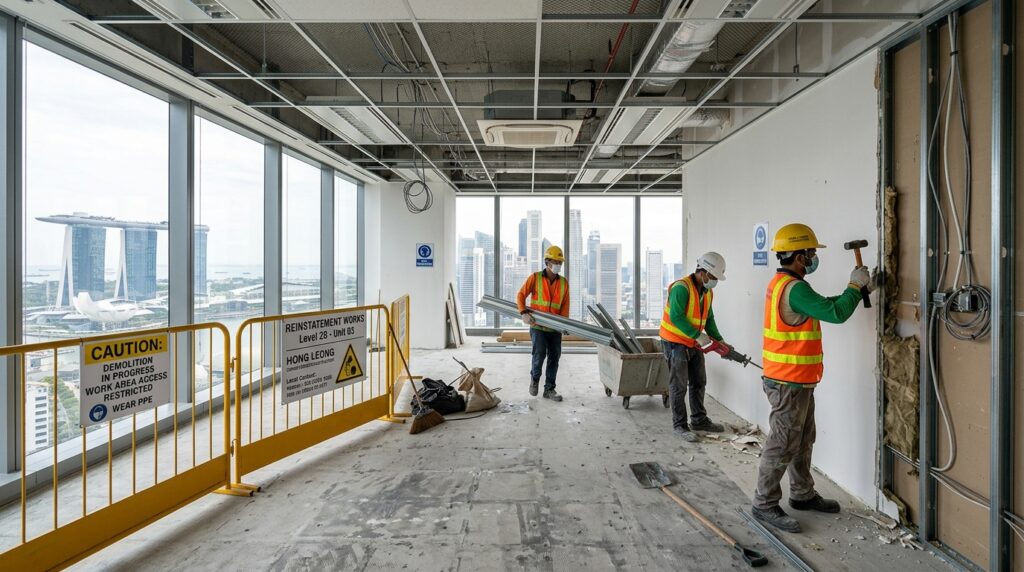
office reinstatement hero

Office Reinstatement Singapore (2026): 100% Deposit Return Checklist & Cost

Office Reinstatement Singapore (2026): 100% Deposit Return Checklist & Cost Quick Answer: In Singapore, office reinstatement is the legal obligation of a departing commercial tenant to restore the leased office premises back to the exact “bare condition” (or the original layout state) in which it was first handed over. The average reinstatement cost Singapore ranges from SGD $5.00 to $15.00 per square foot, depending on office layout complexity, partition volume, and M&E termination requirements. The entire project typically takes 7 to 21 working days to complete. FTC Disclosure: Nouvelle Workz is a direct renovation builder and reinstatement contractor in Singapore. By contacting our project engineering team directly through the links in this guide, you receive direct builder rates, saving on the typical 20% to 35% interior design agency management markups. Last updated: July 10, 2026 — Introduction: The Crucial Handover Obligations for Commercial Tenants For commercial tenants in Singapore renting spaces from landlords like JTC, CapitaLand, Mapletree, or private MCST properties, the end of a tenancy agreement triggers a legally binding requirement: office reinstatement Singapore works. Unlike residential leases where minor wear-and-tear is accepted, commercial leases are strict. If you do not return the property in its original state by the final day of your lease, the landlord can withhold your security deposit (typically 3 to 6 months of rent) and charge you “holding rent” for every day the unit remains unrestored. Whether you are closing a corporate office in the CBD, relocating a retail shop in Orchard Road, or moving a warehouse in Tuas, navigating reinstatement works Singapore requires careful planning. This comprehensive B2B guide breaks down typical commercial reinstatement costs, outlines the landlord handover checklist, details the project timeline, and provides a guide to choosing a licensed contractor. — 1. What is Commercial and Office Reinstatement? When signing a commercial tenancy agreement in Singapore, the handover condition is clearly defined under the “Reinstatement Clause”. There are two primary types of handover conditions required by landlords: Bare Condition Handover This is the most common requirement. The tenant must remove every single alteration made during their tenancy. This includes hacking down gypsum partition walls, stripping carpets, removing glass doors, removing custom carpentry, de-termining electrical wiring back to the main DB box, and restoring the ceiling grid to standard white acoustic tiles. As-Is / Fitted Condition Handover In rare cases, the landlord may allow the tenant to leave the fittings behind if the incoming tenant agrees to take over the office layout “as-is”. This is highly desirable for outgoing tenants as it saves thousands of dollars in demolition costs, but it requires written tripartite agreement between the landlord, the outgoing tenant, and the incoming tenant. Handover Condition Matrix Feature / Detail Bare Condition (Restored) Fitted Condition (As-Is) Work Scope Full demolition, stripping, paint, M&E restoration Cleaning and minor repairs only Typical Cost Range SGD $5.00 – $15.00 per sq ft Minimal (Clean up fees only) Average Timeline 7 to 21 Days 1 to 2 Days Landlord Preference Standard (Allows fresh leasing) Low (Unless incoming tenant is secured) M&E Restoration Mandated (All wires cut & capped safely) Ignored (Inherited by new tenant) — 2. The Comprehensive Reinstatement Checklist To ensure your security deposit is returned in full, your reinstatement contractor Singapore team must check off the following standard landlord requirements: 1. Demolition of Temporary Partitions and Drywalls Hack down all plasterboard partition walls, glass partitions, and concrete block feature walls. Dismantle modular meeting rooms, phone booths, and manager cabins. Dispose of all drywall metal studs, glass sheets, and soundproofing insulation panels at approved waste sites. 2. Removal of Custom Office Carpentry and Paneling Dismantle and clear the reception counter, built-in storage cabinets, and pantries. Remove wall paneling, fluted wood columns, and acoustic wall pads. Disconnect and remove appliances (refrigerators, microwaves, water dispensers) and office furniture. 3. Stripping of Carpet, Vinyl, and Raised Floor Tiles Scrape off carpet tiles, vinyl flooring, or wood laminate down to the bare concrete subfloor. Remove old glue residues using industrial floor scrapers or chemical strippers. Check that the bare concrete floor is smooth, clean, and free of cracks. 4. Electrical and M&E Cable De-termination Pull out all network LAN cables, telephone lines, and electrical wires. Remove custom power sockets, lighting fixtures, switches, and cable trunking. Ensure all electrical lines are disconnected and capped safely at the main Distribution Board (DB) by a Licensed Electrical Worker (LEW). 5. Painting Walls and Structural Pillars Patch up all holes, cracks, and dents in concrete walls using plaster. Apply one coat of primer/sealer and two coats of standard white emulsion paint (or the landlord’s approved color code) across all walls. 6. HVAC/Aircon and Sprinkler Realignment Reposition air conditioning diffusers and return air grilles back to the original grid layout. Readjust fire sprinklers and smoke detectors to match the bare ceiling layout, complying with SCDF fire safety guidelines. — 3. Understanding the Reinstatement Timeline and Milestones Reinstatement works cannot be rushed. Large commercial office buildings have strict delivery limits, allowing hacking noise only after office hours (usually after 6 PM on weekdays and on weekends). Below is the recommended timeline to ensure a smooth handover: 4 Weeks Before: Landlord Walkthrough & Requirements Handover 3 Weeks Before: Permit Application (HDB/JTC/MCST) and M&E Disconnection 2 Weeks Before: Hacking, Demolition, and Disposal works on-site 1 Week Before: Restoring Utilities, Painting, and Deep Industrial Cleaning Handover Day: Joint Site Handover Inspection and Key Return — 4. Cost Analysis: Reinstatement Works Cost Breakdown The cost of commercial reinstatement in Singapore depends on the floor area and the density of partitions. Below is an average cost matrix for 2026: Reinstatement Cost Estimates by Office Size Office Floor Area (Sq Ft) Bare Condition Cost (Per Sq Ft) Estimated Total Project Cost Small (Under 1,000 sq ft) SGD $7.50 – $15.00 SGD $7,500 – $15,000 Medium (1,000 – 3,000 sq ft) SGD $6.00 – $11.00 SGD $6,000 – $33,000 Large (3,000 – 5,000 sq ft) SGD $5.50 – $9.50 SGD $16,500 – $47,500 MNC/Enterprise (5,000+ sq ft) SGD $5.00

Office Reinstatement Singapore (2026): 100% Deposit Return Checklist & Cost Read More »

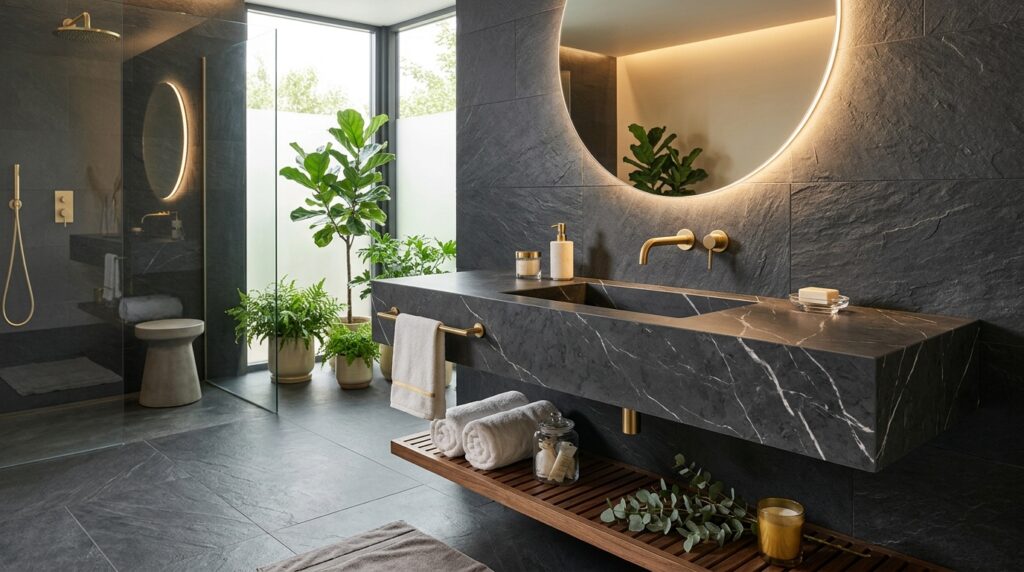
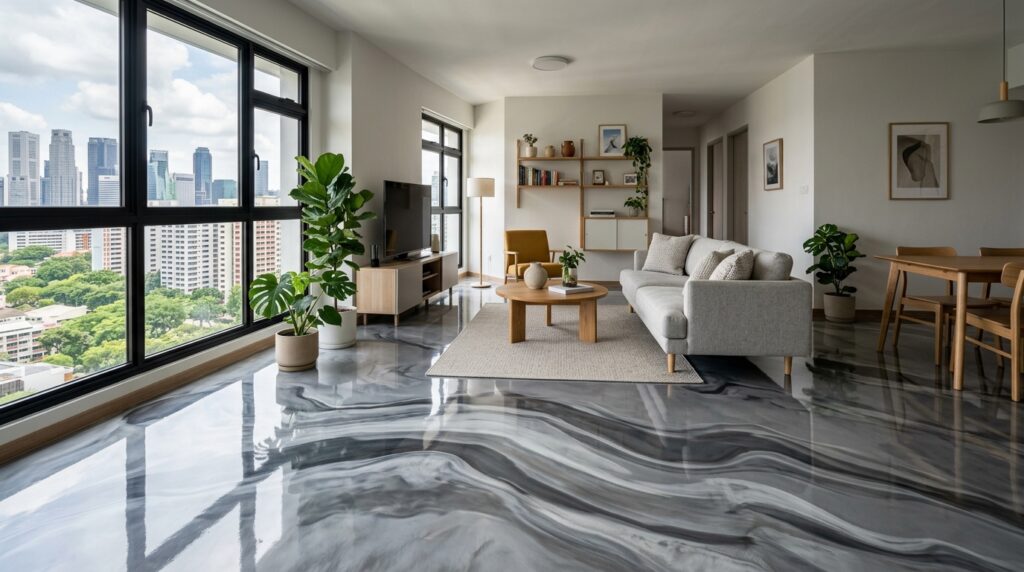
metallic epoxy hdb living 1783657807407

Metallic Epoxy vs Vinyl Flooring (2026): HDB Cost & Durability Compared

Metallic Epoxy vs Vinyl Flooring (2026): HDB Cost & Durability Compared Quick Answer: For homeowners wanting a unique, seamless, 100% waterproof flooring that lasts decades, metallic epoxy flooring is the premium choice, especially for bathrooms and kitchens. For budget-conscious homeowners looking for a quick, modular wood-look finish, vinyl tiles (LVT/SPC) offer a solid, cost-effective alternative. FTC Disclosure: Nouvelle Workz is a professional direct renovation contractor in Singapore. If you purchase flooring services through our direct consultation links in this guide, we receive direct service contract rewards with no middleman agent commissions or ID markups passed to you. Last updated: July 10, 2026 — Introduction: Why Flooring Choice is a Multi-Decade Decision in HDB Flats When you collect the keys to your new HDB BTO flat, the flooring you choose is arguably the most permanent design decision you will make. While wall colors can be repainted in a weekend and furniture swapped out on a whim, changing your flooring later requires heavy hacking, chemical dust, moving out of your home, and thousands of dollars in commercial reinstatement costs. In Singapore’s warm, humid climate, flooring materials face unique stresses. High relative humidity, daily wet mopping, and constant foot traffic require materials that are not just beautiful, but structurally resilient. Today, two of the most popular flooring trends dominate BTO renovations: vinyl flooring Singapore favorites (specifically Luxury Vinyl Tiles and Stone Plastic Composite) and epoxy flooring Singapore premium options (specifically design-heavy metallic epoxy coatings). This guide provides an exhaustive, head-to-head comparison of metallic epoxy flooring versus vinyl tiles, analyzing their costs, durability, waterproofing capabilities, aesthetics, and maintenance to help you make an informed decision for your HDB flat. — 1. Structural Comparison: Metallic Epoxy Flooring vs. Vinyl Tiles To understand how these floors perform, we must first look at what they are made of and how they are installed in HDB flats. What is Metallic Epoxy Flooring? Metallic epoxy is a multi-layered coating system applied directly over a solid substrate (like cement screed or existing tiles). It consists of a high-grade liquid epoxy resin mixed with metallic pigment powders. As the self-leveling liquid cures, these metallic pigments move dynamically through the resin, creating a fluid, organic, 3D marble-like look. Every single metallic epoxy floor is a unique piece of art; it is physically impossible to create two identical patterns. What are Vinyl Tiles (LVT / SPC)? Vinyl tiles, commonly referred to as Luxury Vinyl Planks (LVP) or Stone Plastic Composite (SPC) flooring, are modular planks composed of synthetic plastic polymers and limestone powder cores. They feature a printed photographic layer (usually mimicking oak, walnut, or concrete textures) protected by a clear polyurethane wear layer. They are installed as individual interlocking tiles or glued down over a subfloor. Core Specifications Comparison Performance Factor Metallic Epoxy Flooring Vinyl Tiles (LVT / SPC Planks) Material Base Liquid polymer resin + metallic mineral pigments PVC polymers, limestone dust, wear layer Installation Method Multi-step liquid application, cured in-situ Floating click-lock system or glue-down tiles Thickness 2.0mm to 3.0mm (standard HDB application) 4.0mm to 6.5mm (including underlayment) Seamlessness 100% seamless (no grout lines, no joints) Modular planks with joints and perimeter expansion gaps Life Span 15 to 25+ years (highly durable, restorable) 5 to 12 years (prone to wear, peeling, swelling) Waterproof Rating 100% impervious to moisture (non-porous) Highly water-resistant (but water can seep through joints) Underfloor Feel Solid, cool, dense (similar to marble) Soft, warm, slightly yielding (cushioned underlay) — 2. In-Depth Head-to-Head Performance Evaluation To truly evaluate which flooring fits your lifestyle, we must look at how these materials perform across crucial residential categories. Durability and Scratch Resistance A major concern for HDB homeowners is how flooring handles heavy furniture drag, pet claws, and dropped kitchen utensils. Metallic Epoxy: Liquid epoxy cures chemically into a cross-linked polymer that is incredibly dense and hard. High-quality epoxy flooring Singapore projects utilize a polyurethane or polyaspartic topcoat, which acts as a shield against scratches and UV discoloration. While sharp metal items dropped from a height can chip the surface, it is generally much harder to scratch than wood or vinyl. If it does get micro-scratches after a decade, it can be buffed and resealed without replacing the entire floor. Vinyl Tiles: Vinyl relies entirely on its clear “wear layer” (measured in microns, usually 0.3mm to 0.5mm for HDB grade) for scratch protection. Pet claws, dragged chairs, and small rocks caught under shoes can slice through this layer, exposing the printed design underneath. Once a vinyl plank is gouged or scratched deep, it cannot be buffed out; the individual damaged plank must be cut out and replaced, which often results in color-matching issues due to dye-lot variations. Waterproofing and Wet Area Safety Singapore’s high humidity and frequent washing of kitchens and bathrooms make water resistance a top priority. IMPORTANT DIRECT ANSWER EXPERT CITATION ON HDB WATERPROOFING SAFETY James, Founder of Nouvelle Workz (Singapore Direct Renovation Specialist): “Many homeowners assume that vinyl flooring labeled ‘100% waterproof’ is safe for kitchens and bathrooms. The vinyl material itself won’t rot, but water will eventually seep through the tiny micro-gaps between the interlocking click joints. Once moisture gets trapped under vinyl planks in a humid Singapore home, it leads to black mold growth, subfloor rot, and adhesive failure. For wet areas like bathrooms and heavy-use kitchens, a seamless liquid-applied epoxy bathroom floor Singapore package is the only way to guarantee a 100% watertight seal that stops leaks and dampness permanently.” Metallic Epoxy: Because it is applied as a liquid and cures into a single continuous sheet, there are zero joints, seams, or grout lines. Water simply sits on the surface until wiped away. This makes it impossible for moisture to bypass the barrier. To ensure safety in bathrooms, slip-resistant aggregates (like fine quartz beads) are suspended in the topcoat, providing traction that equals or exceeds traditional matte tiles. Vinyl Tiles: Although SPC vinyl planks are chemically waterproof, they are installed as individual interlocking units. Spilled liquids left standing can migrate through the micro-seams. In

Metallic Epoxy vs Vinyl Flooring (2026): HDB Cost & Durability Compared Read More »

Shopping Cart
Scroll to Top