
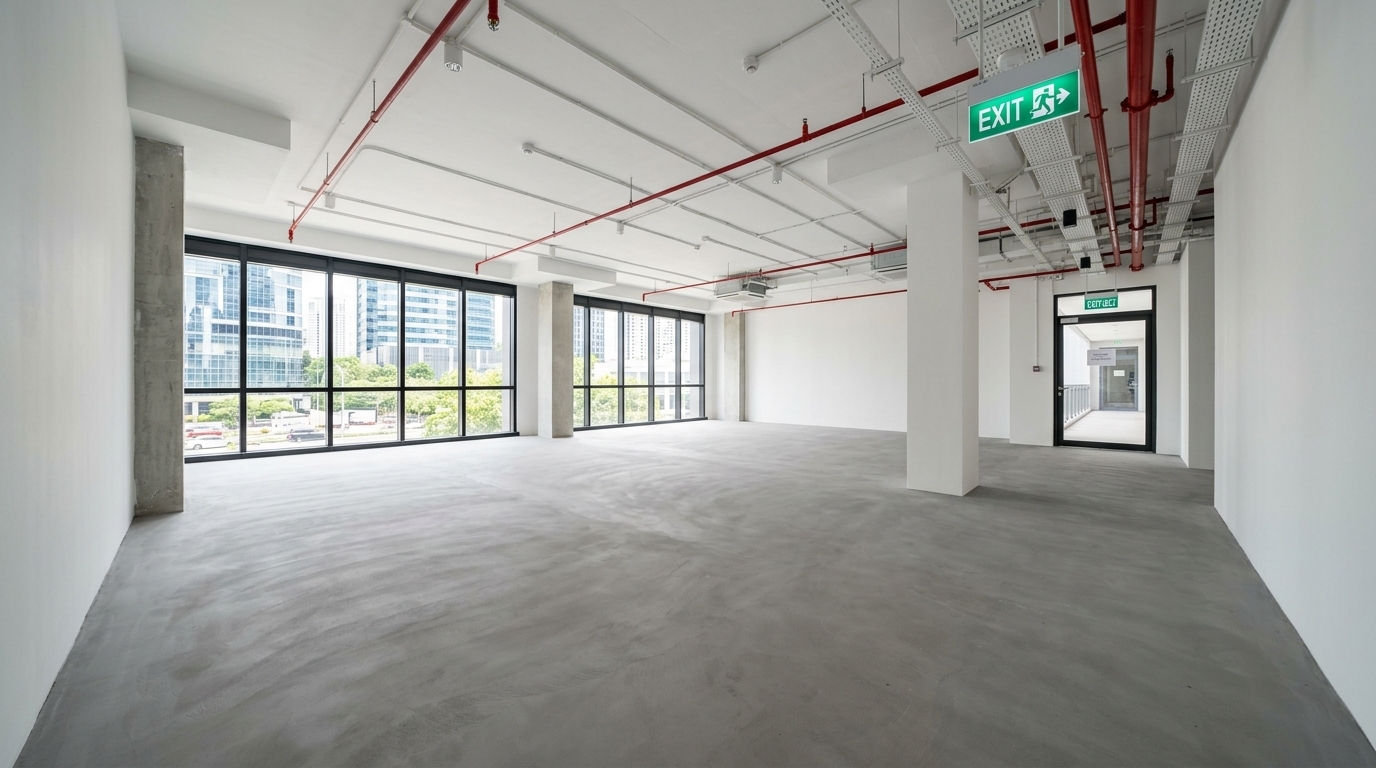
F&B and retail shop reinstatement in Singapore is the contractual process of restoring a leased commercial unit back to its original bare-shell condition upon lease expiration. Unlike standard office handovers, F&B reinstatement requires decommissioning commercial kitchen exhaust systems, capping plumbing and grease traps, removing floor waterproofing, and executing overnight demolition under strict shopping mall MCST guidelines.
Commercial Tenancy Alert: In Singapore shopping malls (such as CapitaLand, Frasers, and Lendlease developments), building management retains the full security deposit—often amounting to 3 to 6 months of rent—until every single item on the reinstatement handover checklist is signed off. Engaging a licensed direct builder with in-house trade capabilities ensures full compliance with mall night-work bylaws and SCDF fire safety regulations.
Operating a retail store or food-and-beverage (F&B) establishment in Singapore is an intensive journey. However, when a commercial lease draws to a close, business owners frequently face an unexpected logistical obstacle: commercial reinstatement. Returning a shop lot or restaurant back to the landlord is far more complex than vacating a residential apartment or corporate office.
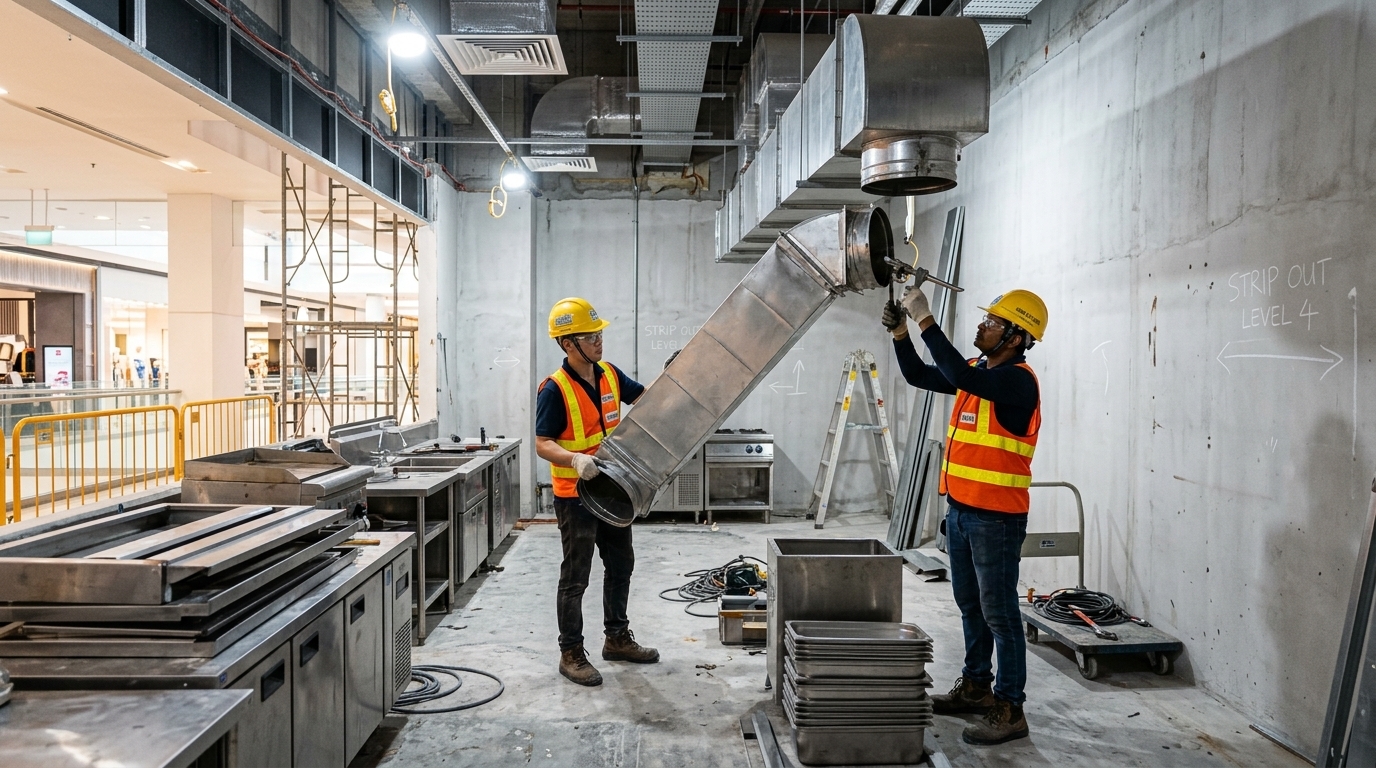
Commercial leases in Singapore contain stringent “make-good” clauses. Tenants are legally obligated to return the leased space in its original “bare shell” condition. For retail boutiques, this means dismantling custom shopfronts, brand signage, display fixtures, and false ceilings. For restaurants and cafes, the scope escalates significantly—involving commercial kitchen exhaust hood dismantling, ecology unit removal, grease trap decommissioning, and chipping away heavy floor tiles and waterproofing screeds.
1. 2026 F&B vs Retail Shop Reinstatement Cost Breakdown
How much does retail and restaurant reinstatement cost in Singapore? Because commercial spaces vary wildly in layout and mechanical complexity, contractors quote either on a rate per square foot ($/sqft) or as an itemized trade-by-trade lump sum. Below is the updated 2026 pricing benchmark across different commercial property types.
Why is restaurant reinstatement significantly costlier than corporate offices? In an office, contractors primarily dismantle gypsum drywalls and remove carpet. In a dining venue, contractors must reverse complex Mechanical, Electrical, and Plumbing (M&E) installations. Furthermore, most shopping malls enforce a 15% to 25% night-shift labor loading because loud hacking and debris haulage can only take place outside mall trading hours.
2. The 5 Non-Negotiable Mall Handover Requirements in Singapore
Major Singapore landlords such as CapitaLand, Frasers Property, Mapletree, and Lendlease enforce strict Fit-Out & Handover Guidelines. Failing to meet even a single specification can lead building management to reject the handover, forfeit your security deposit, or deduct substantial rectification penalties.
1. Mandatory Overnight Working Window (11:00 PM – 7:00 AM)
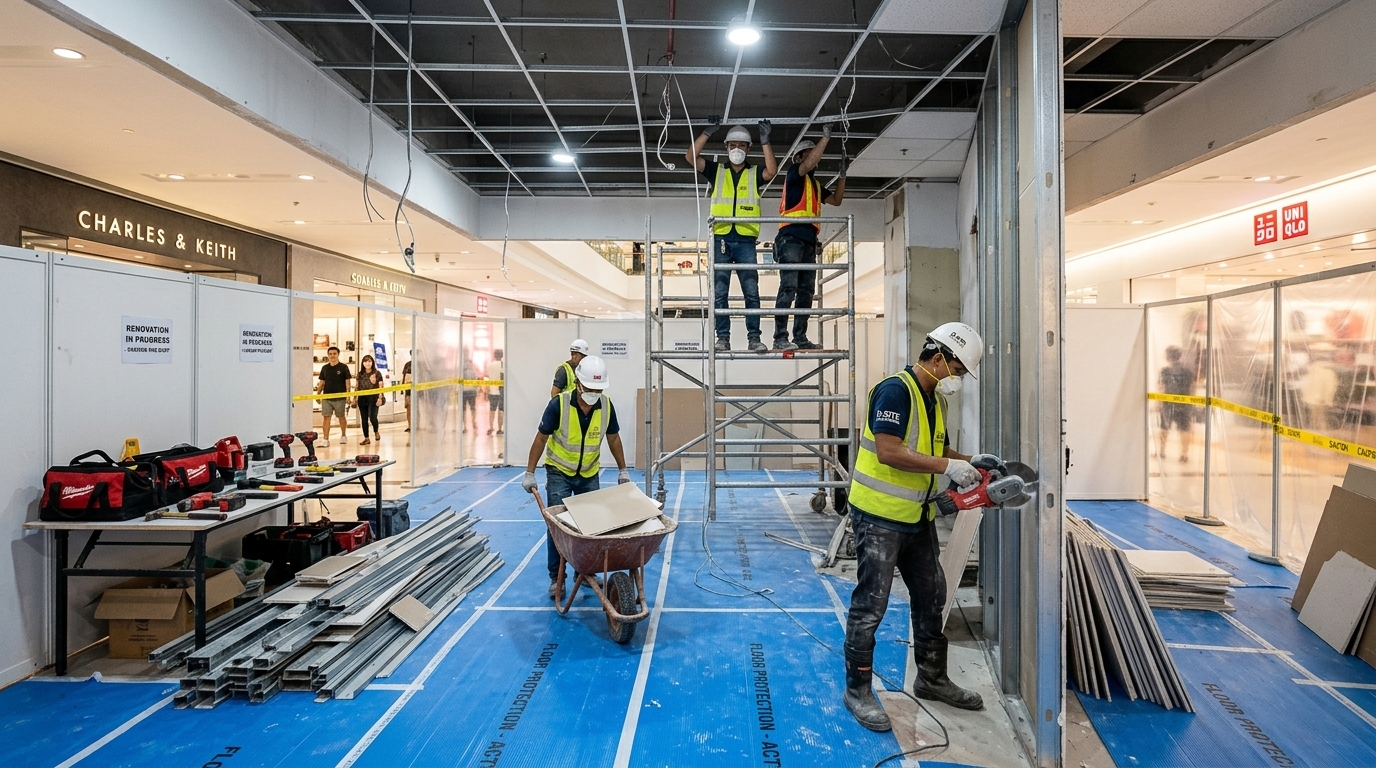
Retail malls operate 365 days a year. Demolition involving rotary hammers, angle grinders, or reciprocating saws is strictly prohibited between 8:00 AM and 10:30 PM. All loud hacking, heavy debris disposal, and material transport through service corridors must occur overnight. Professional contractors must organize disciplined double-shift teams to execute demolition at night and clean up thoroughly before mall doors open at 10:00 AM.
2. Commercial Kitchen Exhaust & Ecology Unit Decommissioning
The kitchen exhaust ductwork is often the single most labor-intensive component of restaurant reinstatement. Tenants must unbolt stainless steel exhaust hoods, disconnect makeup air systems, and dismantle electrostatic precipitators (ecology units). Critically, the duct opening leading to the building’s central exhaust riser must be hermetically sealed or restored to the original fire damper flange. If your business is also planning a future location, review our guide on F&B restaurant and cafe renovation in Singapore to understand proper ductwork installation from the start.
3. Grease Trap Decommissioning and Plumbing Termination
In Singapore, commercial kitchens must comply with strict National Environment Agency (NEA) and Public Utilities Board (PUB) regulations. During reinstatement, in-ground or portable grease traps cannot simply be disconnected and discarded. They must be thoroughly pumped out and sanitized by a licensed toxic industrial waste collector. Water supply pipes must be cut back, capped with pressure-tested brass fittings, and all floor traps inspected for grease blockages.
4. SCDF Fire Safety Restoration (Sprinklers & Detectors)
During your initial retail fit-out, fire sprinkler heads were likely lowered into false ceiling boards, and additional smoke detectors were added to partition walls. Upon lease expiry, Singapore Civil Defence Force (SCDF) Fire Code rules require the sprinkler grid to be re-elevated to the base building height (typically facing downward from the main structural ceiling). Sprinkler pipe drainage and charging must be scheduled with building maintenance to prevent accidental building-wide fire alarms.
5. Protection of Mall Common Property and Hoarding
Before demolition begins, building management requires the contractor to install temporary dust-proof hoarding across the shopfront. Heavy-duty corrugated plastic boards (corflute) must cover the mall floor along the entire haulage route to the service elevator. Any accidental chip on the mall’s marble tiles or damage to lift cab interiors will be deducted directly from your fitting-out deposit.
“Many F&B tenants needlessly spend thousands hacking down high-spec electrical setups that incoming operators desperately want. A proactive builder conducts a joint survey with the mall building manager 30 days early to identify reusable fixtures, saving our clients substantial demolition expenses while keeping the landlord completely satisfied.”
— James Liang, Founder & Managing Director of Nouvelle Workz Pte. Ltd.
3. What Can You Negotiate with the Landlord? (Salvage vs Reinstatement)
One of the most effective strategies to lower commercial reinstatement expenses is negotiating an “As-Is” Handover Waiver with the building owner or incoming tenant. If the subsequent tenant is also an F&B business or retail operator, certain existing structures can often be retained:
- Three-Phase Electrical DB Box & Isolators: Upgrading power capacity in a mall unit costs thousands. Incoming operators almost always prefer keeping high-capacity Distribution Boards.
- Walk-In Chillers and Freezers: Built-in cold rooms have high residual value. Transferring ownership to the landlord or next tenant can save $4,000 to $8,000 in demolition and disposal fees.
- Exhaust Canopy & Fire Suppression System: If the ANSUL fire suppression system is serviced and certified, landlords often permit leaving the hood intact.
- Restroom Sanitary Plumbing: In shophouse units, retaining functional customer toilets saves extensive waterproofing and tiling demolition.
To formalize this, both parties must sign an indemnity letter releasing the outgoing tenant from reinstatement liabilities for the approved fixtures. For general corporate space handovers, see our companion reference on the commercial office reinstatement checklist and FSSD guide.
4. Step-by-Step 30-Day Reinstatement Timeline
Timing is critical during a commercial lease handover. If works are delayed past your lease termination date, tenancy contracts allow landlords to charge holding damages—frequently at double the prevailing rent rate. Follow this structured 30-day timeline to ensure on-time delivery:
Planning an F&B or Retail Handover in Singapore?
Explore our licensed commercial office and retail reinstatement services, or inspect our past corporate fit-outs in our Project Portfolio.
Nouvelle Workz delivers turnkey demolition, M&E capping, and overnight mall execution with guaranteed landlord sign-off.
Frequently Asked Questions (FAQ)
How long does an F&B reinstatement project take in a Singapore shopping mall?
For a typical 1,000 to 2,000 sqft restaurant or cafe, reinstatement generally requires 7 to 14 working nights. Because commercial shopping centres only permit heavy demolition between 11:00 PM and 7:00 AM, contractors must coordinate phased night shifts to complete hacking, mechanical capping, waste removal, and final painting on schedule.
Who is responsible for grease trap pumping and disposal during reinstatement?
The outgoing tenant is fully responsible for clearing grease trap contents prior to landlord inspection. The disposal must be handled by an NEA-licensed grease trap waste collector who issues an official waste disposal receipt. Your reinstatement contractor can coordinate this disposal as part of the turnkey decommissioning package.
Why is F&B reinstatement more expensive than corporate office reinstatement?
Corporate offices primarily require removing drywall partitions and surface carpet. In contrast, F&B reinstatement involves heavy-duty stainless steel exhaust hood dismantling, ecology unit handling, grease-contaminated floor tile hacking, plumbing capping, gas supply isolation, and mandatory night-shift labor premiums enforced by shopping mall managements.
Can a tenant be penalized if the handover is delayed past the lease expiry date?
Yes. Most Singapore commercial tenancy agreements include holding-over clauses that penalize tenants double the daily rental rate for every day the unit remains unreturned. Additionally, landlords may forfeit your security deposit or hire their own contractor at higher market rates and bill the difference to you.