
Planning to hack a wall in your HDB flat or condo to create an open-concept living space? You cannot simply start swinging a sledgehammer. In Singapore, illegal structural hacking is a severe offense that can compromise the integrity of the entire building. Here is your ultimate 2026 guide to HDB hacking permits, PE (Professional Engineer) endorsements, and estimated demolition costs.
Open-concept kitchens, expanded master bedrooms, and massive combined living areas are the most sought-after interior design trends in Singapore. However, achieving these layouts almost always involves knocking down existing walls.
Before you fall in love with a 3D rendering, you must understand the strict regulations enforced by the Housing & Development Board (HDB) and the Building and Construction Authority (BCA). Failing to obtain the right hacking permits can lead to massive fines, forcefully reinstating the wall at your own expense, or worse—causing a structural collapse.
1. The Golden Rule: Structural vs. Non-Structural Walls
The very first step before any renovation is requesting a copy of your floor plan from HDB or your Condo’s MCST. You need to identify two types of walls:
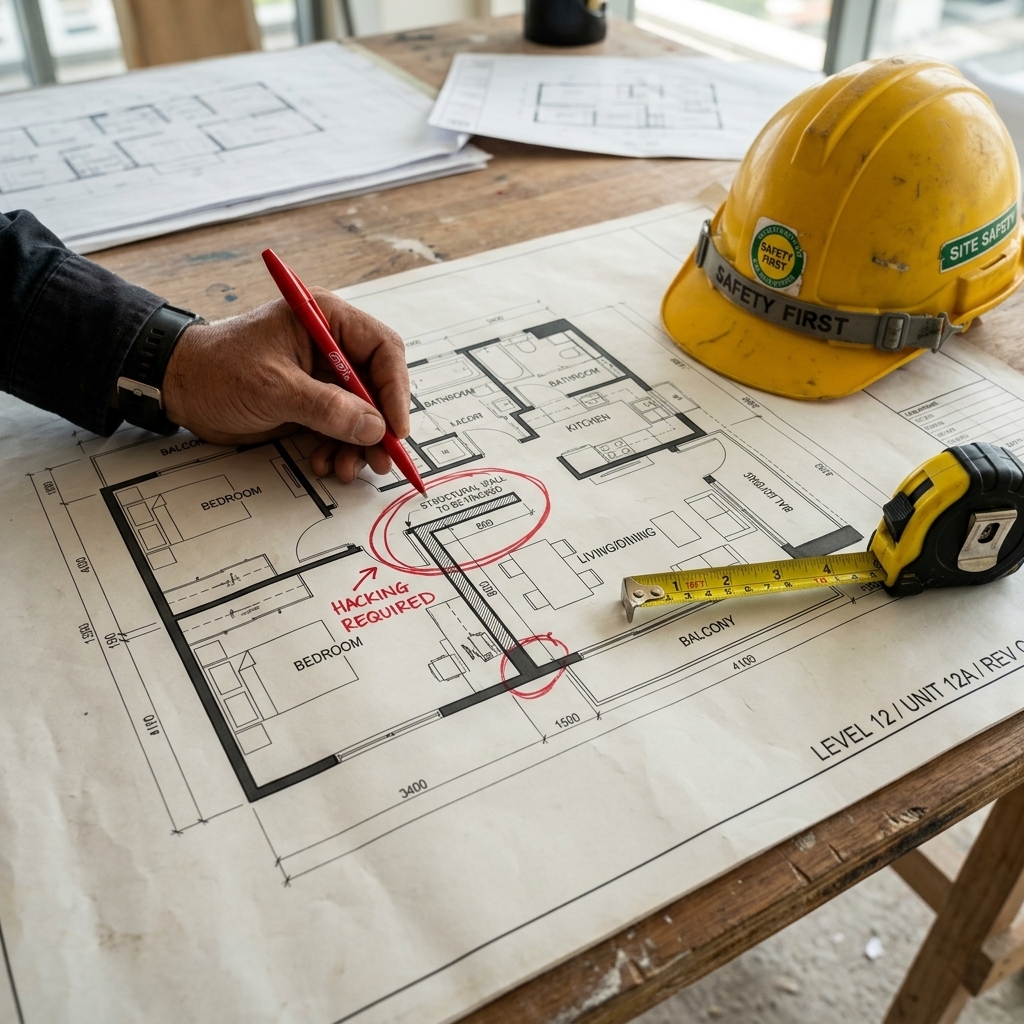
- Structural / Load-Bearing Walls (Thick Solid Lines): These walls hold up the weight of the building. They can NEVER be hacked. Even drilling large holes into these walls is strictly regulated. On your floor plan, they are denoted by thick, solid black lines or shaded in black.
- Non-Structural Walls (Thin / Hollow Lines): These walls merely divide spaces (like bedrooms and kitchens) and do not support the building’s weight. On your floor plan, they are indicated by thin lines with clear spaces in between. These walls can generally be hacked, but you still need a permit.
2. When Do You Need a PE (Professional Engineer) Endorsement?
For standard HDB non-structural walls, your HDB Registered Renovation Contractor will submit the hacking application via the HDB portal on your behalf. Usually, approval is granted within 3 to 7 working days.
However, the rules get significantly stricter for Condominiums, Landed Properties, and certain specific HDB layouts. You will be required to hire a Professional Engineer (PE) to inspect and endorse your hacking plans under the following scenarios:
- Condominium Renovations: Almost all Condo MCSTs require a PE endorsement before they allow you to touch any wall, just to legally protect the building’s structural integrity.
- Creating Doorways in specific areas: If you are modifying archways or creating a new doorway near a structural column, HDB may reject the standard application and demand a PE to certify that the surrounding columns won’t be compromised.
- Executive Maisonettes (EM) or HDB Loft Units: Due to the double-story nature of these units, hacking walls near stairs or the upper floor almost always requires PE calculations.
“A lot of homeowners get shocked when their condo MCST tells them they need a PE for a simple partition wall. At Nouvelle Workz, we manage this entire PE liaison process for you. We submit the CAD drawings, arrange the PE site inspection, and settle the BCA submissions so you don’t have to navigate the bureaucracy.”
3. Hacking Regulations and Process
Once the permit (and PE endorsement, if required) is approved, the actual hacking process must follow strict guidelines:
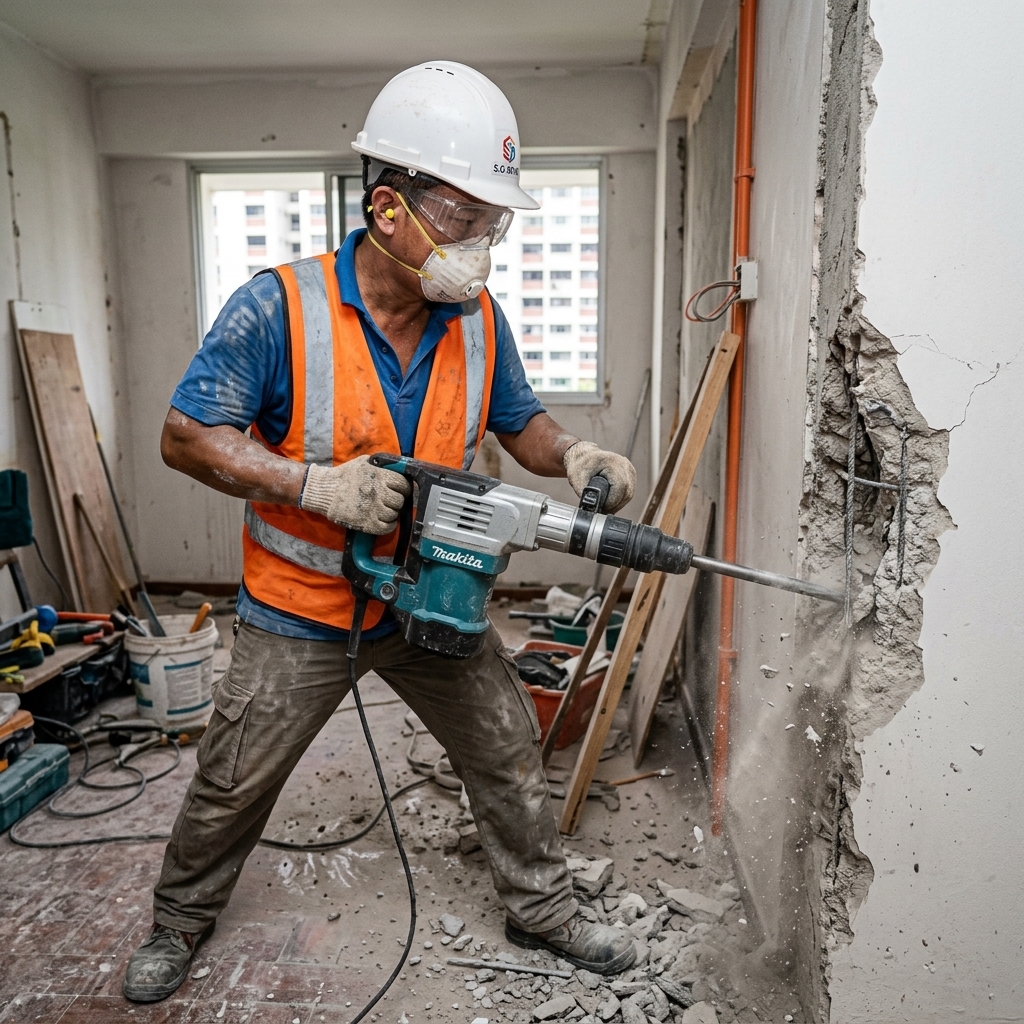
- Noise Regulations: Noisy renovation works (hacking, drilling) are strictly limited to weekdays between 9:00 AM and 5:00 PM. Hacking is completely banned on weekends and public holidays.
- 3-Day Hacking Limit: For HDB flats, the actual noisy hacking work must be completed within 3 consecutive days to minimize nuisance to neighbors.
- Debris Disposal: Hacking generates tons of heavy concrete rubble. Your contractor cannot dump this in the HDB bin centre. They must hire licensed haulage services to dispose of the debris at NEA-approved sites.
4. 2026 Estimated Costs: Hacking & PE Endorsement
How much should you budget if you plan to hack down a wall? Costs vary heavily based on the thickness of the wall (half-brick vs full concrete), the length of the wall, and whether haulage is included.
Estimated Demolition & Hacking Costs (2026)
| Service Item | Estimated Cost Range |
|---|---|
| Hacking 1 Standard Wall (incl. making good the edges) | $600 – $1,200 per wall |
| Hacking Kitchen Floor & Wall Tiles | $1,200 – $1,800 |
| Hacking Bathroom Tiles (per bathroom) | $1,000 – $1,500 |
| Professional Engineer (PE) Endorsement (If required) | $800 – $1,500 per submission |
| Debris Haulage & NEA Disposal Fee | $400 – $800 per truckload |
*Note: Prices are estimates. A direct contractor will usually bundle hacking, haulage, and making-good (plastering the raw edges) into a comprehensive quote.
The Reward: Open Concept Living
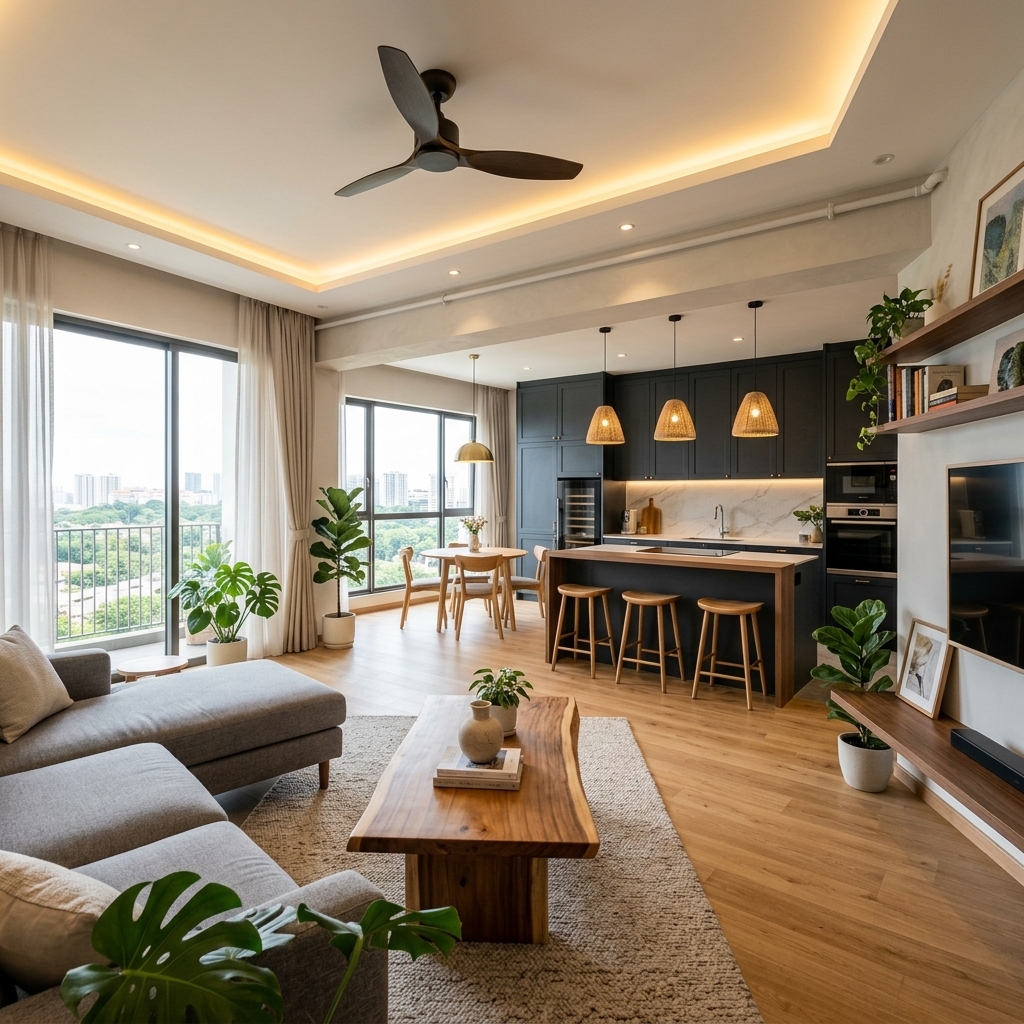
While the permitting process sounds tedious, the result is completely worth it. Hacking down the kitchen wall allows natural light to flood the entire apartment, while combining two bedrooms can create a luxurious master suite with a walk-in wardrobe.
To ensure your renovation proceeds without legal hiccups or delays, always engage an HDB Registered Direct Contractor who handles the permit bureaucracy in-house.
🔗 Related Guide: After hacking, how much will the full renovation cost? See our 2026 HDB Renovation Cost Breakdown.
Want to create an Open-Concept Home?
As an HDB Registered Contractor, Nouvelle Workz handles all hacking permits, PE endorsements, and structural demolition safely and legally.
Explore our Residential Renovation Services today.
Message Us for Hacking CostsFrequently Asked Questions
Can I hack the bomb shelter or household shelter wall?
No. The household shelter is a highly reinforced structural component designed to protect occupants during emergencies. Hacking, drilling, or modifying the bomb shelter walls is strictly prohibited by HDB and SCDF.
How much does a PE (Professional Engineer) endorsement cost in Singapore?
If your condo MCST or HDB requires a PE endorsement for hacking, you can expect to pay between $800 to $1,500 per submission. This covers the engineer’s structural calculations and legal liability for the modification.
How long does the hacking process take?
HDB strictly mandates that all noisy demolition and hacking works must be completed within 3 consecutive working days to minimize disturbance to your neighbors.