

Vinyl Flooring Over Existing Tiles for HDB Resale (2026): Pros, Cons & Costs
Direct Answer: Yes, laying vinyl flooring (SPC) directly over existing HDB tiles is a highly cost-effective choice in 2026. It saves you between $1,500 to $3,000 on hacking and haulage fees, reduces renovation time by a week, and provides a durable, waterproof, and wood-like aesthetic without the messy demolition. When purchasing an older HDB resale flat in Singapore, one of the biggest eyesores is often the outdated, heavily grouted ceramic floor tiles. While replacing them is a top priority for most homeowners, the cost of hacking, applying cement screed, and laying new porcelain tiles can easily consume a massive chunk of your renovation budget. In 2026, the smartest financial move is SPC (Stone Plastic Composite) Vinyl Flooring. At Nouvelle Workz, we specialize in seamless vinyl overlays. Here is everything you need to know about laying vinyl over existing tiles, including the pros, cons, and actual costs. 1. The Financial Benefit: Skipping the Hacking Permit If you decide to rip out your old tiles, you are paying for three separate things before the new floor even goes down: Hacking Labour: $800 – $1,500 (depending on flat size) Haulage & Disposal: $500 – $800 to clear the debris to the town council bin centre Cement Screeding: $1,000 – $2,500 to re-level the raw concrete subfloor By overlaying SPC vinyl planks directly onto the existing tiles, you instantly save up to $4,000. This surplus budget can be redirected to bespoke carpentry or high-end kitchen appliances. 2. Pre-Installation: Can Any Tile Be Overlayed? Before we install the vinyl, a professional contractor must assess the existing floor. Not all tiles are suitable for immediate overlay. Tile Condition Required Action Flat, Intact Ceramic Tiles Ready for direct overlay. Popped or “Hollow” Tiles Must be hacked out and patched with cement before vinyl installation. Deep Grout Lines A thin skim coat (putty) must be applied to fill the grout lines, preventing the vinyl from indenting over time. 3. Managing Door Clearances One of the most common issues with overlaying floors is the added height. Standard SPC vinyl planks are between 4mm and 6mm thick. When layered over existing tiles, this raises the floor level. If your bedroom doors swing inward and scrape against the new floor, your contractor will need to trim (shave) the bottom of the timber doors to ensure a smooth swing. At Nouvelle Workz, this door trimming service is routinely included in our vinyl packages. “Always ask your contractor about the skirting. We recommend removing the old tile skirting and installing matching PVC or timber skirting over the new vinyl. It hides the expansion gaps perfectly and provides a premium, hotel-like finish.” – James, Founder of Nouvelle Workz Ready for a Flooring Upgrade? Explore our HDB Renovation Services in Singapore, or view our Project Portfolio. Contact Nouvelle Workz for a direct, transparent quotation with zero ID markups. WhatsApp Us

Commercial Office Fit-Out Guide (2026): Budgeting for 1,000 – 5,000 Sqft Spaces
Direct Answer: In 2026, a standard commercial office fit-out in Singapore costs between $60 to $110 per square foot (PSF), depending on the complexity of MEP (Mechanical, Electrical, Plumbing) works, glass partitions, and FSSD (Fire Safety) compliance requirements. For a typical 2,000 sqft space, expect to budget around $150,000 to $200,000. Leasing a new commercial unit in Singapore is a major milestone for any growing business. Whether you are expanding into a premium CBD Grade A building or securing a dynamic space in a high-tech business park, the next critical step is planning your office renovation. But how much should you realistically budget for a modern office fit-out in 2026? At Nouvelle Workz, a BCA-registered direct commercial contractor, we eliminate the steep markups charged by traditional interior design firms. In this comprehensive guide, we break down the real costs of fitting out 1,000 to 5,000 sqft office spaces in Singapore. 1. Bare vs. Fitted Condition: The Starting Point Your renovation budget heavily depends on the handover condition of your leased unit: Handover Condition Estimated Cost (PSF) What to Expect Bare Unit $80 – $120 PSF Requires extensive MEP work, fresh ceiling grids, lighting, and floor screeding. Higher initial cost but total design freedom. Partially Fitted $50 – $80 PSF Existing ceiling, raised floors, and basic lighting remain. Budget goes towards partitions, carpentry, and electrical rewiring. “Many tenants underestimate the hidden costs of MEP (Mechanical, Electrical, Plumbing) works in bare units. Repositioning air-con fan coil units and modifying fire sprinklers to meet FSSD regulations often consumes 30% of the entire budget.” – James, Founder of Nouvelle Workz 2. Core Expense Breakdown for a 2,000 Sqft Office If you are budgeting for a standard 2,000 sqft office (suitable for 15-25 employees) in 2026, here is how a $160,000 budget is typically allocated: MEP & Fire Safety (30% – $48,000): Electrical wiring, data cabling, sprinkler relocations, and mandatory FSSD submissions. Partitions & Ceilings (25% – $40,000): Erecting gypsum board walls, double-glazed acoustic glass for meeting rooms, and ceiling grid modifications. Custom Carpentry (20% – $32,000): Bespoke reception counters, pantry cabinets, and built-in storage solutions. Flooring & Finishes (15% – $24,000): Commercial-grade carpet tiles, vinyl flooring for pantries, and wall painting. Project Management & MCST Fees (10% – $16,000): Coordination, permits, and building management deposits. 3. Why Use a Direct Commercial Contractor? Corporate interior design (ID) firms often outsource the actual labor to sub-contractors, layering a 20% to 35% margin on top of the actual construction costs. By engaging a BCA-registered direct contractor like Nouvelle Workz, you communicate directly with the project managers executing the build. This ensures zero communication breakdown, faster MCST approvals, and significant cost savings that can be reinvested into premium ergonomic furniture for your staff. Need a reliable partner for your office fit-out? As a BCA Registered Direct Contractor, we deliver on time and on budget. View our comprehensive Commercial Renovation Services. Need a Reliable Office Fit-Out Partner? Explore our Commercial Renovation Services in Singapore, or view our Corporate Portfolio. Contact Nouvelle Workz for a direct, transparent quotation with zero ID markups. WhatsApp Us

2026 HDB Bomb Shelter Renovation Rules: DOs & DONTs
Direct Answer: 2026 HDB rules for Household Shelters (bomb shelters) strictly prohibit drilling, hacking, or removing the steel door and ventilation sleeves. You may paint the door, install removable wallpaper, or use free-standing storage racks that do not compromise the structural integrity of the shelter walls. If you’ve recently collected the keys to your new BTO or resale HDB flat, you’ve likely noticed the heavy steel door in your living room or kitchen. The Household Shelter (HS), commonly known as the bomb shelter, is a mandatory structural feature in all HDB flats built after 1996. While it offers crucial protection during civil emergencies, it can be an eyesore for interior design. Many homeowners ask: Can I remove the bomb shelter door? Can I drill into the walls to mount shelves? At Nouvelle Workz, a BCA-registered direct contractor, we see homeowners risk massive fines every year for illegal modifications. In this guide, we break down exactly what you can and cannot do to your HDB bomb shelter in 2026. 1. The Golden Rule: No Hacking, No Drilling The walls, floor, and ceiling of your Household Shelter are heavily reinforced to withstand blast impacts. Modifying them compromises the safety of not just your unit, but the entire HDB block. Modification Type HDB & SCDF Ruling Reasoning Hacking Walls or Floors STRICTLY ILLEGAL Destroys structural integrity and blast resistance. Drilling for Shelves/TVs STRICTLY ILLEGAL Creates micro-fractures in reinforced concrete. Removing the Steel Door STRICTLY ILLEGAL The door provides critical blast and airtight sealing. 2. What You CAN Do to Decorate the Shelter Door While you cannot remove or permanently alter the door, you can disguise it. HDB permits you to apply a fresh coat of paint or removable wallpaper over the door, provided you do not paint over or remove the mandatory notice plate. Planning a full flat makeover? See our HDB renovation contractor service. “Many of our clients opt for feature walls. You can build a carpentry feature wall that conceals the bomb shelter door, as long as the false door allows the steel door to open fully and does not block the ventilation sleeves.” – James, Founder of Nouvelle Workz 3. Maximizing Internal Storage (Legally) Since drilling is banned, you cannot mount wall shelves. The best compliant solution is to use heavy-duty, free-standing metal racks. These modular racks maximize vertical space without requiring wall anchors. Additionally, ensure that items do not obstruct the ventilation sleeves, lighting, or power sockets. 4. Floor Finishes in the Bomb Shelter You are not allowed to hack the existing floor tiles of the bomb shelter. However, you can overlay the floor with vinyl flooring or a thin layer of epoxy, provided the final thickness does not obstruct the opening and closing of the steel door. The gap between the door bottom and the floor must remain unhindered. Planning a Compliant HDB Renovation? Explore our top-rated HDB & Residential Renovation Services in Singapore, or view our latest Project Portfolio to see our workmanship. Contact our expert team at Nouvelle Workz for a direct contractor quote and avoid ID markups. WhatsApp Us Frequently Asked Questions Can I drill into my HDB bomb shelter walls? No, it is strictly illegal to drill into the walls, floor, or ceiling of an HDB Household Shelter as it damages the reinforced concrete structure. Can I remove the steel bomb shelter door? No, removing the steel door is prohibited. The door is necessary to maintain the airtight and blast-resistant seal of the shelter. How can I install shelves in a bomb shelter? Since drilling is banned, homeowners must use free-standing metal racks or storage shelves that do not require wall anchors.

How to Spot Fake Direct Contractors in Singapore (2026)
Direct Answer: What is a Fake Direct Contractor? A fake direct contractor in Singapore is a middleman claiming to have their own in-house factory and workers, but actually subcontracts the entire project to third parties, resulting in hidden markups, delayed timelines, and zero accountability for workmanship quality. Real direct contractors own their production facilities and employ direct labor. The Rise of Renovation Scams in Singapore (2026) Finding a reliable renovation partner in Singapore has always been a daunting task. However, as we move through 2026, a new deceptive trend has emerged: the rise of “fake” direct contractors. Homeowners and business owners alike are lured by the promise of factory-direct pricing, only to find themselves trapped in a web of hidden fees, substandard materials, and ghosting project managers. True direct contractors offer immense value. They cut out the interior design (ID) markup because they own their carpentry workshops, employ their own tilers, and manage the project directly. But how can you tell if the company you are speaking to is the real deal, or just a shell company passing your project down the line? This comprehensive guide will equip you with the exact strategies to spot fake direct contractors before you sign any contract. Red Flag 1: No Physical Workshop or Factory Visit Allowed The most defining characteristic of a genuine direct contractor is their infrastructure. If a contractor claims they do their own carpentry but refuses to let you visit their local workshop or factory, run the other way. Fake contractors operate out of virtual offices or small rented desks, relying entirely on overseas or third-party local suppliers. “James, Founder of Nouvelle Workz: ‘Always ask to see their carpentry workshop. A real direct contractor will proudly show you their machines, their raw materials, and their craftsmen at work. If they give excuses about safety regulations or say the factory is in Malaysia and cannot be viewed on video call, they are likely outsourcing your cabinets with a massive markup.’” How to Verify Their Infrastructure Don’t just take their word for it. Look up their registered business address on ACRA (Accounting and Corporate Regulatory Authority). If the address points to a co-working space or a residential HDB block, they don’t have a factory. Genuine contractors are usually located in industrial estates like Sungei Kadut, Defu Lane, or Ubi. Red Flag 2: Vague Quotations and Hidden “Lump Sums” A telltale sign of a middleman is a quotation lacking granularity. Direct contractors know exactly how much materials and labor cost because they pay for it directly. They will itemize everything down to the per-foot-run (PFR) for carpentry, the type of hinges used (e.g., Blum vs. Excel), and the specific brand of vinyl flooring. Fake contractors often provide “Lump Sum” estimates. For example, they might quote “$15,000 for Kitchen Renovation” without specifying the length of the cabinets, the countertop material, or whether plumbing relocation is included. This ambiguity allows them to absorb the sub-contractor’s fees and hit you with Variation Orders (VOs) later. Comparison: Direct vs Fake Contractor Quotations Feature Genuine Direct Contractor Fake Direct Contractor (Middleman) Carpentry Pricing Itemized per foot run (PFR), specifying internal PVC color and hinge brand. Lump sum package price (e.g., “Standard Kitchen Cabinet Package”). Material Transparency Lists exact laminate brands (EDL, Lamitak) and solid surface grades. Vague descriptions like “High-quality wood” or “Premium quartz.” Variation Orders (VO) Rare and clearly discussed upfront before work commences. Frequent, often sprung on the owner mid-renovation due to “unforeseen subcontractor costs.” Red Flag 3: The “Too Good to Be True” Timeline In the renovation industry, fast, cheap, and good is a myth; you can only pick two. Fake direct contractors are desperate to close the deal and will often promise unrealistic timelines. They might claim they can complete a full HDB BTO renovation in 3 weeks. Because they rely entirely on external subcontractors, they have zero control over the actual schedule. When the tiler is busy with another project, your house sits empty. Genuine direct contractors manage their own workforce. They will give you a realistic timeline (typically 6-8 weeks for a standard HDB) and stick to it, providing a detailed Gantt chart of the work schedule. “James, Founder of Nouvelle Workz: ‘If someone promises a full home overhaul in less than a month, they are either cutting massive corners on curing times for screed and waterproofing, or they are lying to get your deposit. Proper craftsmanship takes scheduled, managed time.’” Red Flag 4: Lack of Proper Licensing and Insurance Singapore has strict regulations for renovation works. A legitimate direct contractor should be HDB Registered (if you are renovating an HDB flat) or BCA (Building and Construction Authority) approved for commercial works. They must also carry valid public liability insurance and Work Injury Compensation (WICA) for their workers. Fake contractors often bypass this by asking you to apply for the HDB permit under your own name or using a borrowed license from another company. Never allow this. If a worker gets injured in your home and the contractor has no insurance, you could be held legally liable. The Importance of the “BizFile” Check Before handing over any deposit, purchase the company’s Business Profile from ACRA (BizFile). It costs just a few dollars but provides invaluable insight. Check how long the company has been registered. Many scam contractors operate in cycles: they open a company, collect deposits, go bankrupt, and open a new company under a relative’s name months later. A track record of at least 3-5 years is a good indicator of stability. Red Flag 5: Aggressive Payment Terms (The 50% Deposit Trap) How a contractor structures their payment schedule reveals their financial health and operational model. Fake contractors, acting as middlemen, often demand a hefty upfront deposit—sometimes 50% or even 60%—before any work begins. They need your cash to pay their subcontractors and suppliers because they don’t have their own credit lines. Reputable direct contractors have established accounts with material suppliers and their own payroll. A standard, fair payment schedule
2026 Renovation Warranties in Singapore: Traps to Avoid
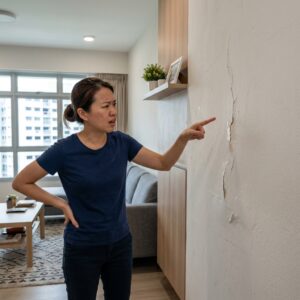
A renovation warranty in Singapore is a legally binding contractual obligation where interior design firms or contractors pledge to rectify structural, material, or workmanship defects for a specified period, typically ranging from one to five years post-handover. Beyond this basic definition, homeowners must navigate complex exclusions, void clauses, and hidden costs that often render superficial warranties useless in practical dispute scenarios. The landscape of home renovations in Singapore has evolved significantly, but one area that continues to trip up homeowners in 2026 is the fine print of renovation warranties. Promising long-term peace of mind, many interior design (ID) firms market comprehensive coverage that sounds perfect on paper. However, the reality of claiming these warranties when a defect actually surfaces often tells a very different story. Homeowners frequently find themselves bogged down in technicalities, hidden clauses, and contractor disputes that can make the process more stressful than the renovation itself. In this comprehensive guide, we dive deep into the specific traps to avoid when navigating renovation warranties, ensuring your investment is genuinely protected for years to come. 1. The “Workmanship vs. Materials” Trap One of the most common pitfalls homeowners encounter is failing to distinguish between workmanship warranties and material warranties. A contractor might proudly advertise a blanket “5-year warranty,” but this often only covers their direct workmanship—such as the physical act of installing a cabinet or laying a tile. If the cabinet hinges rust, the quartz countertop discolors, or the vinyl flooring peels due to material degradation, the contractor may simply point you to the original manufacturer. The trap here is that manufacturer warranties might have already expired, or they might contain numerous exclusions of their own. Furthermore, claiming a manufacturer warranty often requires original receipts and warranty cards that the ID firm might not have handed over. To safeguard yourself, you must demand a clear, written breakdown of what aspects fall under workmanship and which are relegated to third-party material suppliers. Make sure you receive the original manufacturer warranty cards for all high-value fixtures, appliances, and materials used in your home during the handover process. “Always insist on itemized warranty documentation during the handover phase. If an ID firm verbally promises ‘everything is covered,’ that is a massive red flag. Real warranties have specific scopes, durations, and claim procedures written in black and white.” — James, Founder of Nouvelle Workz 2. The Hidden “Call-Out Fee” Clause Imagine discovering a leaking pipe under your newly installed kitchen sink just a few months after moving in. You confidently call your contractor, assuming the repair will be entirely free under your much-touted warranty. However, when the plumber arrives, you are hit with a surprise $150 “transport and assessment fee.” This is a notorious trap hidden in the depths of many standard renovation contracts across Singapore. Understanding Transportation and Assessment Costs While the actual repair work or replacement parts might technically be free as promised, rogue firms offset their obligations by charging exorbitant call-out fees. In some cases, these fees are higher than simply hiring an external handyman yourself. Before signing your renovation contract, explicitly clarify if transportation, diagnostic, and labor costs are fully covered during the warranty period. A genuine, premium warranty will explicitly state that there are zero out-of-pocket costs for legitimate defects. 3. Structural Alterations Voiding Coverage A warranty is a delicate legal agreement that can be instantly voided if the homeowner breaches certain conditions. A classic trap is the “unauthorized modification” clause. For instance, if you hire a third-party electrician to add a smart power socket to a custom TV console originally built by your main ID, the ID may instantly void the warranty for the entire carpentry unit. They will argue that the structural integrity was compromised by an unapproved vendor. If you plan to make subsequent upgrades or employ separate specialized vendors (such as smart home installers or specialized lighting technicians), coordinate this closely with your primary contractor during the initial design phase. Getting their written approval ensures these additions do not inadvertently nullify your hard-earned coverage. 4. The “Normal Wear and Tear” Loophole Perhaps the most subjective and heavily abused clause in any renovation warranty is the exclusion of “normal wear and tear.” When a defect arises—such as discolored tile grout, sagging cabinet doors, or hairline cracks in the plaster wall—contractors often dismiss it as natural degradation rather than a flaw in their workmanship. Defining Acceptable Standards To combat this ambiguity, request that the contract clearly defines what constitutes a legitimate defect versus expected wear and tear. For example, a minor settlement crack in a new partition wall within the first three months should undeniably be rectified free of charge, whereas a scratch on a vinyl floor after two years of heavy foot traffic and furniture movement is genuinely wear and tear. Clear definitions prevent the contractor from using this loophole to escape their responsibilities. Defect Category Defect vs. Wear & Tear Examples Standard Warranty Action Carpentry Hardware (Hinges/Runners) Rust within 6 months (Defect) vs. Slight stiffness after 3 years (Wear & Tear) Free replacement within 1 year Plumbing & Piping Active leak at joints (Defect) vs. Naturally discolored PVC (Wear & Tear) Immediate free repair (within warranty) Painting & Wall Finishes Peeling/blistering paint (Defect) vs. Everyday scuff marks (Wear & Tear) Free touch-up within 3-6 months Electrical Works Tripping breakers under normal load (Defect) vs. Blown lightbulb (Wear & Tear) Immediate diagnosis & rewiring 5. The Disappearing Contractor Phenomenon A shiny 10-year warranty certificate is entirely worthless if the issuing company goes out of business in two years. The interior design and renovation industry in Singapore is notoriously volatile and highly competitive. Smaller firms frequently fold, liquidate, or deceptively rebrand to escape mounting liabilities and bad reviews. When a firm legally dissolves, its warranty obligations disappear into thin air. This emphasizes the paramount importance of performing rigorous due diligence on the financial health, corporate structure, and track record of the ID firm before engaging them. Established firms with a long operating history, a strong

BTO & HDB Bathroom Renovation: Waterproofing, Overlay & Costs (2026)
Author: Nouvelle Workz | Date: August 2026 Quick Answer: HDB toilet waterproofing is the mandatory application of a watertight membrane during renovation to prevent inter-floor leakages. In Singapore, resolving a ceiling leak or waterproofing failure requires proper diagnosis (e.g., PU injection vs hacking) and adherence to HDB’s Goodwill Repair Assistance (GRA) guidelines. For resale flats older than 15 years, hacking the old tiles and applying a new waterproofing membrane is strictly recommended over overlaying. 1. Hacking vs Overlay: The Ultimate Dilemma When planning an HDB or BTO bathroom renovation, homeowners face a critical choice: should you hack the existing tiles or overlay them? This decision dictates not only your immediate renovation budget but also your long-term peace of mind regarding waterproofing integrity. The Case for Hacking (Strictly Recommended for Resale) Hacking involves completely removing the old wall and floor tiles down to the bare concrete substrate. Once the bare concrete is exposed, a brand-new waterproofing membrane is applied before the new tiles are laid. This is the most thorough and safest approach. Over time—typically 10 to 15 years—the original waterproofing membrane under your tiles degrades due to constant moisture and micro-vibrations in the building structure. If you are buying an older HDB resale flat, hacking is non-negotiable. Overlaying new tiles on top of a failing 15-year-old membrane is a ticking time bomb for severe inter-floor leakages. The Case for Overlaying (Suitable for BTOs) Overlaying means applying a special adhesive and laying new tiles directly over the existing ones. This method is significantly cheaper and faster, as it skips the dusty, noisy, and expensive demolition phase. Furthermore, you do not need to apply for a hacking permit. However, overlaying is only viable if the existing waterproofing is 100% intact and there are zero signs of water seepage or hollow tiles. This method is primarily recommended for brand new BTOs or very recent resale flats (under 5 years old) where the homeowner simply dislikes the HDB-provided tile design. Note that HDB mandates a 3-year restriction period on hacking bathroom wall and floor tiles in new BTO flats to prevent damage to the concealed waterproofing membrane. “Many homeowners opt for cheap overlay solutions to save on upfront costs, only to face thousands of dollars in neighbor dispute claims two years later when the old membrane fails. If your resale flat is over 15 years old, always choose hacking and re-waterproofing.” — James, Founder of Nouvelle Workz. 2. BTO Bathroom: The 3-Year Tile Hacking Restriction If you have just collected your keys to a brand new BTO flat, there is one critical HDB rule you must know: you are strictly prohibited from hacking your bathroom wall and floor tiles for the first 3 years after the block’s TOP (Temporary Occupation Permit) date. Note that the 3-year countdown starts from the block’s official completion date — not from when you collected your keys. This restriction exists because HDB installs a professional-grade waterproofing membrane underneath the original bathroom tiles. Hacking these tiles within 3 years risks puncturing the membrane, which can cause severe water leakage into the unit below. Violating this rule can result in a fine of up to $5,000 and you will be forced to reinstate the original condition at your own cost. What Can You Do Within the First 3 Years? Overlay tiles: You can lay new tiles over the existing ones using adhesive, as long as the total floor thickness does not exceed 50mm. Change sanitary wares: You can freely replace the toilet bowl, basin, shower set, tap fittings, and water heater without any permit. Install a shower screen: Adding a frameless glass shower screen does not require any hacking. Add vanity cabinets or mirrors: Wall-mounted accessories that do not require drilling into the floor tiles are permitted. After the 3-Year Period Once 3 years have passed from the TOP date, you may apply for an HDB hacking permit to fully remove and replace the bathroom tiles. However, your contractor must then apply a brand-new waterproofing membrane and conduct a mandatory 48-hour water ponding test (flooding the bathroom floor and checking for leaks) before new tiles can be laid. Always engage an HDB-registered contractor for this work. 3. Waterproofing Failure: Identifying and Fixing Toilet Leaks Waterproofing failure is arguably one of the most stressful disputes between upper and lower floor neighbors in Singapore. Recognizing the signs early can save you from catastrophic structural damage. Common signs of waterproofing failure include: Water stains or yellowish patches on the lower floor’s ceiling. Peeling, bubbling, or flaking paint directly underneath your bathroom. Actual water dripping from the ceiling during or after showers. Efflorescence (white, powdery mineral deposits) forming on tile grout lines. Musty odors that persist despite good ventilation. The Goodwill Repair Assistance (GRA) Scheme HDB guidelines explicitly state that for inter-floor leakages, both the upper and lower floor owners have a mutual responsibility to cooperate. Under the Goodwill Repair Assistance (GRA) scheme, if an investigation determines that the leak is due to the natural wear and tear of the floor slab’s waterproofing membrane, HDB will co-pay 50% of the repair costs, while the remaining 50% is shared equally between the upper and lower floor flat owners (25% each). However, if the leak is caused by recent renovation works by the upper floor owner, the upper floor owner bears 100% of the liability and repair cost. PU Injection vs Full Hacking When a leak is detected, there are two primary repair methods: 1. Polyurethane (PU) Injection: This is a highly effective, non-destructive repair method. Expanding PU resin is injected under high pressure directly into the concrete cracks from the lower floor’s ceiling. The resin reacts with moisture, expands, and forms a watertight seal, effectively stopping the leak without requiring the upper floor owner to hack their tiles. This is often the preferred first line of defense for localized leaks. 2. Full Hacking and Re-Waterproofing: If the waterproofing membrane has universally degraded or if PU injection fails to resolve the issue, a full re-screeding is

2026 HDB Resale & BTO Renovation Cost and Permit Guide
Author: Nouvelle Workz | Date: September 2026 Quick Answer: In 2026, our direct contractor 4-room BTO renovation package starts from just $6,699, while our 4-room Resale HDB package starts from $19,799. Resale renovations are more expensive due to mandatory hacking, dismantling, and infrastructural upgrades like electrical rewiring and full plumbing replacement, all of which require strict HDB permits. 1. Why Resale HDB Renovations Cost 40% More Than BTOs The most common shock for first-time resale HDB buyers is the sheer cost of renovation compared to their BTO counterparts. It is not uncommon for a homeowner who budgeted $30,000 to receive quotes exceeding $60,000 for an older resale flat. To understand why, you must look beyond aesthetics and focus on infrastructure. A BTO flat is a blank canvas. There is nothing to demolish, the wiring is brand new, the bathroom waterproofing is intact, and the walls are perfectly straight. A resale flat, however, is inherited with the previous owner’s design choices—and often, their infrastructural decay. The “Invisible” Upgrades: Demolition, Electrical, and Plumbing Before a single new cabinet is installed in a resale flat, extensive hacking and dismantling must occur. Built-in wardrobes, kitchen cabinets, false ceilings, and degraded bathroom tiles must be torn down and legally disposed of. This demolition phase alone can easily consume $3,000 to $5,000 of your budget. Furthermore, if the resale flat is over 15 to 20 years old, a complete overhaul of the electrical wiring is strongly recommended. Old PVC wire insulation degrades over time, becoming brittle and posing a severe fire hazard. Similarly, concealed copper pipes from the 1990s are prone to pinhole leaks. Replacing these “invisible” infrastructural systems can add an unavoidable $8,000 to $12,000 to your budget. “Many homeowners underestimate the cost of demolition and disposal. Tearing down a 20-year-old kitchen and safely disposing of the debris can cost up to $2,500. Always buffer at least 20% of your budget for hacking and making good when buying a resale flat.” — James, Founder of Nouvelle Workz. 2. The Ultimate Guide to HDB Hacking Permits In Singapore, you cannot simply demolish a wall in your HDB flat to create an open-concept kitchen or a larger master bedroom. HDB stringently regulates hacking to preserve the structural integrity of the entire residential block. Unauthorised hacking can lead to catastrophic building failures and massive fines. Structural vs Non-Structural Walls Load-bearing walls (structural walls) cannot be hacked under any circumstances. On your HDB floor plan, structural walls are represented by thick, solid black lines, while non-structural walls are represented by thinner or hollow lines. However, even for non-structural walls, your contractor must submit a formal hacking application to HDB. Depending on the complexity and location of the wall, HDB may require the application to be endorsed by a Professional Engineer (PE), which incurs additional PE endorsement fees (typically $400 – $800). Always engage a BCA-registered and HDB-approved contractor (like Nouvelle Workz). Unregistered contractors cannot legally apply for these permits on your behalf, leaving you legally exposed. 3. Nouvelle Workz 2026 Renovation Packages (Direct Contractor Rates) Because we are a direct contractor with our own in-house carpentry factory, we eliminate interior design markups. Here are our exact 2026 package starting prices for BTO and Resale flats. HDB Flat Type BTO Package Price Resale Package Price 3-Room HDB $6,399 $18,799 4-Room HDB $6,699 $19,799 5-Room HDB $6,999 $20,799 👉 View what’s included: Check our full BTO Renovation Packages and HDB Resale Packages. 4. How to Avoid Hidden Costs and Variation Orders (VO) A common trap in the Singapore renovation industry is the “Bait and Switch” quote. Interior Design (ID) firms may offer an unbelievably low initial package to secure your signature, only to hit you with thousands of dollars in Variation Orders (VOs) mid-way through the project. To avoid this, ensure your contract explicitly covers “Haulage and Debris Clearance”. Many cheap quotes quietly exclude the cost of renting a skip tank and paying workers to carry debris down from your unit. Furthermore, verify the total length of carpentry quoted. A package offering a “free kitchen cabinet” might only cover 10-foot run of cabinets, whereas a standard 4-room HDB kitchen usually requires 20 to 24 feet, meaning you will be charged exorbitant rates for the excess length. Planning Your HDB Renovation? Explore our top-rated HDB & Residential Renovation Services in Singapore, or view our latest Project Portfolio. Contact Nouvelle Workz for a direct contractor quote and avoid hidden ID markups. WhatsApp Us (+65 9109 8102) → Frequently Asked Questions Why is a resale HDB renovation more expensive than a BTO? Resale renovations require extensive hacking, dismantling, and disposal of old structures, followed by mandatory infrastructural upgrades like electrical rewiring and plumbing replacement, which BTOs do not need. How much does a 4-room resale HDB renovation cost? In 2026, Nouvelle Workz’s direct contractor 4-room resale package starts from just $19,799, whereas traditional ID firms may quote between $40,000 to $65,000 due to hidden markups. Do I need a permit to hack a wall in my HDB flat? Yes. Any wall hacking in an HDB flat requires a formal hacking permit approved by HDB and endorsed by a Professional Engineer. Structural (load-bearing) walls cannot be hacked. Can I hack a wall in my new BTO flat? Yes, you can hack non-structural walls in a BTO flat with an approved HDB permit. However, HDB enforces a strict 3-year restriction period on hacking bathroom wall and floor tiles to preserve the waterproofing warranty.

Top 5 Variation Order (VO) Traps in Singapore Renovations: How to Avoid Hidden Costs Before Signing a Contract
What is a Variation Order (VO) Trap? A Variation Order (VO) in a Singapore renovation refers to any modification to the original signed contract, often resulting in unexpected additional costs. To avoid VO traps, homeowners must ensure their initial quotation itemizes all electrical points, exact carpentry lengths, haulage fees, and structural permits before paying the deposit. The nightmare scenario for any homeowner is signing a $35,000 renovation package, only to be handed a final bill of $50,000 upon handover. The culprit? Variation Orders (VOs). While some VOs are genuine (e.g., you decided to add a last-minute feature wall), many are the result of predatory pricing tactics by unscrupulous interior design (ID) firms or contractors. As a direct builder committed to transparent pricing, Nouvelle Workz believes in educating homeowners. Here are the top 5 most common VO traps in the Singapore renovation industry and how you can spot them in your quotation before you sign on the dotted line. 1. The ‘Lump Sum’ Carpentry Trap Carpentry is usually the most expensive component of any renovation. A classic trap is when an ID quotes a ‘lump sum’ for a kitchen cabinet or wardrobe without specifying the exact length (in foot run). The Trap: The quotation states ‘Design and fabricate kitchen cabinet: $4,500’. Once works begin, the contractor claims the $4,500 only covered 10 feet of cabinetry. Since your kitchen actually needs 20 feet, you are hit with a massive VO for the remaining 10 feet at an inflated per-foot-run price. The Fix: Demand that all carpentry quotations state the exact length (e.g., ’20 ft run top and bottom kitchen cabinet’). 2. Vague Electrical Point Provisions Electrical rewiring is notoriously vague in initial quotations. Many packages entice buyers with ‘Free Electrical Works’, but the fine print severely limits the scope. The Trap: The package covers 10 lighting points and 5 power sockets. A standard 4-room HDB actually requires roughly 30 lighting points and 20 sockets. Every additional point is charged at a premium rate ($60-$80 per point), resulting in a sudden $2,000+ VO. 3. Haulage, Debris Clearing, and Protection Fees Logistics and site preparation are mandatory, yet frequently omitted from low-ball initial quotes to make the bottom line look attractive. The Trap: You sign the contract, and immediately the contractor issues a VO for ‘HDB Haulage & Debris Disposal’ ($500) and ‘Corrugated Paper Floor Protection’ ($300), claiming these are ‘third-party regulatory costs’ not included in the design package. Common VO Trap Items Typical Hidden Cost (SGD) Extra Carpentry Length (per foot run) $120 – $250 / ft Additional Lighting/Power Points $60 – $90 / point Haulage & Debris Clearing $300 – $800 Chemical Wash / Post-Reno Cleaning $250 – $400 “The cheapest quotation on paper is rarely the cheapest upon handover. A transparent direct builder will itemize every single nail, permit, and haulage fee upfront so your final bill matches your initial contract exactly.” — James, Founder of Nouvelle Workz 4. Hacking and Making Good (Plastering) If your quotation includes ‘Hacking of Walls’, it must also explicitly include ‘Making Good’ or plastering the hacked edges. Some contractors charge a VO just to smooth out the jagged edges of the wall they just demolished, claiming plastering was a ‘separate cosmetic service’. 🔗 Related Guide: Know what a fair quote looks like before you sign — check our 2026 HDB Renovation Cost Breakdown. Ready to Transform Your Space? Explore our top-rated HDB & Residential Renovation Services in Singapore, or view our latest Project Portfolio to see our workmanship. Contact our expert team at Nouvelle Workz for a direct contractor quote and avoid ID markups. WhatsApp Us Frequently Asked Questions What is a VO in renovation? A Variation Order (VO) is any change, addition, or omission to the originally signed renovation contract. VOs usually incur extra charges and are a common source of budget overruns. How can I avoid hidden costs in my renovation quotation? To avoid hidden costs, ensure your quotation itemizes specific quantities rather than lump sums. Demand exact foot-run measurements for carpentry, a specific count for electrical points, and ensure haulage and debris clearing are included. Are haulage and debris clearing fees standard? Yes, haulage and debris disposal are mandatory costs in any major renovation. However, predatory firms often hide these fees from the initial quote to make it look cheaper, only to charge them later as a VO.

HDB Hacking Services in Singapore: Kitchen Wall & Permit Costs
Quick Answer: HDB Kitchen & Service Yard Hacking Yes, you can hack the wall separating your HDB kitchen and service yard, but only if it is a non-load-bearing wall. You must obtain an official HDB hacking permit via a licensed hacking contractor before proceeding. If structural pillars are involved, a Professional Engineer (PE) endorsement is mandatory. Proper hacking services in Singapore typically cost between $600 to $900. The biggest complaint among HDB resale buyers in Singapore is the size of the kitchen. Older flats, especially 4-room and 5-room models, often partition the kitchen from the service yard (laundry area) with a thick, obstructive wall. This blocks natural light and limits your usable countertop space. To achieve that highly coveted bright, airy, and expansive open-concept kitchen, the most effective strategy is to engage professional hacking services in Singapore to tear down this separating wall. However, this is not a DIY project. It involves strict HDB regulations, structural integrity checks, and strategic planning. 1. Understanding HDB Hacking Permits Before any hacking works begin, you must understand the difference between load-bearing and non-load-bearing walls. Load-bearing walls hold up the structural weight of the entire HDB block. Hacking them is strictly prohibited and incredibly dangerous. How to Check Your HDB Floor Plan Purchase your HDB floor plan from the HDB portal. Look for the wall separating your kitchen and service yard. If it is drawn with thick, bold black lines, it is structural. If it is drawn with thin, single lines, it is non-structural and generally safe to hack, pending HDB’s official permit approval. “Never assume a service yard wall can be fully hacked just because your neighbor did it. HDB structural layouts vary even within the same block, especially on different floor levels. Always engage an HDB Registered Renovation Contractor to submit the permit application. Skipping this step can result in a $5,000 fine and forced reinstatement.” — James, Founder of Nouvelle Workz 2. The Headache of CityGas Pipes and Floor Traps Once the hacking works are completed, you will likely be confronted with an exposed, thick yellow CityGas pipe and a washing machine floor trap sitting right in the middle of your newly expanded kitchen footprint. Legal Concealment Strategies By law, you cannot permanently box up gas pipes inside fixed masonry (cement walls). If there is a gas leak, it must be detectable and accessible. The optimal solution is custom carpentry. We design bespoke tall utility cabinets featuring subtle ventilation louvers. This completely hides the ugly pipes while adhering strictly to safety regulations. 3. HDB Kitchen Extension & Hacking Cost Breakdown (2026) Expanding your kitchen requires more than just hacking down a wall. You must factor in the cost of making good the hacked areas, extending floor tiles, and proper haulage disposal. Renovation Works Estimated Direct Cost Important Notes Wall Hacking & Debris Disposal $600 – $900 Includes HDB permit application and proper haulage of debris. PE Endorsement (If Required) $800 – $1,200 Only necessary if hacking involves partial structural support areas. Custom Gas Pipe Carpentry $500 – $800 Vented tall cabinet specifically designed for legal utility concealment. Conclusion: Hire Reliable Hacking Contractors Hacking your service yard wall is the single most impactful renovation decision you can make for an HDB resale flat. It transforms a cramped, dark cooking space into a sprawling, modern culinary haven. By engaging a licensed HDB direct contractor for hacking services, you ensure the structural integrity of your home remains uncompromised, while saving thousands on middleman ID fees. Need Professional Hacking Services? Ensure your wall hacking is HDB-approved, legally permitted, and structurally safe. Explore our HDB & Residential Renovation Services or view our Project Portfolio. WhatsApp Us