
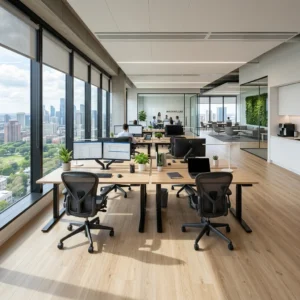
Commercial Vinyl Flooring in Singapore: SPC vs. LVT for Offices
Looking for professional help? Explore our top-rated Commercial Renovation & Reinstatement Services in Singapore, or view our latest Project Portfolio to see our workmanship.
Condo Kitchen Renovation Singapore: Open Concept Designs
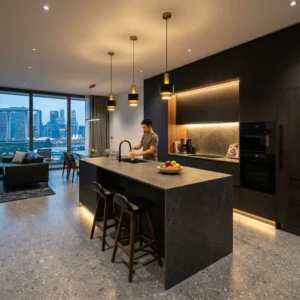
Condo Kitchen Renovation Singapore: Open Concept Designs For most private condominiums in Singapore, the kitchen is often the smallest and most enclosed space in the house. Developers typically design them as narrow galleys hidden behind heavy doors to trap cooking fumes. However, modern homeowners increasingly view the kitchen as the social centerpiece of the home. If you are tired of cooking in a cramped, dark space, an Open-Concept Condo Kitchen Renovation is the ultimate solution. At Nouvelle Workz, our masonry and carpentry experts specialize in tearing down those restrictive walls and building stunning, highly functional culinary spaces. 1. Hacking Walls: The Open Concept Transformation The first step to achieving an open-concept kitchen is hacking away the non-load-bearing walls that separate the kitchen from the living or dining area. MCST and PE Approvals Unlike HDB flats where hacking permits are straightforward, condominium management (MCST) rules are highly strict. Before any hacking can commence, a Professional Engineer (PE) must evaluate the floor plan and officially endorse that the wall being removed is not a structural pillar. As a direct contractor, Nouvelle Workz handles these PE endorsements and MCST submissions seamlessly, ensuring your renovation deposit remains safe. The Illusion of Space By removing the enclosing walls, natural light from your living room balcony can finally reach the kitchen. This immediately makes your entire apartment feel significantly larger, brighter, and more welcoming. 2. The Kitchen Island: Sintered Stone vs. Quartz Once the walls are down, the most popular addition is a central kitchen island. It serves as a preparation counter, a breakfast bar, and a physical boundary between the kitchen and the living space. Choosing the right countertop material for your island is crucial: Quartz: Highly durable, non-porous, and resistant to stains. It offers a wide variety of colors and patterns that mimic natural marble without the high maintenance. Sintered Stone: The current gold standard for luxury kitchens. Sintered stone is completely heat-resistant (you can place a hot pan directly on it), scratch-proof, and can be manufactured in ultra-thin profiles for a highly modern, sleek look. Our direct factory access allows us to fabricate and install premium sintered stone islands at highly competitive prices, bypassing the heavy markups charged by boutique interior designers. 3. Maximizing Storage with Custom Carpentry Condo kitchens demand extremely efficient use of space. Off-the-shelf cabinets rarely fit perfectly, leaving wasted gaps. Full-Height Custom Cabinetry We design and fabricate custom carpentry that reaches all the way to the ceiling. This eliminates the dusty gap above traditional cabinets and maximizes vertical storage for items you don’t use daily. Smart Internal Storage A beautiful exterior must be matched by a functional interior. We integrate heavy-duty Blum hinges, pull-out pantry tall units, and hidden corner carousels (magic corners) so that every square inch of your condo kitchen is utilized effectively. 4. Semi-Open Concepts (The Glass Partition Solution) If you love the visual space of an open kitchen but do a lot of heavy Asian cooking (like deep-frying or wok-hei), a fully open concept might result in grease spreading to your living room furniture. The perfect compromise is the Semi-Open Concept. We hack the solid walls and replace them with sleek, black-framed glass sliding doors or bi-fold glass partitions. When you are doing heavy cooking, you simply slide the glass doors shut to contain the fumes and grease. When you are entertaining guests or baking, you open them fully to combine the spaces. Are you ready to transform your cramped condo kitchen into a luxurious, open culinary space? Planning a full condo makeover? Maximize your space and budget with a direct contractor. Explore our Condo Renovation Packages (No ID Markups) today. Contact Nouvelle Workz Today
Retail Shop Renovation Singapore: Design & BCA Approvals
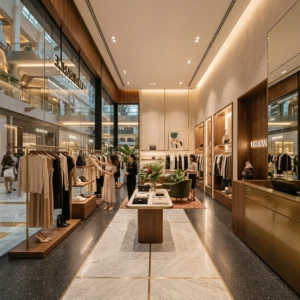
Retail Shop Renovation Singapore: Design & BCA Approvals Opening a physical retail shop or boutique in Singapore remains a highly lucrative strategy for brands looking to establish a premium physical presence. However, transitioning from signing a commercial lease to welcoming your first customer is a complex journey. Retail shop renovation in Singapore is not just about beautiful display shelves; it requires navigating a labyrinth of mall management rules, BCA/URA approvals, and strict fire safety regulations. At Nouvelle Workz, a BCA-registered and BizSAFE Level 3 direct commercial contractor, we specialize in delivering fast, compliant, and visually stunning retail fit-outs. In this guide, we break down what every brand owner needs to know before starting a retail renovation in Singapore. See our [retail shop and salon renovation service] for scope and timelines. 1. Navigating Shopping Mall Management (MCST) Rules If your shop is located within a shopping mall (like ION Orchard, VivoCity, or heartland malls), you are bound by the mall’s highly restrictive fit-out guidelines. Mall management (MCST) prioritizes the safety and experience of their shoppers above all else. Fit-Out Deposits: Expect to place a substantial renovation deposit with the mall management before any works can begin. This acts as an insurance policy against damage to the mall’s common corridors and lifts. Night Works: Because malls are open to the public during the day, nearly all noisy and dusty works (hacking, drilling, material delivery) must be conducted after mall operating hours—typically between 10:00 PM and 6:00 AM. Hoarding Requirements: Before renovation starts, the storefront must be covered with MCST-approved hoarding (temporary wooden partitions). This hoarding often needs to be painted or plastered with a “Coming Soon” marketing visual approved by the mall. A seasoned commercial contractor like Nouvelle Workz is familiar with handling mall management officers, ensuring all paperwork, insurance, and worker permits are submitted flawlessly to prevent delays. 2. BCA and URA Approvals for Structural Changes If you are taking over a conservation shophouse or planning significant structural changes within a mall, you will likely need approvals from the Building and Construction Authority (BCA) and the Urban Redevelopment Authority (URA). Change of Use: If the previous tenant was an office and you are converting it into a retail shop, you must apply for a Change of Use permit from URA. Structural Works: If your design requires knocking down walls or altering the load-bearing structure, a Professional Engineer (PE) must endorse the plans and submit them to BCA. Mezzanine Floors: Adding a mezzanine level for extra storage or display space requires strict BCA approval, as it increases the Gross Floor Area (GFA) and structural load. 3. The Psychology of Retail Lighting In retail, lighting is not just functional; it is a critical sales tool. A poorly lit shop makes merchandise look dull and unappealing. Ambient Lighting: This sets the overall mood of the store. High-end boutiques often use warmer, softer ambient light, while supermarkets and pharmacies use bright, cool white light. Accent Lighting: Track lights and spotlights are crucial for highlighting specific products, mannequins, or promotional displays. High CRI (Color Rendering Index) LED lights ensure the true colors of your products pop. Task Lighting: Focused lighting at the cashier counter and inside fitting rooms. Our M&E (Mechanical & Electrical) specialists can design a lighting layout that draws customers into the store and guides their eyes directly to your high-margin items. 4. Why Fast Handover Times Are Critical In the commercial retail sector, time is literally money. The moment your lease begins, the rent clock starts ticking. Most landlords offer a “rent-free fit-out period” of 14 to 30 days. If your renovation takes two months, you are burning through an entire month of expensive commercial rent without generating a single dollar of revenue. This is why hiring a direct commercial contractor is vital. Unlike boutique interior design agencies that outsource the heavy lifting and struggle to coordinate third-party carpenters and electricians, Nouvelle Workz executes using our direct, in-house workforce. We run highly coordinated night shifts to ensure your retail shop is fully fitted, compliant, and handed over within the shortest possible timeframe. Are you ready to launch your dream retail store? Contact Nouvelle Workz Today for a comprehensive site consultation and a highly efficient fit-out strategy.
Condo Renovation Cost & MCST Approval Guide Singapore (2026)
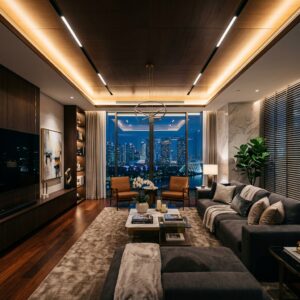
Author: Nouvelle Workz | Date: August 2026 Quick Answer: Renovating a condo in Singapore strictly requires MCST approval. You must submit your contractor’s BizSAFE certificates, lay protective Correx boards in common areas, and pay a renovation deposit (typically $1,000 – $3,000). Noisy hacking works are usually restricted to weekdays, 10:00 AM to 4:00 PM, making logistical planning by a direct contractor critical. Renovating a private condominium in Singapore is vastly different from renovating an HDB flat. While HDB renovations are governed by standardized housing rules, condo renovations are subjected to the strict and highly individualized regulations of the Management Corporation Strata Title (MCST). Without a deep understanding of these estate-specific rules, homeowners can face massive delays, forfeited deposits, and stop-work orders. In this 2026 guide, Nouvelle Workz breaks down the crucial differences between condo and HDB renovations, and how to navigate MCST approvals flawlessly to achieve your luxury dream home. 1. The Strict MCST Approval Process Before your contractor can bring in a single tool, you must apply for renovation approval from your condo’s MCST. This process usually involves submitting detailed floor plans, the contractor’s BizSAFE certificates, and a comprehensive scope of work. The Renovation Deposit Unlike HDB, almost all condo management offices require a renovation deposit (ranging from $1,000 to $3,000, and sometimes higher for luxury estates). This deposit is held to cover any potential damages caused by your contractor to the common property (e.g., scratched lift panels, damaged lobby floors). Choosing an inexperienced contractor who is careless with material transport can result in this deposit being fully forfeited. At Nouvelle Workz, our direct workers are heavily trained in common area protection, ensuring your deposit is safely refunded. Working Hours and Noise Restrictions Condos have notoriously strict working hours to preserve the peace of the residents. General Works: Typically allowed Monday to Friday, 9:00 AM to 5:00 PM, and half-days on Saturdays. Noisy Works (Hacking/Drilling): Heavily restricted. Often only allowed on weekdays between 10:00 AM and 4:00 PM, with strict limits on the total number of “hacking days” allowed (usually 3 to 5 days maximum). 2. Common Property Protection When renovating a condo, your unit is not the only thing being protected. The path from the guardhouse to your front door is considered common property, and the MCST will penalize any damage. Lift Padding and Correx Protection Your contractor must install heavy-duty canvas padding inside the elevators before hauling materials. Additionally, the lobby floor and the corridor leading to your unit must be lined with protective Correx boards. The MCST security guards will inspect this daily. If the protection is torn or insufficient, they will immediately halt all renovation works. Hauling of Debris HDB estates have centralized rubbish chutes or nearby dumpsters. Condos do not. All renovation debris (broken tiles, hacked walls, old carpentry) must be meticulously bagged and hauled down via the service lift, loaded onto a lorry, and legally disposed of at a commercial dumping ground. This increases the logistical complexity and cost of the renovation. 3. Structural Works and PE Endorsements If your condo renovation involves hacking walls to create an open-concept living space, the process is far more complex than applying for an HDB hacking permit. Because condo layouts and structural pillars vary wildly between different developments, the MCST will almost always demand a Professional Engineer (PE) endorsement. The PE must evaluate your floor plan, perform structural calculations, and officially certify that knocking down a specific wall will not compromise the building’s structural integrity. Hiring a contractor who has direct connections with reputable PEs will save you weeks of administrative delays. 4. Why Hire a Direct Contractor for Condos? Condo renovations require a contractor with impeccable logistical planning. Because working hours are so short, any delay in material delivery or worker scheduling means the project will drag on for months. Many Interior Design (ID) agencies outsource the actual hacking, masonry, and carpentry to multiple different sub-contractors. Managing this tangled web of external workers within a 6-hour daily window often leads to disaster. Nouvelle Workz is a BCA-registered direct contractor. We rely on our own in-house teams: Precision Scheduling: Because we control our workers directly, we can execute tasks seamlessly within the strict MCST time limits. Accountability: We take full responsibility for common area protection, ensuring zero complaints from your condo manager. Direct Factory Pricing: We deliver luxury finishes—such as sintered stone kitchen islands and custom walk-in wardrobes—at direct factory prices, eliminating the hefty 20% ID markup. Planning a Condo Renovation? Don’t let MCST regulations delay your dream home. Partner with Nouvelle Workz for a seamless, factory-direct renovation experience. Explore our Condo Renovation Services or view our Project Portfolio. Get a Free Consultation
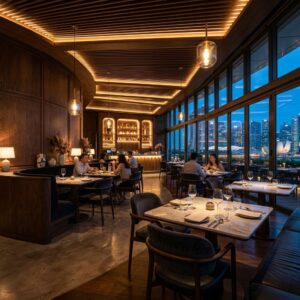
F&B Restaurant Renovation in Singapore
F&B Restaurant Renovation in Singapore Opening a restaurant or cafe in Singapore is a highly rewarding venture, but the renovation process is notoriously complex. Unlike a standard office or retail shop, an F&B (Food & Beverage) renovation is heavily regulated to ensure food safety, fire safety, and environmental hygiene. Without the right commercial contractor, you risk delaying your grand opening and burning through months of expensive rental overheads while waiting for permits. At Nouvelle Workz, a BCA-registered and BizSAFE Level 3 direct contractor, we specialize in delivering fully compliant, turn-key restaurant fit-outs. In this guide, we break down the critical components of a successful F&B renovation in Singapore. Planning a fit-out? See our [F&B and cafe renovation service]. 1. SFA Licensing and Layout Approvals Before any hammer swings, your restaurant floor plan must be approved by the Singapore Food Agency (SFA). A poorly designed kitchen layout will result in your food license being rejected. The SFA has strict requirements regarding the segregation of spaces: Dirty vs. Clean Zones: The dishwashing area (dirty zone) must be physically separated from the food preparation area (clean zone) to prevent cross-contamination. Wash Basins: SFA mandates dedicated hand-washing basins equipped with soap and paper towel dispensers, separate from dishwashing sinks. Staff Changing Rooms: A dedicated area for staff to store belongings and change into uniforms away from the kitchen. A specialized F&B contractor will draft your floor plan with these SFA regulations in mind, ensuring a smooth, first-time approval process. 2. Essential Commercial Kitchen M&E Works The heart of any F&B renovation is the Mechanical & Electrical (M&E) works. This is where a high percentage of your budget will go, and it must be executed flawlessly. Exhaust and Ventilation Systems Commercial cooking generates immense heat, smoke, and grease. Kitchen Exhaust Hoods: Custom-fabricated stainless steel hoods must be installed directly above cooking equipment. Fresh Air Intake: For every cubic meter of air exhausted out, fresh air must be pumped back in to maintain balanced air pressure and prevent the dining area from smelling like cooking oil. Grease Traps Every commercial kitchen in Singapore must have an NEA-approved portable grease trap installed under the sink. It intercepts fats and oils before they enter the public sewer system. Proper plumbing gradient is required to ensure smooth flow without choking. 3. SCDF Fire Safety Compliance Because commercial kitchens use open flames and gas, the Singapore Civil Defence Force (SCDF) sets rigorous fire safety standards. Fire Suppression Systems: Kitchen exhaust hoods must be equipped with an automated fire suppression system (such as ANSUL) that deploys fire-retardant chemicals directly onto the stoves in case of a flare-up. Fire-Rated Compartmentation: The walls separating the kitchen from the dining area must typically be fire-rated to prevent flames from spreading. Emergency Exits: Clear evacuation routes, emergency lighting, and exit signs must be installed and endorsed by a Registered Inspector (RI). 4. Why Hire a Direct Contractor over a Standard ID? Many business owners make the mistake of hiring a boutique interior design (ID) firm to renovate their restaurant. While IDs excel at creating beautiful 3D renderings for the dining area, many lack the technical expertise to handle SFA submissions, M&E ducting, and SCDF fire safety. As a result, they outsource the entire kitchen build to sub-contractors, marking up the prices by 20% to 30%. Nouvelle Workz is a direct commercial contractor. This means we have in-house capabilities to handle heavy-duty masonry, custom stainless steel fabrication, and compliance submissions. Feature Interior Design Agency Nouvelle Workz (Direct Builder) Middleman Markup High (20% – 30%) None Kitchen Expertise Outsourced In-house execution Project Speed Slower (Multiple layers of communication) Faster (Direct control over workers) SFA / SCDF Approvals Relies on third parties Handled by experienced commercial team If you are planning to launch an F&B outlet, Contact Nouvelle Workz Today for a comprehensive site consultation. We will ensure your restaurant is beautiful, compliant, and ready to open on time.
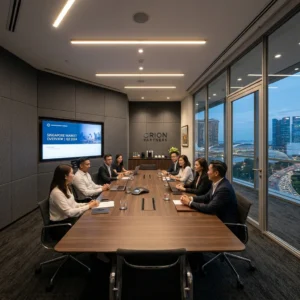
Soundproofing Singapore Offices
Looking for professional help? Explore our top-rated Commercial Renovation & Reinstatement Services in Singapore, or view our latest Project Portfolio to see our workmanship.

Warehouse Office Renovation Guide
Looking for professional help? Explore our top-rated Commercial Renovation & Reinstatement Services in Singapore, or view our latest Project Portfolio to see our workmanship.
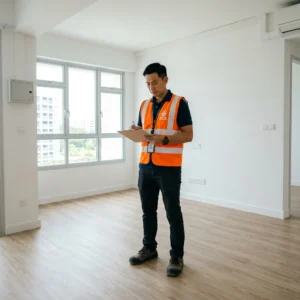
BTO Defect Checking Guide (2026)
Looking for professional help? Explore our top-rated HDB, BTO & Residential Renovation Services in Singapore, or view our latest Project Portfolio to see our workmanship.
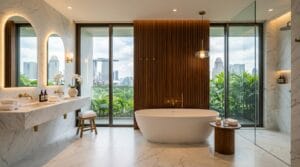
The Details That Define Luxury
The Details That Define Luxury: Anti-Mold Epoxy Grout & Fluted Wall Panels At a Glance / Quick Summary – The Mold Solution: Epoxy grout is 100% waterproof and non-porous, meaning it will never stain or grow mold like traditional cement grout. – Seamless Look: Can be color-matched to your tiles for a flawless, unbroken surface. – Fluted Panels: The perfect architectural complement to add texture and depth to your living areas or concealed entrances. True luxury in interior design isn’t just about expensive furniture or large spaces—it is found in the microscopic details. It’s the absence of ugly, blackened mold lines in your shower. It’s the rich, architectural texture of a perfectly crafted feature wall. For homeowners in Singapore looking to elevate their HDB or condo to a five-star hotel standard, two upgrades have become absolutely essential: Epoxy Grout and Fluted Wall Panels. The End of Moldy Bathrooms: Why You Need Epoxy Grout Traditional cement-based grout is highly porous. In Singapore’s unforgiving, humid climate, traditional grout rapidly absorbs moisture, soap scum, and dirt. Within months, it turns yellow, brown, or black with deep-rooted mold that no amount of scrubbing or bleach can permanently remove. Enter Epoxy Grout Unlike traditional cement, epoxy grout is made from epoxy resins and a filler powder. It cures into an incredibly hard, plastic-like state that is 100% waterproof and non-porous. Zero Stain Absorption: Spilled wine, coffee, or dark shampoo? Epoxy grout simply repels it. It will never stain. Mold and Mildew Proof: Because moisture cannot penetrate its surface, mold cannot grow on it. Your bathroom will look brand new for decades. Seamless Aesthetics: We can color-match epoxy grout to perfectly blend with your tiles, creating the illusion of a continuous, unbroken slab of stone. Applying two-part epoxy grout is highly specialized work. It cures quickly and requires meticulous cleaning by our professional tilers before it sets. Architectural Elegance: Fluted Wall Panels While epoxy grout perfects your wet areas, Fluted Wall Panels (also known as slatted or ribbed wood panels) are the secret to adding instant architectural depth to your dry areas. Flat, painted walls can sometimes feel sterile or lacking in character. Fluted panels introduce a rhythmic, vertical texture that draws the eye upward, making ceilings feel higher and rooms feel grander. Where to Use Fluted Panels 1. The TV Feature Wall: A fluted panel backdrop adds acoustic dampening and a rich, warm texture behind your screen. 2. Hidden Doors (Concealed Entrances): By continuing fluted panels across a wall and over a door, we can completely camouflage the entrance to a bomb shelter or a master bathroom. 3. Bed Headboards: Integrating fluted panels with ambient LED strip lighting creates an ultra-luxurious, boutique-hotel vibe in your master suite. A macro look at our epoxy grout work: glossy, smooth, and permanently immune to mold and stains. Elevate Your Details with Nouvelle Workz At Nouvelle Workz, we obsess over the details so you don’t have to. Our tiling specialists are certified in the meticulous application of premium epoxy grout, and our master carpenters craft flawless fluted wall integrations. Don’t let dirty grout lines or flat, uninspired walls ruin the luxury feel of your home. Contact us today to discuss how we can integrate these premium upgrades into your upcoming renovation.